sadalawpublications.com

Indian judiciary

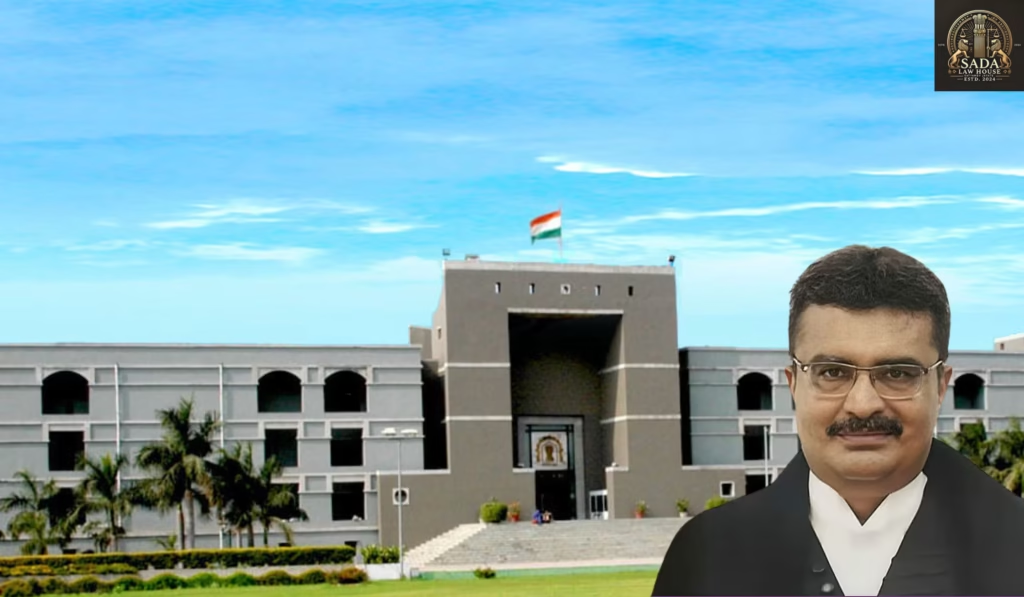
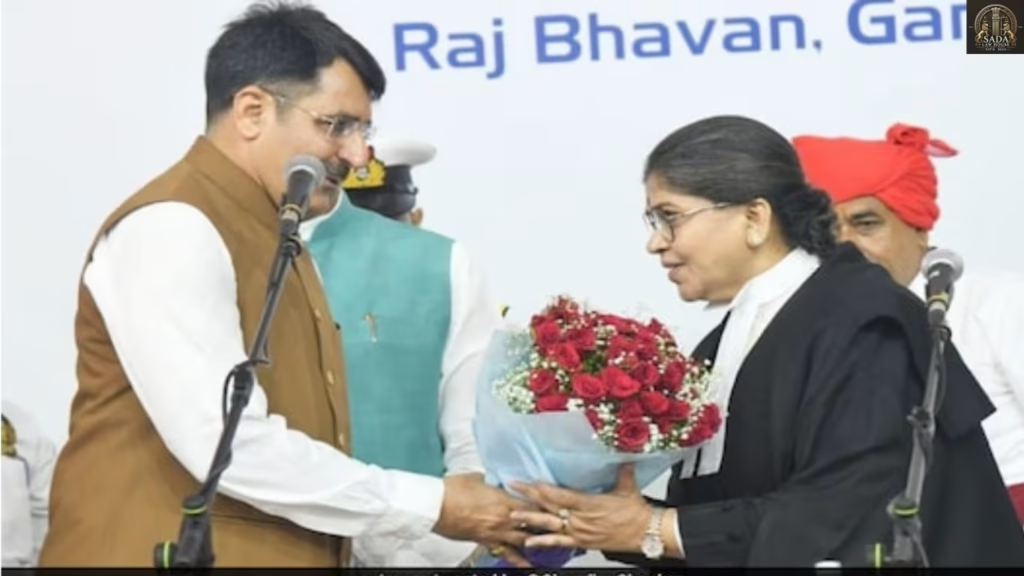
Gujarat High Court Bar Seeks Transfer of Chief Justice Sunita Agarwal Over Filing Delays

Trending Today Indian Government Fixes Critical Security Flaw in Income Tax E-Filing Portal, Preventing Major Data Leak Gujarat High Court Bar Seeks Transfer of Chief Justice Sunita Agarwal Over Filing Delays Supreme Court Strengthens Road Safety Measures Across India in Landmark Judgment Dilip Kumar v. Brajraj Shrivastava & Anr. (2023): Supreme Court Clarifies Magistrate’s Duty Under Section 202(1) CrPC Sandeep Kumar v. State of Haryana & Another (2023): Supreme Court Upholds Summoning of Additional Accused Under Section 319 CrPC Anbazhagan v. State (2023): Supreme Court Modifies Conviction to Culpable Homicide under Section 304 Part II IPC CCPA Finds Drishti IAS Misrepresented Success Stories of Candidates Advocate Rakesh Kishore Attempts Shoe Throw at Chief Justice B.R. Gavai in Supreme Court Why the Delhi High Court Is the Preferred Forum for Protecting Celebrity Personality Rights Plea Filed in Bombay High Court Challenging SEBI’s Approval for WeWork India’s IPO Gujarat High Court Bar Seeks Transfer of Chief Justice Sunita Agarwal Over Filing Delays Palak Singla 09 October 2025 Introduction The Gujarat High Court Advocates’ Association (GHCAA) has formally appealed to the Chief Justice of India (BR Gavai) for the transfer of Chief Justice Sunita Agarwal from the Gujarat High Court. The association has expressed serious concerns about unprecedented delays in case registrations and clearance backlogs following new procedural instructions issued by the Chief Justice. These developments have caused widespread disruption to daily court functioning, affecting both litigants and advocates. Background of the Controversy The issue arose after the introduction of a new Standard Operating Procedure (SOP) in September 2025, which prohibits overwriting, interpolation, or manual corrections in case files unless authorized by the registry. While the rule aimed to bring transparency and accountability, it has instead created severe administrative bottlenecks, with thousands of case files pending for approval or awaiting filing numbers. The GHCAA claims that the delays have also impacted urgent matters like bail applications, leaving many litigants in distress. GHCAA’s Concerns and Representation According to the association, the problem has worsened despite multiple meetings between GHCAA representatives, Chief Justice Sunita Agarwal, and other senior judges. The bar stated that many original case files have gone missing, and junior lawyers are struggling to get their cases listed. The delays, they argue, have crippled the court’s functioning — particularly concerning as the Diwali vacation begins on October 17, 2025. The GHCAA, in its official communication, emphasized that such filing issues have never occurred in the High Court’s 65-year history. The association has requested a personal audience with the CJI to resolve the matter urgently. About Chief Justice Sunita Agarwal Justice Sunita Agarwal assumed charge as the Chief Justice of the Gujarat High Court in July 2023. Prior to this, she served as a judge at the Allahabad High Court, where she was known for her emphasis on procedural discipline and administrative reform. The recent SOP introduced under her tenure, however, has sparked debate within the legal fraternity over the balance between procedural strictness and judicial efficiency. Impact on the Legal Community The filing backlog has created a ripple effect across the Gujarat legal ecosystem: Litigants are facing prolonged wait times for hearing dates. Junior lawyers report reduced work opportunities due to fewer case listings. Senior advocates warn that the administrative paralysis could damage the High Court’s reputation for prompt justice delivery. Legal experts suggest that while stricter documentation norms are necessary, implementation without transitional support has led to operational breakdowns. Looking Ahead The GHCAA’s letter to CJI BR Gavai seeks intervention to restore normalcy at the Gujarat High Court. The association has urged the transfer of Chief Justice Sunita Agarwal or the immediate suspension of the new SOP until a more balanced system is in place. The coming weeks will determine whether the Supreme Court intervenes to address the crisis or directs internal reform measures within the Gujarat High Court’s registry system. Conclusion The ongoing standoff between the Gujarat High Court Bar and Chief Justice Sunita Agarwal highlights a critical debate between judicial discipline and accessibility to justice. As the bar awaits the Chief Justice of India’s response, the outcome of this administrative crisis will likely shape future judicial governance practices across India’s High Courts. Leave a Reply Cancel Reply Logged in as Sadalaw. Edit your profile. Log out? Required fields are marked * Message* Live Cases Indian Government Fixes Critical Security Flaw in Income Tax E-Filing Portal, Preventing Major Data Leak Sadalaw • October 9, 2025 • Live cases • No Comments Gujarat High Court Bar Seeks Transfer of Chief Justice Sunita Agarwal Over Filing Delays Sadalaw • October 9, 2025 • Live cases • No Comments Supreme Court Strengthens Road Safety Measures Across India in Landmark Judgment Sadalaw • October 9, 2025 • Live cases • No Comments 1 2 3 … 5 Next »

Gujarat High Court Bar Seeks Transfer of Chief Justice Sunita Agarwal Over Filing Delays Read More »
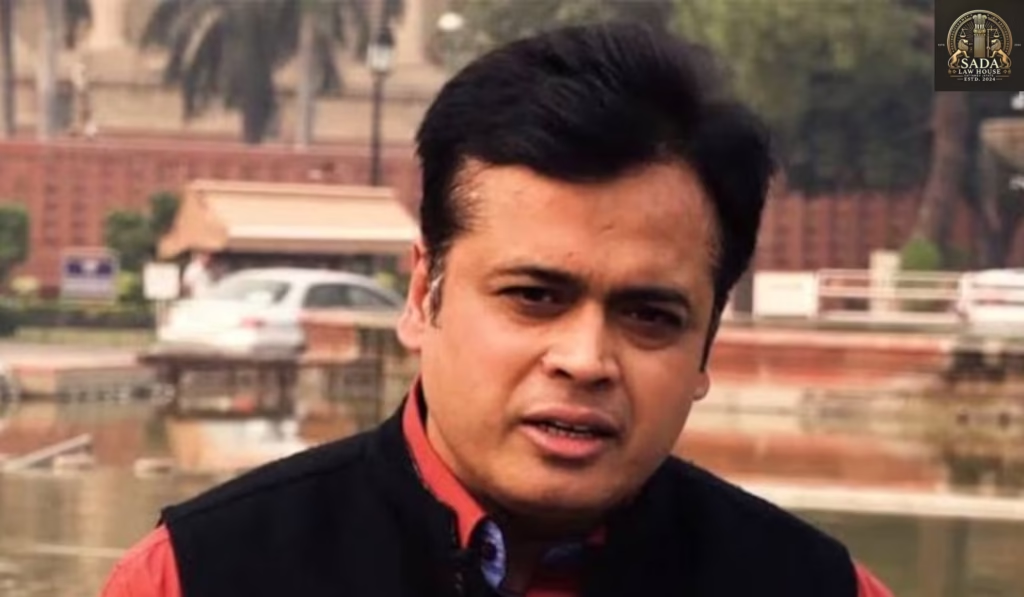
Supreme Court Grants Interim Protection to Journalist Abhisar Sharma in Assam FIR

Trending Today Supreme Court Grants Interim Protection to Journalist Abhisar Sharma in Assam FIR Kerala High Court Rules Judges Must Personally View Obscene Video Evidence Before Conviction Gujarat HC Lawyers Meet CJI Over Transfer Proposal of Justice Sandeep Bhatt Bombay High Court Restrains Sanjay Nirupam from Making Communal Remarks Against Slum Developer Ankita Bhati v. Dev Raj Singh Bhati – Supreme Court Reiterates Wife’s Convenience Paramount in Transfer of Matrimonial Cases (2023) Presidential Reference on Deadlines for Governors: Supreme Court Hearing Enters Day 5 LEGAL INTERNSHIP OPPORTUNITY AT CHAMBERS FOR JUSTICE, DELHI LEGAL INTERNSHIP OPPORTUNITY AT AVNEESH ARPUTHAM LEGAL JOB OPPORTUNITY AT RISHABH GANDHI AND ADVOCATES LEGAL JOB OPPORTUNITY AT UTKRISHTHA LAW OFFICES Supreme Court Grants Interim Protection to Journalist Abhisar Sharma in Assam FIR Kashak Agarwala 29 AUG 2025 The Supreme Court of India grants journalist Abhisar Sharma four-week interim protection against arrest in Assam over a YouTube video, while directing him to challenge the FIR before the Gauhati High Court. Interim Protection by Supreme Court On Thursday, a Bench of Justices M.M. Sundresh and N. Kotiswar Singh granted Abhisar Sharma a four-week interim protection against arrest in connection with a FIR filed over a YouTube video criticizing the Assam government. The Court declined to quash the FIR itself, clarifying that Sharma must approach the Gauhati High Court to challenge it. The Bench acknowledged his role as a journalist and stated that the protection was to ensure he could seek judicial relief without facing immediate arrest. FIR and Charges Invoked The FIR was registered on 21 August 2025, after Sharma criticized the Assam government for allotting 3,000 bighas of tribal land to a private entity and accused it of divisive politics. Charges under the Bharatiya Nyaya Sanhita (BNS) included: Section 152 BNS: Threatening sovereignty of the state Section 196 BNS: Encouragement of hostility between groups Section 197 BNS: Statements prejudicial to national integration The FIR alleged that Sharma mocked the government, ridiculed Ram Rajya, and encouraged communal hatred, negatively impacting national cohesion. Court Proceedings and Submissions Senior Advocate Kapil Sibal argued to annul the FIR and prevent multiple complaints arising from the same video. He emphasized the need for uniformity in prosecuting such cases. Justice Sundresh noted that even if the Supreme Court entertained the plea, the State could file another FIR, making the High Court the appropriate forum for challenging the FIR. The Bench granted interim protection for four weeks to allow Sharma to seek relief before the Gauhati High Court. Constitutional Challenge to Section 152 BNS Sharma contended that Section 152 BNS was unconstitutional, as it was a reform of the repealed Section 124A IPC, and argued that it is vague and overly broad, allowing potential misuse against critics. The petition invoked Articles 14, 19(1)(a), and 21 of the Constitution of India, claiming violations of equality, freedom of speech, and due process. The Supreme Court issued notice to the Central Government, linking Sharma’s challenge to other similar cases pending before the Court. Petition Grounds The petition argued that: Sharma’s video criticism was factual and verifiable, containing no incitement to violence. Freedom of speech includes criticism of government policies and political decisions. Prosecution under Section 152 BNS for journalistic reporting, including potential life imprisonment, is disproportionate and unconstitutional. Next Steps Interim protection: Four weeks for Sharma to approach the Gauhati High Court to quash the FIR. Constitutional challenge: Section 152 BNS case to be considered by the Supreme Court. Representation: Advocate Sumeer Sodhi filed the petition on behalf of Sharma. This ruling highlights press freedom, proportionality in criminal law, and safeguards for journalists under India’s democratic framework. Leave a Reply Cancel Reply Logged in as Sadalaw. Edit your profile. Log out? Required fields are marked * Message* Live Cases Supreme Court Grants Interim Protection to Journalist Abhisar Sharma in Assam FIR Sadalaw • August 29, 2025 • Live cases • No Comments Kerala High Court Rules Judges Must Personally View Obscene Video Evidence Before Conviction Sadalaw • August 29, 2025 • Live cases • No Comments Gujarat HC Lawyers Meet CJI Over Transfer Proposal of Justice Sandeep Bhatt Sadalaw • August 29, 2025 • Live cases • No Comments 1 2 3 … 5 Next »

Supreme Court Grants Interim Protection to Journalist Abhisar Sharma in Assam FIR Read More »

Kerala High Court Rules Judges Must Personally View Obscene Video Evidence Before Conviction

Trending Today Kerala High Court Rules Judges Must Personally View Obscene Video Evidence Before Conviction Gujarat HC Lawyers Meet CJI Over Transfer Proposal of Justice Sandeep Bhatt Bombay High Court Restrains Sanjay Nirupam from Making Communal Remarks Against Slum Developer Ankita Bhati v. Dev Raj Singh Bhati – Supreme Court Reiterates Wife’s Convenience Paramount in Transfer of Matrimonial Cases (2023) Presidential Reference on Deadlines for Governors: Supreme Court Hearing Enters Day 5 LEGAL INTERNSHIP OPPORTUNITY AT CHAMBERS FOR JUSTICE, DELHI LEGAL INTERNSHIP OPPORTUNITY AT AVNEESH ARPUTHAM LEGAL JOB OPPORTUNITY AT RISHABH GANDHI AND ADVOCATES LEGAL JOB OPPORTUNITY AT UTKRISHTHA LAW OFFICES LEGAL JOB OPPORTUNITY AT DEEPAK SINGH THAKUR & ASSOCIATES Kerala High Court Rules Judges Must Personally View Obscene Video Evidence Before Conviction Kashak Agarwala 29 AUG 2025 The Kerala High Court rules that trial courts cannot convict individuals for distributing obscene material without personally verifying video evidence, strengthening due process in obscenity cases under Section 292 IPC. Court Mandates Direct Judicial Verification The Kerala High Court has ruled that trial courts must personally watch and analyze video evidence before finding a person guilty of distributing obscene content. The judgment emphasizes that a video must meet the legal definition of obscenity and cannot be assessed solely based on witness testimony or police reports. Justice Kauser Edappagath allowed a criminal revision petition filed by Harikumar, a video shop operator from Kottayam, who was previously convicted for renting out allegedly obscene video cassettes. Background of the Case Incident: In the 1990s, authorities seized ten video cassettes from Harikumar’s video shop, claiming they contained obscene material. Charges: Filed under Section 292(2)(a), (c), and (d) of the Indian Penal Code, which addresses the sale, hire, distribution, and exhibition of obscene content. Trial Court Verdict: Two years imprisonment and a fine of ₹2,000. On appeal, the sentence was reduced to one year, but the conviction was upheld. Petitioner’s Claim: Harikumar argued the trial court never personally viewed the cassettes, relying instead on witness testimony and police reports. High Court Findings The Kerala High Court ruled: Primary evidence under the Indian Evidence Act, 1872, like video cassettes, must be personally inspected by the trial judge. Viewing by the court is required to verify that the content is lascivious or obscene. Witness testimony and police reports may supplement evidence but cannot replace direct judicial examination. Justice Edappagath stressed that obscenity is a legal conclusion, not subjective hearsay, and requires direct contact with the material to determine whether it could deprave or corrupt viewers. Legal Principle on Obscenity Obscenity prosecutions demand strict adherence to evidentiary standards. Courts must personally verify content before a conviction under Section 292 IPC. The ruling ensures due process, protecting defendants against convictions based solely on indirect evidence. Outcome of the Case The High Court allowed Harikumar’s criminal revision petition. Conviction and sentence were nullified. Representation: Advocate M.P. Madhavankutty for the petitioner; Public Prosecutor Sangeetha Raj N.R. for the State. Significance This ruling reinforces that: Judicial examination is essential in obscenity cases. Convictions cannot rely solely on hearsay or official evaluation. It safeguards free speech, morality, and proper evidentiary procedure in criminal prosecutions. Leave a Reply Cancel Reply Logged in as Sadalaw. Edit your profile. Log out? Required fields are marked * Message* Live Cases Kerala High Court Rules Judges Must Personally View Obscene Video Evidence Before Conviction Sadalaw • August 29, 2025 • Live cases • No Comments Gujarat HC Lawyers Meet CJI Over Transfer Proposal of Justice Sandeep Bhatt Sadalaw • August 29, 2025 • Live cases • No Comments Bombay High Court Restrains Sanjay Nirupam from Making Communal Remarks Against Slum Developer Sadalaw • August 29, 2025 • Live cases • No Comments 1 2 3 … 5 Next »

Kerala High Court Rules Judges Must Personally View Obscene Video Evidence Before Conviction Read More »

Gujarat HC Lawyers Meet CJI Over Transfer Proposal of Justice Sandeep Bhatt

Trending Today Gujarat HC Lawyers Meet CJI Over Transfer Proposal of Justice Sandeep Bhatt Bombay High Court Restrains Sanjay Nirupam from Making Communal Remarks Against Slum Developer Ankita Bhati v. Dev Raj Singh Bhati – Supreme Court Reiterates Wife’s Convenience Paramount in Transfer of Matrimonial Cases (2023) Presidential Reference on Deadlines for Governors: Supreme Court Hearing Enters Day 5 LEGAL INTERNSHIP OPPORTUNITY AT CHAMBERS FOR JUSTICE, DELHI LEGAL INTERNSHIP OPPORTUNITY AT AVNEESH ARPUTHAM LEGAL JOB OPPORTUNITY AT RISHABH GANDHI AND ADVOCATES LEGAL JOB OPPORTUNITY AT UTKRISHTHA LAW OFFICES LEGAL JOB OPPORTUNITY AT DEEPAK SINGH THAKUR & ASSOCIATES Mangilal v. State of Madhya Pradesh – Supreme Court Acquittal for Non-Compliance with Section 52A NDPS Act (2023) Gujarat HC Lawyers Meet CJI Over Transfer Proposal of Justice Sandeep Bhatt Kashak Agarwala 29 AUG 2025 A delegation of Gujarat High Court lawyers met Chief Justice of India BR Gavai and Justice Surya Kant opposing the transfer of Justice Sandeep N. Bhatt to Madhya Pradesh High Court, citing his integrity and judicial contributions. GHCAA Delegation Meets CJI On Thursday, a delegation of the Gujarat High Court Advocates Association (GHCAA) met CJI BR Gavai and Justice Surya Kant to present a representation opposing the transfer of Justice Sandeep N. Bhatt to the Madhya Pradesh High Court. Since 26 August 2025, GHCAA has been on strike over the transfer proposal, which was approved by the Supreme Court Collegium during its meetings on 25–26 August 2025. Composition of the Delegation The GHCAA formed a special committee to advocate for the Bar’s interests. The delegation included: Brijesh J. Trivedi, GHCAA President Senior Advocate Asim Pandya Advocates Hardik Brahmbhatt, Babubhai Mangukiya, Dipen Dave, and Bhargav Bhatt The lawyers expressed their opposition to the transfer, emphasizing Justice Bhatt’s fairness, diligence, and integrity. Representation in Favor of Justice Bhatt The written representation highlighted Justice Bhatt’s judicial record: Promoted as a Judge in October 2021 Adjudicated approximately 19,000 cases over four years Maintained an industrious and respected presence in the Gujarat judiciary The Bar praised his integrity, stating it is “above suspicion,” and emphasized the respect he commands among his peers. Allegations Against the High Court Administration The representation criticized administrative practices under Chief Justice Sunita Agarwal, suggesting that Justice Bhatt’s transfer might be linked to administrative friction. Key examples included: Registrar AT Ukrani failed to return 15 case files to a Surat court within seven months (2019). Justice Bhatt questioned this delay. Following his order, the Chief Justice changed Justice Bhatt’s roster, moving him to a Division Bench under a senior judge, despite GHCAA’s objections. Further Controversies Justice Bhatt later handled service matter cases, where he noted deficiencies, including the failure to install CCTV cameras in judiciary departments. Some of his observations were expunged by a Division Bench. The Bar emphasized that Justice Bhatt never overstepped legal boundaries, maintaining adherence to judicial norms. Background of Justice Bhatt Education: Science degree from Kotak Science College, Rajkot (1988); Law degree (1992) Legal Career: Enrolled as advocate with Bar Council of Gujarat in 1993; practiced at Rajkot District Court with his father N.S. Bhatt Gujarat High Court: Joined in 1994 under late Girishbhai D. Bhatt; elevated to Judge in October 2021 after nearly 30 years in law Concerns Over the Transfer Process The GHCAA argued that judge transfers should not be routine. In Justice Bhatt’s case, they warned that the transfer could be perceived as stigmatic, potentially harming both his reputation and the judiciary’s credibility. The delegation could not meet all members of the Collegium but sent additional copies of the representation for consideration. Leave a Reply Cancel Reply Logged in as Sadalaw. Edit your profile. Log out? Required fields are marked * Message* Live Cases Gujarat HC Lawyers Meet CJI Over Transfer Proposal of Justice Sandeep Bhatt Sadalaw • August 29, 2025 • Live cases • No Comments Bombay High Court Restrains Sanjay Nirupam from Making Communal Remarks Against Slum Developer Sadalaw • August 29, 2025 • Live cases • No Comments Presidential Reference on Deadlines for Governors: Supreme Court Hearing Enters Day 5 Sadalaw • August 29, 2025 • Live cases • No Comments 1 2 3 … 5 Next »

Gujarat HC Lawyers Meet CJI Over Transfer Proposal of Justice Sandeep Bhatt Read More »

Gujarat High Court Orders Fresh SIT Probe Into Dalit Man’s Custodial Death Amid Allegations of Police Torture

Trending Today INTERNSHIP OPPORTUNITY AT CCR, NUSRL, RANCHI Gujarat High Court Orders Fresh SIT Probe Into Dalit Man’s Custodial Death Amid Allegations of Police Torture INTERNSHIP OPPORTUNITY AT K&G TECHLAW PARTNERS Delhi High Court Quashes FIR Against Journalist in Official Secrets Act Case, Cites Press Freedom Supreme Court to Urgently Hear Petition on Same-Sex Couples’ Adoption Rights in India Madras High Court Allows Women to Join Temple Chariot Festival, Citing Equality and Religious Freedom Telangana High Court Cancels Free Land Allotment to IAMC Hyderabad in Landmark Ruling Court Orders FIR Against Zed News and News18 for Defamatory Reporting During Operation Sindoor in Jammu & Kashmir Delhi High Court Rules Arbitration Clause Doesn’t Automatically Override Civil Court Jurisdiction Supreme Court Affirms Right to Close Business Under Article 19 of Indian Constitution Gujarat High Court Orders Fresh SIT Probe Into Dalit Man’s Custodial Death Amid Allegations of Police Torture KASHISH JAHAN 1 JULY 2025 The Gujarat High Court has ordered a fresh SIT probe into the alleged custodial death of a 27-year-old Dalit man in Rajkot, highlighting critical concerns about police accountability and custodial violence in India. High Court Steps In Amid Allegations of Custodial Torture The Gujarat High Court has ordered the formation of a new Special Investigation Team (SIT) to investigate the alleged custodial death of a 27-year-old Dalit man in Rajkot. The man died within 24 hours of being detained over a minor theft allegation. Family Alleges Torture and Post-Mortem Tampering According to the victim’s family, he was subjected to severe custodial torture. They also claimed that the post-mortem report was tampered with to conceal the actual cause of death, contradicting physical injuries and witness statements. Initial Police Investigation Under Scrutiny The original investigation conducted by the district police cleared all involved officers, citing natural causes. However, ongoing protests by Dalit rights groups and mounting public pressure prompted the victim’s family to petition the court for an independent probe. Justice Biren Vaishnav Highlights Major Lapses Justice Biren Vaishnav stated that initial findings pointed to procedural irregularities, destruction of CCTV footage, and conflicting witness testimonies. The court ordered that a new SIT, led by an independent IPS officer, be formed and that a detailed report be submitted within two months. Debate Rekindled Over Police Accountability in India This incident has reignited national debate on police accountability and custodial violence. The National Human Rights Commission (NHRC) has frequently raised concerns over custodial deaths in India. The victim’s family called the court’s decision a “ray of hope for justice.” Leave a Reply Cancel Reply Logged in as Sada Law. Edit your profile. Log out? Required fields are marked * Message* Live Cases Gujarat High Court Orders Fresh SIT Probe Into Dalit Man’s Custodial Death Amid Allegations of Police Torture Sada Law • July 1, 2025 • Live cases • No Comments Delhi High Court Quashes FIR Against Journalist in Official Secrets Act Case, Cites Press Freedom Sada Law • July 1, 2025 • Live cases • No Comments Supreme Court to Urgently Hear Petition on Same-Sex Couples’ Adoption Rights in India Sada Law • July 1, 2025 • Live cases • No Comments 1 2 3 … 5 Next »

Gujarat High Court Orders Fresh SIT Probe Into Dalit Man’s Custodial Death Amid Allegations of Police Torture Read More »

Delhi High Court Quashes FIR Against Journalist in Official Secrets Act Case, Cites Press Freedom

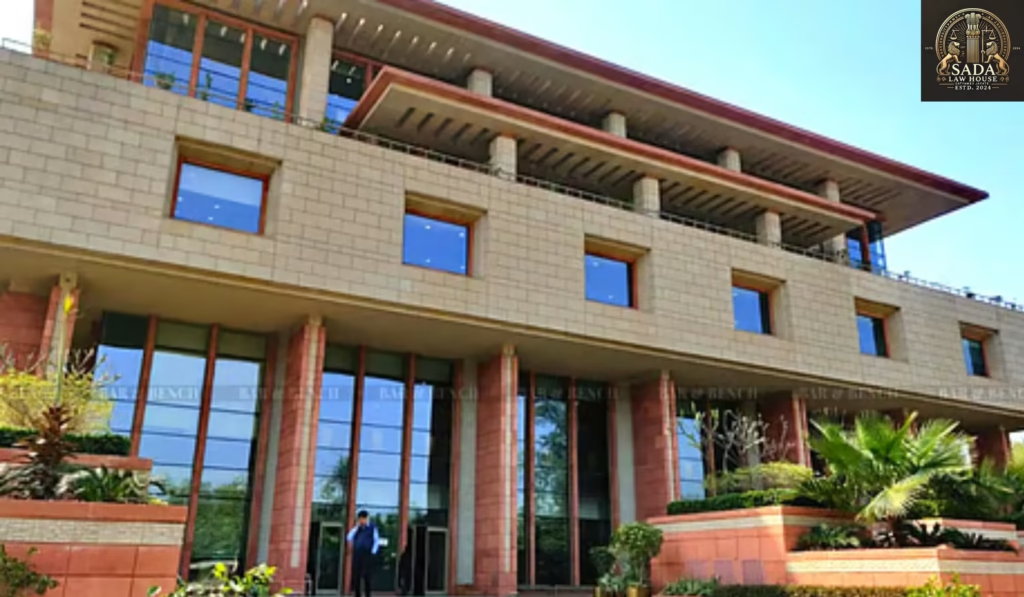
Trending Today Delhi High Court Quashes FIR Against Journalist in Official Secrets Act Case, Cites Press Freedom Supreme Court to Urgently Hear Petition on Same-Sex Couples’ Adoption Rights in India Madras High Court Allows Women to Join Temple Chariot Festival, Citing Equality and Religious Freedom Telangana High Court Cancels Free Land Allotment to IAMC Hyderabad in Landmark Ruling Court Orders FIR Against Zed News and News18 for Defamatory Reporting During Operation Sindoor in Jammu & Kashmir Delhi High Court Rules Arbitration Clause Doesn’t Automatically Override Civil Court Jurisdiction Supreme Court Affirms Right to Close Business Under Article 19 of Indian Constitution Bombay High Court Halts Aarey Forest Demolition: Legal Win for Environment and Tribal Rights Delhi High Court Orders Centre to Draft Deepfake Guidelines: Major Step for Digital Privacy and Free Speech in India Supreme Court Clears Uttarakhand’s Uniform Civil Code: A Historic Step Toward Gender Equality and Secular Law in India Delhi High Court Quashes FIR Against Journalist in Official Secrets Act Case, Cites Press Freedom KASHISH JAHAN 1 JULY 2025 The Delhi High Court has quashed an FIR against an investigative journalist under the Official Secrets Act, marking a major victory for press freedom and free speech in India. A Landmark Ruling for Press Freedom in India In a major win for democratic values and the rights of the media, the Delhi High Court has quashed a First Information Report (FIR) filed against an investigative journalist under the Official Secrets Act (OSA). The journalist had published leaked government documents related to sensitive defense procurements. Justice Anup Jairam Bhambhani: Publishing Public Interest Documents Is Not a Crime Justice Anup Jairam Bhambhani, while hearing a joint plea by the journalist and a prominent media watchdog, stated that mere possession or publication of documents—if of public importance—does not violate the OSA. He emphasized that such actions are not criminal unless there is clear evidence of espionage or intent to harm national security. Background: FIR Filed After Journalist Exposed Defense Irregularities The FIR, originally filed in 2024, followed a series of investigative reports by the journalist that revealed alleged irregularities in defense procurement deals. These articles were based on internal files from the Ministry of Defence. While the government claimed the leaked documents posed a national security risk, several civil society organizations argued the exposé served the public interest. Reaffirming the Right to Free Speech and Journalistic Integrity The ruling is a significant reinforcement of the Supreme Court’s precedent in the landmark Vinod Dua judgment. The High Court emphasized that the right to report on matters of national relevance cannot be suppressed by the misuse of outdated secrecy laws like the OSA. Court Urges Clearer Guidelines for Press and National Security Balance The Court also directed the Central Government to establish clear, updated guidelines to ensure a fair balance between protecting national interests and respecting press freedom. Verdict Welcomed by Media Rights Groups The decision has been widely praised by media rights groups and legal experts as a reaffirmation that investigative journalism is not a threat to the state—it is a vital pillar of a transparent and democratic society. The verdict sends a strong message that journalism is not sedition or spying, but a safeguard of public accountability. Leave a Reply Cancel Reply Logged in as Sada Law. Edit your profile. Log out? Required fields are marked * Message* Live Cases Delhi High Court Quashes FIR Against Journalist in Official Secrets Act Case, Cites Press Freedom Sada Law • July 1, 2025 • Live cases • No Comments Supreme Court to Urgently Hear Petition on Same-Sex Couples’ Adoption Rights in India Sada Law • July 1, 2025 • Live cases • No Comments Madras High Court Allows Women to Join Temple Chariot Festival, Citing Equality and Religious Freedom Sada Law • July 1, 2025 • Live cases • No Comments 1 2 3 … 5 Next »

Delhi High Court Quashes FIR Against Journalist in Official Secrets Act Case, Cites Press Freedom Read More »

Madras High Court Allows Women to Join Temple Chariot Festival, Citing Equality and Religious Freedom

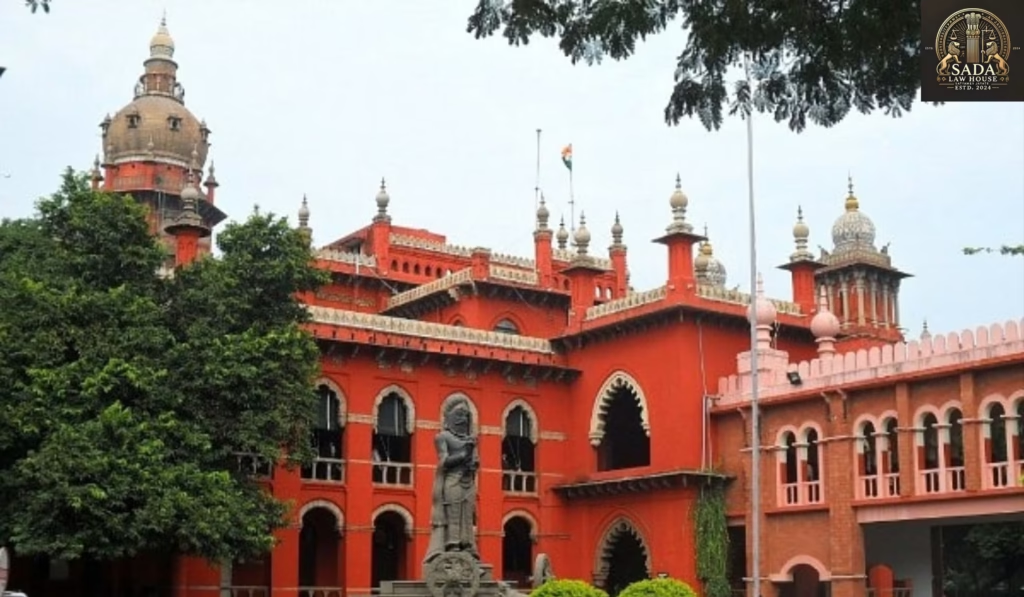
Trending Today Madras High Court Allows Women to Join Temple Chariot Festival, Citing Equality and Religious Freedom Telangana High Court Cancels Free Land Allotment to IAMC Hyderabad in Landmark Ruling Court Orders FIR Against Zed News and News18 for Defamatory Reporting During Operation Sindoor in Jammu & Kashmir Delhi High Court Rules Arbitration Clause Doesn’t Automatically Override Civil Court Jurisdiction Supreme Court Affirms Right to Close Business Under Article 19 of Indian Constitution Bombay High Court Halts Aarey Forest Demolition: Legal Win for Environment and Tribal Rights Delhi High Court Orders Centre to Draft Deepfake Guidelines: Major Step for Digital Privacy and Free Speech in India Supreme Court Clears Uttarakhand’s Uniform Civil Code: A Historic Step Toward Gender Equality and Secular Law in India Supreme Court Reviews CAA Rules 2024: Fresh Petitions Challenge Citizenship Law on Constitutional Grounds Supreme Court Orders CBI Probe into ₹3,200 Crore Bihar Foodgrain Scam: Political Fallout and Fight Against Corruption Madras High Court Allows Women to Join Temple Chariot Festival, Citing Equality and Religious Freedom KASHISH JAHAN 1 JULY 2025 In a historic verdict, the Madras High Court affirms women’s constitutional right to participate in Tamil Nadu’s traditional temple chariot procession, striking down a discriminatory centuries-old ban. Historic Ruling by Madras High Court on Women’s Temple Entry In a landmark judgment, the Madras High Court has upheld the right of women to participate in the annual temple chariot procession at a centuries-old temple in Tamil Nadu. This progressive ruling overturns a long-standing ban that prevented women from pulling the sacred chariot ropes during the festival. Legal Challenge Based on Constitutional Rights A Public Interest Litigation (PIL) was filed by a group of female devotees. They argued that the restriction violated their fundamental rights under Article 14 (Right to Equality) and Article 25 (Freedom of Religion) of the Indian Constitution. The temple management, however, defended the ban as a “customary tradition” tied to ritual purity. Justice Anita Sumanth: Tradition Cannot Override the Constitution Delivering the verdict, Justice Anita Sumanth ruled that traditional customs cannot override the constitutionally protected rights of citizens. The Court emphasized that “constitutional morality must prevail over traditional patriarchy,” reinforcing the supremacy of gender equality and individual religious freedom. Inspiration from the Supreme Court’s Sabarimala Verdict The ruling draws parallels with the groundbreaking Sabarimala verdict by the Supreme Court of India, which allowed women of all ages to enter the Sabarimala temple in Kerala. Like that case, this decision marks a significant step forward in breaking gender barriers in religious practices. Support from Gender Rights Activists and Devotees The judgment has been celebrated by gender rights groups and devotees across the country. Advocates hailed it as a powerful move against outdated and discriminatory religious norms that restrict women’s participation in sacred rituals and festivals. Temple Authorities Ordered to Facilitate Women’s Participation In closing, the Court directed temple authorities to ensure the smooth and safe inclusion of women in this year’s temple festival, scheduled to begin next week. This ensures immediate enforcement of the ruling and sets a strong precedent for inclusive temple practices across India. Leave a Reply Cancel Reply Logged in as Sada Law. Edit your profile. Log out? Required fields are marked * Message* Live Cases Madras High Court Allows Women to Join Temple Chariot Festival, Citing Equality and Religious Freedom Sada Law • July 1, 2025 • Live cases • No Comments Telangana High Court Cancels Free Land Allotment to IAMC Hyderabad in Landmark Ruling Sada Law • July 1, 2025 • Live cases • No Comments Court Orders FIR Against Zed News and News18 for Defamatory Reporting During Operation Sindoor in Jammu & Kashmir Sada Law • July 1, 2025 • Live cases • No Comments 1 2 3 … 5 Next »

Madras High Court Allows Women to Join Temple Chariot Festival, Citing Equality and Religious Freedom Read More »

Supreme Court Rules Weapon Recovery Alone Insufficient for Murder Conviction

Trending Today Supreme Court Rules Weapon Recovery Alone Insufficient for Murder Conviction Karnataka High Court Dismisses Hate Speech Case Against Former CM Basavaraj Bommai LEGAL INTERNSHIP OPPORTUNITY AT VSK LEGAL, DELHI LEGAL INTERNSHIP OPPORTUNITY AT DEEPAK SINGH THAKUR & ASSOCIATES, NEW DELHI LEGAL JOB OPPORTUNITY AT SLICE BANK LEGAL JOB OPPORTUNITY AT RASHTRIYA RAKSHA UNIVERSITY JOB OPPORTUNITY AT DHANALAKSHMI SRINIVASAN UNIVERSITY LEGAL INTERNSHIP OPPORTUNITY AT ADV. AVNEESH ARPUTHAM LEGAL INTERNSHIP OPPORTUNITY AT SALVORS & CO. LEGAL INTERNSHIP OPPORTUNITY AT GAGAN TIWARI & ASSOCIATES Supreme Court Rules Weapon Recovery Alone Insufficient for Murder Conviction PRABHAT KUMAR BILTORIA 28 June 2025 The Supreme Court of India emphasizes that recovery of a blood-stained weapon alone cannot justify a murder conviction without a complete chain of circumstantial evidence. Learn more about this landmark judgment and its legal impact. Supreme Court of India Clarifies: Weapon Recovery Alone Not Enough for Murder Conviction In a significant legal development, the Supreme Court of India has reaffirmed that merely recovering a blood-stained weapon is insufficient to convict someone of murder in the absence of corroborative evidence. This ruling highlights the importance of a full and unbroken chain of circumstantial evidence to prove guilt beyond a reasonable doubt. Case Background: State of Rajasthan v. Hanuman The case revolves around the 2007 murder of Chotu Lal. The accused, Hanuman, was convicted solely based on the recovery of a blood-stained weapon matching the victim’s blood group (B+). The trial court had found him guilty based on this solitary piece of evidence. However, the Rajasthan High Court overturned the conviction in 2015, ruling that the evidence was insufficient. The High Court stressed that a conviction based solely on circumstantial evidence requires a series of interlinked facts that clearly point to the guilt of the accused. Supreme Court Verdict: Forensic Evidence Needs Corroboration In its detailed judgment, the Supreme Court underlined that the presence of blood on a weapon—even if recovered at the request of the accused—cannot be treated as conclusive proof without other incriminating factors. The judgment cited the case of Raja Naykar v. State of Chhattisgarh as a precedent for this principle. The Court reiterated that forensic evidence must be supported by a broader context of reliable and legally admissible connections. Suspicion alone, no matter how compelling, cannot replace solid proof in criminal proceedings. Importance of the Burden of Proof in Criminal Cases This ruling reinforces a fundamental aspect of criminal law: the burden of proof lies entirely with the prosecution. If there is any reasonable doubt, the benefit must go to the accused. The Supreme Court’s decision acts as a crucial safeguard against potential miscarriages of justice caused by insufficient or misleading evidence. It sets a clear precedent ensuring that only well-substantiated cases lead to conviction. Conclusion: A Landmark Judgment for Indian Jurisprudence This judgment serves as a pivotal reminder for legal practitioners and law enforcement agencies: forensic recovery alone does not equate to guilt. The Supreme Court has once again upheld the principles of justice by ensuring that convictions are based on comprehensive and credible evidence. By reinforcing the need for a full chain of circumstantial evidence, this verdict strengthens the foundation of fair trials and protects individuals from wrongful convictions. Leave a Reply Cancel Reply Logged in as Sada Law. Edit your profile. Log out? Required fields are marked * Message* Live Cases Supreme Court Rules Weapon Recovery Alone Insufficient for Murder Conviction Sada Law • June 28, 2025 • Live cases • No Comments Karnataka High Court Dismisses Hate Speech Case Against Former CM Basavaraj Bommai Sada Law • June 28, 2025 • Live cases • No Comments Supreme Court Acts Against ED Summons to Lawyers: Upholding Legal Privilege and Professional Freedom Sada Law • June 27, 2025 • Live cases • No Comments 1 2 3 … 5 Next »

Supreme Court Rules Weapon Recovery Alone Insufficient for Murder Conviction Read More »

Supreme Court of India Upholds Amicable Separation as Valid Outcome of Mediation in Matrimonial Cases

Trending Today Supreme Court of India Upholds Amicable Separation as Valid Outcome of Mediation in Matrimonial Cases Delhi High Court Orders ₹65.9 Crore Transfer to Canada in Cross-Border COVID-19 Fraud Case Supreme Court Upholds Karnataka Doctor Transfers, Reinforces Equity in Government Postings Bombay High Court Grants Bail to Nine in Nagpur Riots Case, Denounces Mob Justice Supreme Court Reviews Contempt Plea Over Chandigarh UT Quota Conversion in NEET-PG Admissions Supreme Court of India Upholds Lawyer-Client Privilege and Legal Profession Autonomy in Landmark Ruling Madras High Court Awards ₹10 Lakh for Illegal Detention, Reinforces Right to Liberty Supreme Court Clarifies Dowry Death Law: Presumption Only if Dowry Demand Proven Delhi High Court: Social Media Users Liable for Defamation, Freedom of Speech Has Limits Thiruchendur Temple Consecration Dispute: Vidhayahar Challenges HC-Approved Timing in Supreme Court Supreme Court of India Upholds Amicable Separation as Valid Outcome of Mediation in Matrimonial Cases KASHISH JAHAN 27 June 2025 Discover how the Supreme Court of India has redefined the purpose of mediation in matrimonial disputes, affirming that amicable separation is a valid and dignified outcome. A landmark ruling that reshapes family law and promotes mental well-being. Supreme Court of India Affirms Amicable Separation as a Valid Outcome of Mediation In a landmark decision that may transform how family law disputes are resolved in India, the Supreme Court of India has declared that mediation in matrimonial matters is not solely meant for reconciliation—it can also lead to an amicable separation if circumstances demand it. Shifting Focus: Mediation is About Resolution, Not Just Reunion While presiding over a case involving marital discord, Justice K.V. Viswanathan emphasized the importance of emotional and mental well-being in marriage. He stated that compelling unwilling spouses to reunite through mediation could be detrimental. Instead, he noted that the core aim of mediation is to facilitate a peaceful and constructive resolution—be it reconciliation or lawful separation. Justice N.K. Singh Supports Structured Dispute Resolution Supporting this perspective, Justice N.K. Singh added that matrimonial conflicts, like commercial disputes, deserve structured dispute resolution mechanisms. He emphasized that the outcome of such processes should align with the best interests of the individuals involved, not with traditional or societal expectations. Impact on Family Law and Alternative Dispute Resolution in India This progressive ruling carries major implications for Alternative Dispute Resolution (ADR) in personal law cases. It is particularly relevant in matters involving domestic violence, mutual incompatibility, and the irretrievable breakdown of marriage. Empowering Individuals, Especially Women, to Choose Dignity By legitimizing amicable separation as an acceptable outcome of mediation, the judgment empowers individuals—especially women—to make choices that prioritize their dignity, mental health, and emotional freedom. It removes the stigma around separation and paves the way for a more compassionate and realistic interpretation of matrimonial law in India. Leave a Reply Cancel Reply Logged in as Sada Law. Edit your profile. Log out? Required fields are marked * Message* Live Cases Supreme Court of India Upholds Amicable Separation as Valid Outcome of Mediation in Matrimonial Cases Sada Law • June 27, 2025 • Live cases • No Comments Delhi High Court Orders ₹65.9 Crore Transfer to Canada in Cross-Border COVID-19 Fraud Case Sada Law • June 27, 2025 • Live cases • No Comments Supreme Court Upholds Karnataka Doctor Transfers, Reinforces Equity in Government Postings Sada Law • June 27, 2025 • Live cases • No Comments 1 2 3 … 5 Next »

Supreme Court of India Upholds Amicable Separation as Valid Outcome of Mediation in Matrimonial Cases Read More »

Supreme Court Clarifies Dowry Death Law: Presumption Only if Dowry Demand Proven

Trending Today Supreme Court Clarifies Dowry Death Law: Presumption Only if Dowry Demand Proven Delhi High Court: Social Media Users Liable for Defamation, Freedom of Speech Has Limits Thiruchendur Temple Consecration Dispute: Vidhayahar Challenges HC-Approved Timing in Supreme Court Kerala High Court Empowers Muslim Women: Khula Divorce Valid Without Husband’s Consent Orissa High Court Slams ‘Bulldozer Justice’, Orders ₹2 Lakh Salary Recovery from Tahasildar for Illegal Demolition LEGAL JOB OPPORTUNITY AT DMD ADVOCATES LEGAL JOB OPPORTUNITY AT SINGHANIA & PARTNERS LEGAL JOB OPPORTUNITY AT K.L.E. SOCIETY’S LAW COLLEGES JOB OPPORTUNITY AT S.S. JAIN SUBODH LAW COLLEGE, JAIPUR LEGAL INTERNSHIP OPPORTUNITY AT EQUATOR LAW CHAMBERS, NEW DELHI Supreme Court Clarifies Dowry Death Law: Presumption Only if Dowry Demand Proven KASHISH JAHAN 27 June 2025 The Supreme Court of India has ruled that in dowry death cases under Section 304B of the IPC, a presumption of guilt applies only when a specific dowry demand is proven. This decision reinforces fair legal proceedings and protects against misuse. Supreme Court Ruling: Dowry Death Presumption Requires Proven Demand In a significant judgment, the Supreme Court has clarified the application of Section 304B of the Indian Penal Code (IPC). The Court stated that in dowry death cases, the legal presumption of guilt cannot be invoked unless the prosecution successfully establishes that a specific and consistent dowry demand was made. Understanding Section 304B IPC in Dowry Death Cases Section 304B IPC deals with dowry deaths—defined as the unnatural death of a woman within seven years of marriage under suspicious circumstances linked to dowry harassment. The recent clarification ensures that the section is not misused and that accusations are backed by substantial evidence. Case Background: Allegations Without Direct Evidence The case revolved around the tragic death of a young woman within seven years of her marriage. Her family accused her husband and in-laws of persistent harassment related to dowry demands. However, the defense argued that the incident was an accident and no direct evidence of a dowry demand existed. Supreme Court’s Verdict: Prosecution Must Prove Dowry Demand A bench led by Justice B.R. Gavai emphasized that courts cannot assume guilt mechanically. The Court ruled: “It is the duty of the prosecution to first prove that there was a persistent and proximate demand for dowry that led to harassment or death.” This interpretation ensures that trials under Section 304B are grounded in factual evidence, not assumptions. Future Implications of the Judgment The ruling is expected to impact the way courts interpret dowry-related death cases, promoting a balanced approach. While it upholds justice for genuine victims of dowry harassment, it also serves as a safeguard against the misuse of the law through unsubstantiated claims. Conclusion: Reinforcing Legal Fairness in Dowry Death Cases This judgment by the Supreme Court sets a strong precedent for future dowry death cases. It ensures that charges under IPC Section 304B are rooted in evidence, strengthening both the credibility of the law and the protection of human rights. Leave a Reply Cancel Reply Logged in as Sada Law. Edit your profile. Log out? Required fields are marked * Message* Live Cases Supreme Court Clarifies Dowry Death Law: Presumption Only if Dowry Demand Proven Sada Law • June 27, 2025 • Live cases • No Comments Delhi High Court: Social Media Users Liable for Defamation, Freedom of Speech Has Limits Sada Law • June 27, 2025 • Live cases • No Comments Thiruchendur Temple Consecration Dispute: Vidhayahar Challenges HC-Approved Timing in Supreme Court Sada Law • June 27, 2025 • Live cases • No Comments 1 2 3 … 5 Next »

Supreme Court Clarifies Dowry Death Law: Presumption Only if Dowry Demand Proven Read More »