sadalawpublications.com

Indian judiciary

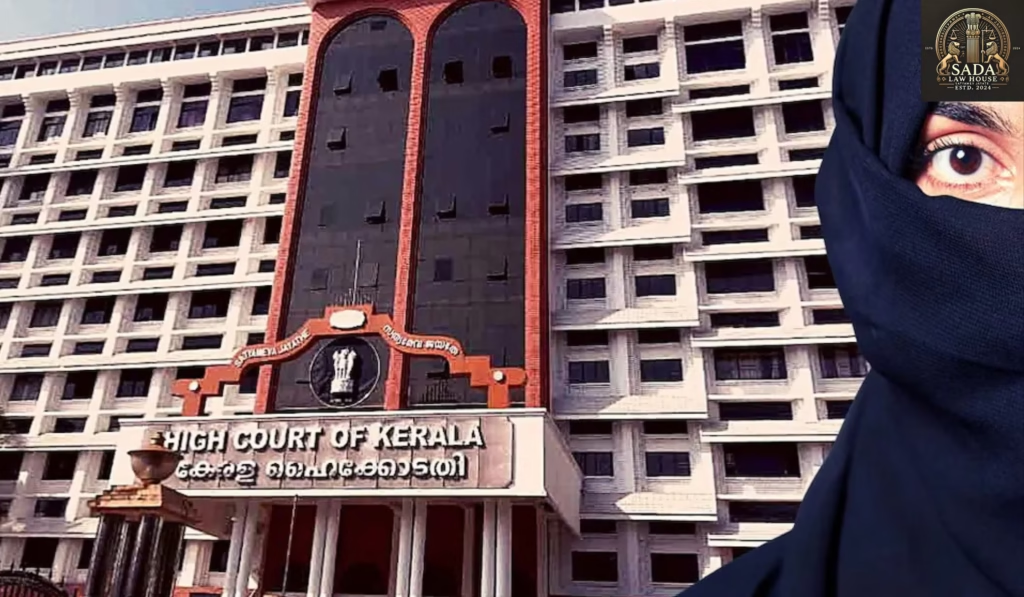
Kerala High Court Empowers Muslim Women: Khula Divorce Valid Without Husband’s Consent

Trending Today Kerala High Court Empowers Muslim Women: Khula Divorce Valid Without Husband’s Consent Orissa High Court Slams ‘Bulldozer Justice’, Orders ₹2 Lakh Salary Recovery from Tahasildar for Illegal Demolition LEGAL JOB OPPORTUNITY AT DMD ADVOCATES LEGAL JOB OPPORTUNITY AT SINGHANIA & PARTNERS LEGAL JOB OPPORTUNITY AT K.L.E. SOCIETY’S LAW COLLEGES JOB OPPORTUNITY AT S.S. JAIN SUBODH LAW COLLEGE, JAIPUR LEGAL INTERNSHIP OPPORTUNITY AT EQUATOR LAW CHAMBERS, NEW DELHI LEGAL JOB OPPORTUNITY AT DEEPAK UPADHYAY, DELHI & NOIDA LEGAL INTERNSHIP OPPORTUNITY AT APPAREL GROUP INDIA Supreme Court Probes Air India Crash: Safety Lapses, Legal Action, and Aviation Reforms Kerala High Court Empowers Muslim Women: Khula Divorce Valid Without Husband’s Consent KASHISH JAHAN 27 June 2025 The Kerala High Court has ruled that Muslim women have the right to divorce through khula without their husband’s consent, marking a major win for gender equality and personal law reform in India. Progressive Interpretation of Muslim Personal Law In a groundbreaking judgment, the Kerala High Court has affirmed a Muslim woman’s right to independently seek divorce through khula, even without her husband’s consent. This historic ruling is being recognized as a significant advancement for women’s rights and gender justice within the framework of religious personal laws in India. Understanding the Legal Case: Cruelty and Compatibility Issues The case centered around a Muslim woman who filed for divorce citing cruelty and incompatibility in her marriage. However, the lower family court denied her petition, stating that her husband’s consent was necessary under Muslim Personal Law. Challenging this interpretation, the woman escalated the matter to the High Court. High Court’s Ruling: A Woman’s Inalienable Right to Divorce The division bench of the Kerala High Court, drawing from Quranic teachings and previous decisions by the Supreme Court of India, ruled that a Muslim woman has an absolute and unconditional right to end her marriage through khula. The court emphasized that principles of personal dignity, freedom, and gender equality must guide the modern interpretation of religious laws in a secular, democratic nation like India. Implications for Gender Equality and Legal Reform This landmark decision sets a vital precedent for gender-equal applications of personal law and adds momentum to the broader discourse surrounding the proposed Uniform Civil Code (UCC). It also empowers Muslim women across India by reaffirming their legal autonomy and rights within marriage and divorce laws. Leave a Reply Cancel Reply Logged in as Sada Law. Edit your profile. Log out? Required fields are marked * Message* Live Cases Kerala High Court Empowers Muslim Women: Khula Divorce Valid Without Husband’s Consent Sada Law • June 27, 2025 • Live cases • No Comments Orissa High Court Slams ‘Bulldozer Justice’, Orders ₹2 Lakh Salary Recovery from Tahasildar for Illegal Demolition Sada Law • June 27, 2025 • Live cases • No Comments Supreme Court Probes Air India Crash: Safety Lapses, Legal Action, and Aviation Reforms Sada Law • June 25, 2025 • Live cases • No Comments 1 2 3 … 5 Next »

Kerala High Court Empowers Muslim Women: Khula Divorce Valid Without Husband’s Consent Read More »

Orissa High Court Slams ‘Bulldozer Justice’, Orders ₹2 Lakh Salary Recovery from Tahasildar for Illegal Demolition

Trending Today Orissa High Court Slams ‘Bulldozer Justice’, Orders ₹2 Lakh Salary Recovery from Tahasildar for Illegal Demolition LEGAL JOB OPPORTUNITY AT DMD ADVOCATES LEGAL JOB OPPORTUNITY AT SINGHANIA & PARTNERS LEGAL JOB OPPORTUNITY AT K.L.E. SOCIETY’S LAW COLLEGES JOB OPPORTUNITY AT S.S. JAIN SUBODH LAW COLLEGE, JAIPUR LEGAL INTERNSHIP OPPORTUNITY AT EQUATOR LAW CHAMBERS, NEW DELHI LEGAL JOB OPPORTUNITY AT DEEPAK UPADHYAY, DELHI & NOIDA LEGAL INTERNSHIP OPPORTUNITY AT APPAREL GROUP INDIA Supreme Court Probes Air India Crash: Safety Lapses, Legal Action, and Aviation Reforms Karnataka High Court Mandates Full Digitisation of Land Acquisition to Curb Corruption and Delays Orissa High Court Slams ‘Bulldozer Justice’, Orders ₹2 Lakh Salary Recovery from Tahasildar for Illegal Demolition PRABHAT KUMAR BILTORIA 27 June 2025 The Orissa High Court has ordered a ₹2 lakh deduction from a Tahasildar’s salary for an unlawful demolition in Dharmasala, reinforcing constitutional rights and condemning bulldozer justice. Orissa High Court Cracks Down on Bulldozer Justice: Tahasildar Fined ₹2 Lakh for Illegal Demolition In a powerful verdict upholding constitutional safeguards and due process, the Orissa High Court has ordered a ₹2 lakh salary recovery from a Tahasildar responsible for an illegal demolition in Dharmasala, Odisha. The Court condemned the act as part of a “troubling pattern of bulldozer justice” and ruled it a violation of constitutional protections under Article 21 of the Indian Constitution. Unlawful Eviction Without Due Process The incident involved the demolition of residential structures without issuing prior notices or conducting a fair hearing. The High Court found that eviction notices were served arbitrarily, bypassing the essential legal steps that ensure justice and administrative transparency. Key Legal Violations Identified According to the court, the demolition violated the principles of due process and amounted to arbitrary state action. The judgment emphasized that any demolition must comply with the following procedures: Issuing legally valid show-cause notices Allowing affected residents a proper opportunity to respond Ensuring oversight by appropriate administrative or judicial authorities Court Declares Demolition Notices Illegal The bench declared the demolition notices, specifically Annexure 6, to be legally invalid and ordered an immediate halt to any further evictions until proper legal channels are followed. This ruling aligns with previous directions by the Supreme Court of India, which has consistently criticized demolitions executed without due process. Personal Liability for State Officials Holding state officials personally accountable, the High Court ordered the recovery of ₹2 lakh from the Tahasildar’s salary. This sends a clear message that bureaucrats cannot bypass legal procedures or infringe on the fundamental rights of citizens under the guise of administrative action. A National Pattern of Judicial Pushback This ruling is consistent with a broader trend in Indian jurisprudence. Courts including the Allahabad High Court and Uttarakhand High Court have issued similar rulings, condemning “bulldozer politics” and ensuring that victims of arbitrary demolitions are compensated. Reinforcing Constitutional Values The judgment reinforces key democratic and legal principles: Upholds due process for all constructions, even unauthorized ones Protects against administrative overreach by demanding judicial scrutiny Strengthens rule of law by limiting unchecked executive actions A Landmark Victory for Civil Rights in Odisha This ruling is a significant win for civil liberties and judicial accountability in Odisha. It makes it unequivocally clear: no public servant—regardless of rank—has the authority to circumvent constitutional rights in the name of enforcement. Leave a Reply Cancel Reply Logged in as Sada Law. Edit your profile. Log out? Required fields are marked * Message* Live Cases Orissa High Court Slams ‘Bulldozer Justice’, Orders ₹2 Lakh Salary Recovery from Tahasildar for Illegal Demolition Sada Law • June 27, 2025 • Live cases • No Comments Supreme Court Probes Air India Crash: Safety Lapses, Legal Action, and Aviation Reforms Sada Law • June 25, 2025 • Live cases • No Comments Karnataka High Court Mandates Full Digitisation of Land Acquisition to Curb Corruption and Delays Sada Law • June 25, 2025 • Live cases • No Comments 1 2 3 … 5 Next »

Orissa High Court Slams ‘Bulldozer Justice’, Orders ₹2 Lakh Salary Recovery from Tahasildar for Illegal Demolition Read More »

Supreme Court Slams Misuse of UP Gangsters Act, Demands Accountability from Uttar Pradesh Government

Trending Today Supreme Court Slams Misuse of UP Gangsters Act, Demands Accountability from Uttar Pradesh Government Delhi High Court Orders Ghadi Detergent to Remove Disparaging Surf Excel Remarks from Ads Supreme Court Petition Seeks Immediate Suspension of Air India’s Boeing Fleet Over Safety Concerns Supreme Court Refuses Urgent Listing of Hany Babu’s Bail Clarification Plea in Bhima Koregaon Case Supreme Court Clarifies Azure–PPL Copyright Stay: No Impact on Third Parties Bombay High Court Quashes 306 IPC FIR in Loan-Linked Suicide Case, Cites Lack of Instigation Punjab–Haryana High Court Rejects PIL Against Online Betting Ads, Citing Statutory Remedies Under Gambling Law Supreme Court Reserves Interim Order on Waqf (Amendment) Act, 2025: Key Legal and Constitutional Highlights HDFC Bank CEO Sashidhar Jagdishan Moves Bombay HC to Quash FIR in ₹2 Crore Bribery Case Filed by Lilavati Trust IPS Officer’s Husband Arrested in ₹7.2 Crore BMC Redevelopment Scam: Mumbai EOW Crackdown Sparks Integrity Debate Supreme Court Slams Misuse of UP Gangsters Act, Demands Accountability from Uttar Pradesh Government KASHISH JAHAN 25 June 2025 The Supreme Court of India has reprimanded the Uttar Pradesh government for misuse of the UP Gangsters Act, raising crucial concerns about preventive detention, civil liberties, and legal reform in India. Supreme Court of India Slams Misuse of UP Gangsters Act In a significant move for the protection of civil liberties, the Supreme Court of India has strongly criticized the Uttar Pradesh government for its rampant misuse of the Uttar Pradesh Gangsters and Anti-Social Activities (Prevention) Act. This landmark intervention could influence how preventive detention laws are enforced across the country. Widespread Abuse of Preventive Laws in Uttar Pradesh Multiple petitions filed in the Supreme Court exposed an alarming pattern: ordinary citizens—such as farmers, small traders, and activists—were charged under the UP Gangsters Act without any legitimate evidence of involvement in organized crime. Petitioners alleged that the Act had been weaponized to target political opponents, settle personal vendettas, and suppress dissent. Shockingly, data revealed that over 70% of those arrested under the Act were eventually acquitted or had charges dropped due to lack of evidence. Justice Sanjiv Khanna Raises Red Flags The bench, headed by Justice Sanjiv Khanna, voiced serious concern about the growing misuse of preventive laws. Originally designed to counter organized criminal activities, the law had been distorted to unjustly detain innocent civilians. The court directed the state government to submit a list of all cases filed under the Act over the past five years, along with the justification for each arrest. It also indicated that it may issue formal guidelines to restrict the arbitrary use of such draconian laws. Constitutional Implications and Fundamental Rights This case brings into sharp focus the conflict between national security interests and the fundamental rights enshrined under Part III of the Constitution of India. According to legal experts, the final ruling may clarify constitutional boundaries on the state’s power to implement preventive detention and provide stronger protections against wrongful incarceration. It also renews urgent calls for police reforms and greater judicial oversight of executive power. What Happens Next? The Supreme Court will revisit the matter in July 2025, at which point it will examine the data provided by the Uttar Pradesh government. Civil rights activists are optimistic that the case will lead to meaningful legal reform and greater transparency in the use of laws that enable preventive detention. Leave a Reply Cancel Reply Logged in as Sada Law. Edit your profile. Log out? Required fields are marked * Message* Live Cases Supreme Court Slams Misuse of UP Gangsters Act, Demands Accountability from Uttar Pradesh Government Sada Law • June 25, 2025 • Live cases • No Comments Delhi High Court Orders Ghadi Detergent to Remove Disparaging Surf Excel Remarks from Ads Sada Law • June 25, 2025 • Live cases • No Comments Supreme Court Petition Seeks Immediate Suspension of Air India’s Boeing Fleet Over Safety Concerns Sada Law • June 25, 2025 • Live cases • No Comments 1 2 3 … 5 Next »

Supreme Court Slams Misuse of UP Gangsters Act, Demands Accountability from Uttar Pradesh Government Read More »

Madras High Court Halts ED Proceedings Against Film Producer, Cites Lack of Jurisdiction and Orders Return of Seized Items

Trending Today Madras High Court Halts ED Proceedings Against Film Producer, Cites Lack of Jurisdiction and Orders Return of Seized Items CLAT PG Candidate Challenges ₹30,000 Counselling Fee in Delhi High Court, Cites Financial Hardship Bombay High Court Pushes for Swift Resolution in Sony vs Tata Play Licensing Dispute Operation Thunder: How Nagpur is Leading India’s War Against Drugs with Tech and Community Power INTERNSHIP OPPORTUNITY AT LAWKARI LEGAL JOB OPPORTUNITY AT JURIDICA SOLUTION LEGAL JOB OPPORTUNITY AT ATREUS LAW FIRM LEGAL JOB OPPORTUNITY AT SG BANK, MUMBAI LEGAL JOB OPPORTUNITY AT RELIANCE INDUSTRIES LIMITED, NAVI MUMBAI LEGAL JOB OPPORTUNITY AT KKR, GURUGRAM Madras High Court Halts ED Proceedings Against Film Producer, Cites Lack of Jurisdiction and Orders Return of Seized Items PRABHAT KUMAR BILTORIA 20 June 2025 The Madras High Court halts Enforcement Directorate actions against film producer Akash Bhaskaran and businessman Vikram Ravindran, citing lack of jurisdiction and orders immediate return of seized items. Learn how this ruling impacts ED’s authority. Madras High Court Halts ED Proceedings Against Film Producer In a significant judicial development on June 20, 2025, the Madras High Court put a stay on all actions initiated by the Enforcement Directorate (ED) against prominent film producer Akash Bhaskaran and businessman Vikram Ravindran. The court ordered the ED to return all items seized during their searches, declaring that the investigative agency acted without legal jurisdiction. Court Rules ED Search Unauthorized The judicial bench, comprising Justice MS Ramesh and Justice V Lakshminarayan, emphasized that the basis of the ED’s raids lacked credible evidence. According to the judges, the materials presented by the ED did not demonstrate any grounds for investigation or seizure. “At first glance, the respondents’ authorization and search are entirely outside their jurisdiction because no incriminating material was present,” the bench observed. ED’s Request for Appeal Rejected Despite efforts by Additional Solicitor General (ASG) SV Raju to secure a three-week stay on the order for an appeal, the court denied the request. The court made it clear that continuing ED activity would contradict its ruling. Phones Seized by ED: Cloning Request Denied ED’s Special Public Prosecutor Zoheb Hussain informed the court that some mobile phones seized from the petitioners had not been cloned. He requested permission to do so before returning them. The court rejected this, stating that any further action would undermine the integrity of its ruling. ED Admits to Overstepping Authority During the previous hearing, the court questioned whether the ED could legally seal premises that were closed during a search. The ED admitted it had no authority to do so. The agency also informed the bench that it was prepared to withdraw the notices issued to the petitioners, further supporting the claim that the search was unwarranted. Leave a Reply Cancel Reply Logged in as Sada Law. Edit your profile. Log out? Required fields are marked * Message* Live Cases Madras High Court Halts ED Proceedings Against Film Producer, Cites Lack of Jurisdiction and Orders Return of Seized Items Sada Law • June 20, 2025 • Live cases • No Comments CLAT PG Candidate Challenges ₹30,000 Counselling Fee in Delhi High Court, Cites Financial Hardship Sada Law • June 20, 2025 • Live cases • No Comments Bombay High Court Pushes for Swift Resolution in Sony vs Tata Play Licensing Dispute Sada Law • June 20, 2025 • Live cases • No Comments 1 2 3 … 5 Next »

Madras High Court Halts ED Proceedings Against Film Producer, Cites Lack of Jurisdiction and Orders Return of Seized Items Read More »

Supreme Court Slams Karnataka High Court Over Thug Life Ban, Defends Kamal Haasan’s Free Speech

Trending Today Supreme Court Slams Karnataka High Court Over Thug Life Ban, Defends Kamal Haasan’s Free Speech Lucknow Court Sentences Woman for Filing False SC/ST Gangrape Case, Highlights Misuse of Protective Laws ED Moves to Fast-Track Charges Against Lalu Prasad Yadav and Family in IRCTC Scam and Land-for-Jobs Case Chhattisgarh High Court Orders ₹2 Lakh Compensation in Custodial Death Case, Cites Police Misconduct Supreme Court Rules Title Deed Essential for Property Ownership in Landmark Judgment Mehul Choksi Sues Indian Government in London Over Alleged Abduction From Antigua Supreme Court Stays Contempt Proceedings Against Bengal Police Officers Over 2019 Howrah Lathicharge Incident JOB OPPORTUNITY AT GREENFINCH LEGAL SERVICES PVT. LTD., ANDHRA PRADESH LEGAL JOB OPPORTUNITY AT BURGEON LAW Tamil Nadu ADGP Arrested Following Madras High Court Order in Teenage Abduction Case Involving MLA Supreme Court Slams Karnataka High Court Over Thug Life Ban, Defends Kamal Haasan’s Free Speech PRABHAT KUMAR BILTORIA 19 June 2025 The Supreme Court of India rebukes the Karnataka High Court over the proposed ban on Thug Life, defending Kamal Haasan’s freedom of expression and condemning mob threats. Learn how this ruling reinforces the rule of law and artistic freedom in Indian cinema. Supreme Court Defends Kamal Haasan and Criticizes Thug Life Ban in Karnataka On June 18, 2025, the Supreme Court of India strongly criticized the proposed ban on the Tamil film Thug Life in Karnataka, starring acclaimed actor Kamal Haasan. The apex court condemned the pressure from groups attempting to suppress the film’s release over alleged controversial remarks made by Haasan. Supreme Court: Rule of Law Must Prevail Over Mob Intimidation The bench emphasized that the rule of law cannot be overridden by threats from “groups of hooligans.” The justices stated firmly that public disagreement should be expressed through civil discourse—not through threats of violence or cinema vandalism. “If someone has made a statement, counter it with another statement. You cannot threaten to burn down theatres,” the court remarked. Freedom of Expression is Fundamental, Says the Bench While recognizing that residents of Karnataka and Bengaluru may oppose Kamal Haasan’s statements, the court insisted that constitutional freedoms must be upheld. The right to dissent does not justify intimidation or coercion. “If the enlightened individuals of Karnataka believe Haasan was wrong, they can respond publicly—not with threats,” the court noted. SC Questions Karnataka High Court’s Role in Seeking Apology The Supreme Court transferred the plea submitted by Thug Life’s producer from the Karnataka High Court and requested a response from the state government. The justices expressed concern over the High Court’s alleged suggestion that Kamal Haasan apologize to diffuse the controversy. “Why should the High Court ask for an apology? That is not its function,” the bench asserted. Film Certified by CBFC Must Be Allowed to Release Reiterating legal precedent, the court stated that any film cleared by the Central Board of Film Certification (CBFC) must be permitted to release nationwide. Citizens may choose to watch—or not watch—the film, but no one has the right to block its release through threats. “We cannot let mob mentality dictate the release of films,” the court declared. Previous Rulings Reaffirm Artistic Freedom in India To reinforce its judgment, the court cited past decisions, including the Bombay High Court verdict on the Mi Nathuram Boltoy play and a case involving Imran Pratapgarhi. These precedents emphasize the importance of protecting diverse opinions in a democracy. “We Are the Custodians of the Rule of Law” The Supreme Court concluded with a strong reminder of its duty: to uphold constitutional values and defend free speech. It reaffirmed that judicial institutions must protect filmmakers and artists from unlawful censorship. “We are the custodians of the rule of law. That is the purpose of the Supreme Court,” the bench concluded. Leave a Reply Cancel Reply Logged in as Sada Law. Edit your profile. Log out? Required fields are marked * Message* Live Cases Supreme Court Slams Karnataka High Court Over Thug Life Ban, Defends Kamal Haasan’s Free Speech Sada Law • June 19, 2025 • Live cases • No Comments Lucknow Court Sentences Woman for Filing False SC/ST Gangrape Case, Highlights Misuse of Protective Laws Sada Law • June 19, 2025 • Live cases • No Comments ED Moves to Fast-Track Charges Against Lalu Prasad Yadav and Family in IRCTC Scam and Land-for-Jobs Case Sada Law • June 19, 2025 • Live cases • No Comments 1 2 3 … 5 Next »

Supreme Court Slams Karnataka High Court Over Thug Life Ban, Defends Kamal Haasan’s Free Speech Read More »

Supreme Court Stays Contempt Proceedings Against Bengal Police Officers Over 2019 Howrah Lathicharge Incident

Trending Today Supreme Court Stays Contempt Proceedings Against Bengal Police Officers Over 2019 Howrah Lathicharge Incident JOB OPPORTUNITY AT GREENFINCH LEGAL SERVICES PVT. LTD., ANDHRA PRADESH LEGAL JOB OPPORTUNITY AT BURGEON LAW Tamil Nadu ADGP Arrested Following Madras High Court Order in Teenage Abduction Case Involving MLA LEGAL JOB OPPORTUNITY AT A. K. SINGH & ASSOCIATES, MUMBAI LEGAL JOB OPPORTUNITY AT ZIMYO, GURUGRAM CALL FOR BLOGS BY LAWFUL LEGAL Supreme Court Judgment on SBI vs Rajesh Agarwal: Borrowers’ Right to Hearing Under SARFAESI Act and RBI Fraud Classification Guidelines Supreme Court Judgment on Enforcement Directorate v. Kapil Wadhawan: Interpretation of Remand Date for Default Bail under Section 167(2) CrPC Supreme Court Upholds Bar Council of India’s Power to Conduct AIBE; Overrules V. Sudeer Judgment Supreme Court Stays Contempt Proceedings Against Bengal Police Officers Over 2019 Howrah Lathicharge Incident PRABHAT KUMAR BILTORIA 19 June 2025 The Supreme Court of India has issued an interim stay on contempt proceedings against six West Bengal police officers related to the 2019 Howrah lathicharge incident. Learn more about the case, key developments, and legal implications. Overview of the Supreme Court’s Interim Stay On Monday, the Supreme Court of India granted an interim stay on the contempt proceedings initiated by the Calcutta High Court against six senior police officials from West Bengal. Among those named are four IPS officers and the Howrah Police Commissioner. Background: The 2019 Howrah Municipal Incident The case dates back to 2019 when police used a lathicharge during a protest at the Howrah Municipal Corporation. The demonstration, which was related to a parking dispute, reportedly resulted in several lawyers being injured. Following the incident, the High Court took suo motu cognizance and initiated contempt proceedings. High Court’s Summons and Legal Developments In response to the alleged police misconduct, the Calcutta High Court summoned the officers to appear on June 25. Notices were also issued to the West Bengal government, the Registrar General of the High Court, and other relevant parties, requiring them to file their responses within six weeks. Arguments Presented in the Supreme Court Senior Advocate Sidharth Luthra, representing the petitioners, argued that the contempt proceedings were initiated via a suo motu writ petition without due cause. Recognizing the complexity and seriousness of the issue, the Supreme Court issued formal notices and stayed the proceedings to allow time for comprehensive review. Ram Janmabhoomi Case Reference During the hearing, the bench referred to the precedent set in the Ram Janmabhoomi case, where action against IAS officers was withheld due to a lack of charges for over a year. This comparison further underscored the need for careful judicial scrutiny before moving forward. Current Status and What Lies Ahead The Supreme Court concluded that the matter “needs to be heard” and granted a six-week window for replies from all involved parties. Until then, all further proceedings have been officially stayed. Leave a Reply Cancel Reply Logged in as Sada Law. Edit your profile. Log out? Required fields are marked * Message* Live Cases Supreme Court Stays Contempt Proceedings Against Bengal Police Officers Over 2019 Howrah Lathicharge Incident Sada Law • June 19, 2025 • Live cases • No Comments Tamil Nadu ADGP Arrested Following Madras High Court Order in Teenage Abduction Case Involving MLA Sada Law • June 19, 2025 • Live cases • No Comments US Court Convicts 6 NRIs in $15 Million Hawala Scam Tied to Dark Web and Money Laundering Sada Law • June 17, 2025 • Live cases • No Comments 1 2 3 … 5 Next »

Supreme Court Stays Contempt Proceedings Against Bengal Police Officers Over 2019 Howrah Lathicharge Incident Read More »

Supreme Court: Absconding Alone Doesn’t Prove Guilt but Is Relevant Under Evidence Act Section 8

Trending Today Supreme Court: Absconding Alone Doesn’t Prove Guilt but Is Relevant Under Evidence Act Section 8 Review Petition Challenges Supreme Court’s 3-Year Practice Rule for Judicial Services Entry INTERNSHIP OPPORTUNITY AT TRUEBLUE LEGALS, KANDIVALI OFFICE, MUMBAI JOB OPPORTUNITY AT ANOMA LEGAL LEGAL INTERNSHIP OPPORTUNITY AT PRANAY JOSHI ADVOCATE & ASSOCIATES LEGAL INTERNSHIP OPPORTUNITY AT VRG LEGAL Supreme Court Clarifies Res Judicata Principle Applies to Various Phases of Identical Proceedings LEGAL JOB OPPORTUNITY AT JADON LAW CHAMBERS Uttarakhand High Court Quashes Summons Against Patanjali and Baba Ramdev Over Misleading Ads Case LEGAL JOB OPPORTUNITY AT PINK SAMURA Supreme Court: Absconding Alone Doesn’t Prove Guilt but Is Relevant Under Evidence Act Section 8 PRABHAT KUMAR BILTORIA 17 June 2025 Absconding after a crime doesn’t prove guilt on its own, but as per the Supreme Court of India, it is a relevant fact under Section 8 of the Indian Evidence Act. Learn how behavioral evidence and last-seen theories influence murder convictions in Indian criminal law. Understanding the Role of Absconding in Criminal Cases The Supreme Court of India has reaffirmed that simply fleeing from the scene of a crime does not, by itself, establish guilt. However, such behavior is considered a relevant fact under Section 8 of the Indian Evidence Act, especially when the accused fails to offer a reasonable explanation for their absence. Judicial Interpretation by Justices Surya Kant and N. Kotiswar Singh In a recent case, the bench of Justices Surya Kant and N. Kotiswar Singh upheld a murder conviction, noting that the accused was last seen with the deceased before going missing. His failure to account for his sudden disappearance added weight to the prosecution’s argument, especially when supported by forensic evidence and the recovery of the murder weapon. Absconding vs. Instinctive Fear: A Legal Distinction While the instinct for self-preservation might drive even innocent individuals to flee under suspicion, the court emphasized that absconding can reflect a guilty mind when examined alongside other circumstances. As clarified under the Indian Evidence Act of 1872, absconding is a piece of conduct evidence that must be evaluated in context. Citing Legal Precedents: Matru v. State of Uttar Pradesh The Court referenced the case of Matru @ Girish Chandra vs. State of Uttar Pradesh (1971), where it was stated that such conduct “strengthens the needle of suspicion.” This precedent reinforces that while absconding alone does not prove guilt, it is a vital piece of the evidentiary puzzle. Case Details: Timeline and Behavioral Evidence In this case, the appellant was last seen with the deceased on 10 July 2006 and absconded from 11 July to 22 July 2006. During this period, he misled companions and gave false information to the deceased’s family. This deceptive behavior, when coupled with the discovery of the firearm and scientific proof connecting it to the murder, painted a compelling narrative of guilt. Why Absconding Matters When Supported by Other Evidence The Supreme Court concluded that the appellant’s failure to explain his escape, along with corroborating evidence—such as last-seen theory, motive, and weapon recovery—solidified the prosecution’s case. The appeal was dismissed, and the murder conviction was upheld. Leave a Reply Cancel Reply Logged in as Sada Law. Edit your profile. Log out? Required fields are marked * Message* Live Cases Supreme Court: Absconding Alone Doesn’t Prove Guilt but Is Relevant Under Evidence Act Section 8 Sada Law • June 17, 2025 • Live cases • No Comments Review Petition Challenges Supreme Court’s 3-Year Practice Rule for Judicial Services Entry Sada Law • June 17, 2025 • Live cases • No Comments Supreme Court Clarifies Res Judicata Principle Applies to Various Phases of Identical Proceedings Sada Law • June 16, 2025 • Live cases • No Comments 1 2 3 … 5 Next »

Supreme Court: Absconding Alone Doesn’t Prove Guilt but Is Relevant Under Evidence Act Section 8 Read More »

Supreme Court Clarifies Res Judicata Principle Applies to Various Phases of Identical Proceedings

Trending Today Supreme Court Clarifies Res Judicata Principle Applies to Various Phases of Identical Proceedings LEGAL JOB OPPORTUNITY AT JADON LAW CHAMBERS Uttarakhand High Court Quashes Summons Against Patanjali and Baba Ramdev Over Misleading Ads Case LEGAL JOB OPPORTUNITY AT PINK SAMURA LEGAL JOB OPPORTUNITY AT AGROSTAR Madras High Court Seeks Centre’s Stand on Uniform Civil Code in Tamil Nadu INTERNSHIP OPPORTUNITY AT PEEPALCO Uttarakhand High Court Orders Urgent Action on Prison Remissions for Life-Term Convicts, Pushing Prison Reform Custodial Death of Somnath Suryawanshi: Bombay High Court Urged to Order Court-Monitored SIT Probe One Nation, One Election: A Constitutional Reform or Threat to India’s Federalism? Supreme Court Clarifies Res Judicata Principle Applies to Various Phases of Identical Proceedings Prabhat Kumar Biltoria 16 June 2025 Supreme Court rules that the res judicata principle applies to various phases of identical proceedings, reinforcing finality in civil litigation and barring repeated objections to impleadment under CPC Order I Rule 10. Understanding the Res Judicata Principle in Indian Civil Law The Supreme Court of India recently clarified that the res judicata principle is applicable not only across different proceedings but also at various phases within the same legal proceeding. This landmark judgment reinforces the finality of judicial decisions and prevents repeated litigation on the same issues. Key Supreme Court Judgment on Res Judicata and Impleadment Background of the Case In a significant ruling, a bench comprising Justices JB Pardiwala and R Mahadevan upheld the Kerala High Court’s decision that dismissed an application under Order I Rule 10 of the Civil Procedure Code (CPC). The application sought to object to the impleadment of a legal heir at a late stage, despite the opportunity to raise such objections earlier. Court’s Reasoning The Court emphasized that once the trial court issued an order to implead a legal heir after a proper inquiry under Order XII Rule 4 CPC, any subsequent objections were barred by the doctrine of constructive res judicata, as per Explanation IV, Section 11 CPC. This principle prohibits re-litigation of matters that have already been decided or could have been decided. The bench cited the precedent set in Bhanu Kumar Jain v. Archana Kumar (2005) 1 SCC 787, noting: “The principles of res judicata apply not only to two different proceedings but also to different stages of the same proceeding.” Finality of Impleadment Decision Since the appellant did not object or file a revision against the impleadment order earlier, the Court ruled that the matter had reached finality. Consequently, the later attempt to remove the appellant from the list of parties was rightly dismissed as barred by res judicata. What This Means for Civil Litigation in India Res Judicata Applies Within the Same Proceeding: This ruling confirms that objections or disputes cannot be raised repeatedly at different stages of the same case. Importance of Timely Objections: Parties must raise objections during the proper phase; failure to do so will bar them from raising the same issues later. Finality of Orders on Impleadment: Once a legal heir is impleaded following due inquiry, that decision is binding and cannot be contested repeatedly. Conclusion The Supreme Court’s decision strengthens the doctrine of res judicata, ensuring judicial efficiency by avoiding unnecessary delays and repetitive litigation. Litigants and legal practitioners should take note that timely objections and challenges are crucial to protect their rights during civil proceedings. Leave a Reply Cancel Reply Logged in as Sada Law. Edit your profile. Log out? Required fields are marked * Message* Case Laws Supreme Court Affirms Right to Anticipatory Bail Across States in Matrimonial Disputes: Priya Indoria v. State of Karnataka (2023) Sada Law • June 13, 2025 • Case law • No Comments Supreme Court Rules on Governor’s Limited Discretion to Withhold Assent and Summon Punjab Legislative Assembly | State of Punjab v. Principal Secretary (2023) Sada Law • June 13, 2025 • Case law • No Comments Supreme Court Judgment on Chargesheets: Not Public Documents, No Mandatory Online Upload by Investigating Agencies | Saurav Das v. Union of India (2023) Sada Law • June 13, 2025 • Case law • No Comments 1 2 3 … 5 Next »

Supreme Court Clarifies Res Judicata Principle Applies to Various Phases of Identical Proceedings Read More »

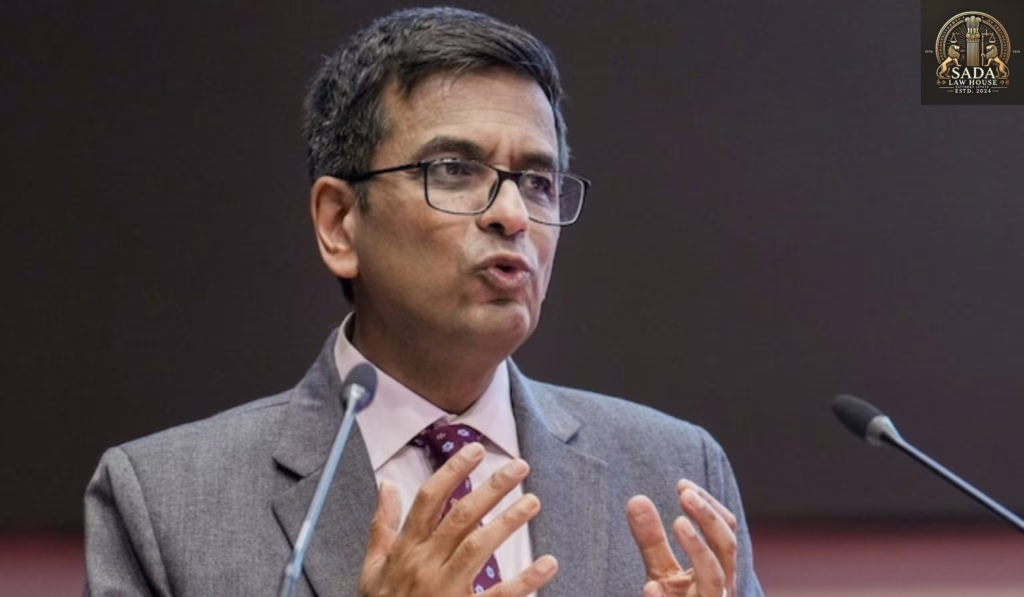
President Approves Inquiry Into Former CJI D Y Chandrachud Over Alleged Misuse of Power

Trending Today President Approves Inquiry Into Former CJI D Y Chandrachud Over Alleged Misuse of Power Bokaro Launches Mobile Land Court to Deliver Justice in Rural Jharkhand Supreme Court Questions Centre on Surrogacy Rules 2023: Challenge Highlights Reproductive Rights and Constitutional Concerns Delhi High Court Restrains Unauthorized Use of “TATA” Trademark in Domain Names Bombay High Court Halts BMC Demolition Over Alleged Illegal Structures Amid Procedural Dispute Madras High Court Seeks Tamil Nadu’s Response on Facial Recognition in Policing Amid Privacy Concerns Madras High Court Seeks Tamil Nadu Govt’s Response on PIL Challenging Facial Recognition in Policing Supreme Court Affirms Maternity Leave as Constitutional Right, Even for Third Child Supreme Court Grants Bail to Bengaluru Stampede Executives, Emphasizes Due Process and Fair Arrests Supreme Court Stays ₹317 Crore VAT Demand on Antrix, Safeguarding India’s Space Commerce Growth President Approves Inquiry Into Former CJI DY Chandrachud Over Alleged Misuse of Power KASHISH JAHAN 16 June 2025 The President of India approves a historic inquiry into former Chief Justice D Y Chandrachud over allegations of power misuse. Explore its implications on judicial accountability, ethics, and India’s legal framework. President of India Approves Inquiry Against Former Chief Justice D Y Chandrachud In a groundbreaking and controversial move, the President of India has reportedly authorized an official inquiry into former Chief Justice of India Dr. D Y Chandrachud. This rare development has stirred intense national discourse around judicial accountability and the integrity of the Indian judiciary. The allegations concern the alleged misuse of administrative powers during his tenure, a matter that could significantly reshape discussions about ethics in India’s top courts. Allegations Triggering National Attention The complaint that led to this inquiry is centered around suspected abuse of authority in administrative decisions taken by the former CJI. While specific details remain undisclosed, sources claim the alleged irregularities may have impacted the overall judicial governance system in India. With the President’s nod, the matter now heads towards a potential investigation by the Central Bureau of Investigation (CBI), India’s top investigative agency. Judicial Independence vs. Accountability: A Constitutional Dilemma This situation raises pressing questions about the balance between judicial independence and constitutional accountability. India’s Constitution ensures protection for judicial officers, yet this incident highlights the need to scrutinize even the highest offices of justice. If the inquiry proceeds, it would mark the first time a former Chief Justice of India faces an officially sanctioned investigation of this nature — a landmark in the country’s legal history. Implications for India’s Legal and Ethical Framework Should the CBI or another authority initiate a formal probe, this case could set a powerful precedent for post-retirement judicial scrutiny. It challenges the effectiveness of existing constitutional safeguards meant to maintain the independence and dignity of the judiciary, while also ensuring justice is served when misconduct is suspected. The coming weeks may witness vigorous debates within the legal fraternity, with lasting impacts on judicial ethics and public trust in the justice system. A Defining Moment for Judicial Transparency This is a rare test of India’s judicial transparency and constitutional morality. As due process unfolds, maintaining fairness and respect for natural justice will be critical. The outcome of this case may not only determine Dr. Chandrachud’s legacy but also redefine the ethical standards and oversight mechanisms applied to India’s judiciary.   Leave a Reply Cancel Reply Logged in as Sada Law. Edit your profile. Log out? Required fields are marked * Message* Live Cases President Approves Inquiry Into Former CJI D Y Chandrachud Over Alleged Misuse of Power Sada Law • June 16, 2025 • Live cases • No Comments Bokaro Launches Mobile Land Court to Deliver Justice in Rural Jharkhand Sada Law • June 16, 2025 • Live cases • No Comments Supreme Court Questions Centre on Surrogacy Rules 2023: Challenge Highlights Reproductive Rights and Constitutional Concerns Sada Law • June 16, 2025 • Live cases • No Comments 1 2 3 … 5 Next »

President Approves Inquiry Into Former CJI D Y Chandrachud Over Alleged Misuse of Power Read More »

Kerala High Court Raises Alarm Over Microplastics in Food Delivery Containers and Potential Health Risks

Trending Today Kerala High Court Raises Alarm Over Microplastics in Food Delivery Containers and Potential Health Risks Delhi High Court Denies Bail to Kashmiri Separatist Leader Shabir Shah in UAPA Terror Case Supreme Court Seeks Karnataka’s Response on Thug Life Film Ban Amid Kamal Haasan Controversy Air India Flight AI171 Crash: 265 Dead, 1 Survivor in Ahmedabad Tragedy Involving Boeing 787 LEGAL INTERNSHIP OPPORTUNITY AT ADITI MOHONI LEGAL JOB OPPORTUNITY AT INDIAMART LEGAL INTERNSHIP OPPORTUNITY AT SHURUWAT FOUNDATION CALL FOR PAPERS BY JAI JAGAT SUMMIT INTERNSHIP OPPORTUNITY AT CHAMBERS OF SUSHANT SINGH ADV. LEGAL INTERNSHIP OPPORTUNITY AT LEGAL SOLUTIONS Kerala High Court Raises Alarm Over Microplastics in Food Delivery Containers and Potential Health Risks PRABHAT KUMAR BILTORIA 15 June 2025 The Kerala High Court has raised urgent concerns over the health risks of microplastics from plastic food delivery containers, urging a thorough investigation into their impact on food safety and public health. Kerala High Court Flags Microplastic Contamination in Food Delivery On June 13, 2025, the Kerala High Court expressed serious concerns about the widespread use of plastic containers in food delivery. The Court emphasized the growing danger of microplastic ingestion, especially when hot food is packed in plastic containers, raising significant health and safety questions. Food Delivery and Microplastics: A Threat to Public Health Presiding over the case Prasanna EV v. State of Kerala & Ors, Justice Devan Ramachandran called attention to the increasing reliance on food delivery services, particularly by children and youth. He warned that microplastics leach into food when hot items are stored in plastic containers, potentially leading to their ingestion by unsuspecting consumers. In a strong statement, the judge asked:“Are the plastic containers used for delivery safe? Little kids are relying on this food delivery. You should realize that microplastics are getting into your body.” Link Between Microplastics and Serious Health Conditions Justice Ramachandran pointed out that continuous consumption of food contaminated with microplastics could be linked to severe health conditions, including cancer and organ damage affecting the liver, lungs, colon, and intestines. These alarming claims underline the urgency of regulatory scrutiny and action. Directive for Investigation into Plastic Food Packaging In response to the issue, the Court directed the Additional Director General of Prosecution to investigate the practice of using plastic containers for food delivery and assess its health implications. The appointment was recommended by Mary Meera Joseph, a senior government pleader. Justice Ramachandran also acknowledged the assurance from Gracious Kuriakose, a senior counsel experienced in environmental and health matters, who confirmed that the issue will be thoroughly examined and reported back to the Court in the next hearing. Regulatory Oversight Needed on Plastic Use in Food Delivery The Court highlighted that current regulatory frameworks may not fully understand or address the long-term effects of microplastic exposure. The rising dependence on food delivery platforms calls for urgent reform in how food is packaged and delivered to consumers across India. Leave a Reply Cancel Reply Logged in as Sada Law. Edit your profile. Log out? Required fields are marked * Message* Live Cases Kerala High Court Raises Alarm Over Microplastics in Food Delivery Containers and Potential Health Risks Sada Law • June 15, 2025 • Live cases • No Comments Delhi High Court Denies Bail to Kashmiri Separatist Leader Shabir Shah in UAPA Terror Case Sada Law • June 15, 2025 • Live cases • No Comments Supreme Court Seeks Karnataka’s Response on Thug Life Film Ban Amid Kamal Haasan Controversy Sada Law • June 15, 2025 • Live cases • No Comments 1 2 3 … 5 Next »

Kerala High Court Raises Alarm Over Microplastics in Food Delivery Containers and Potential Health Risks Read More »