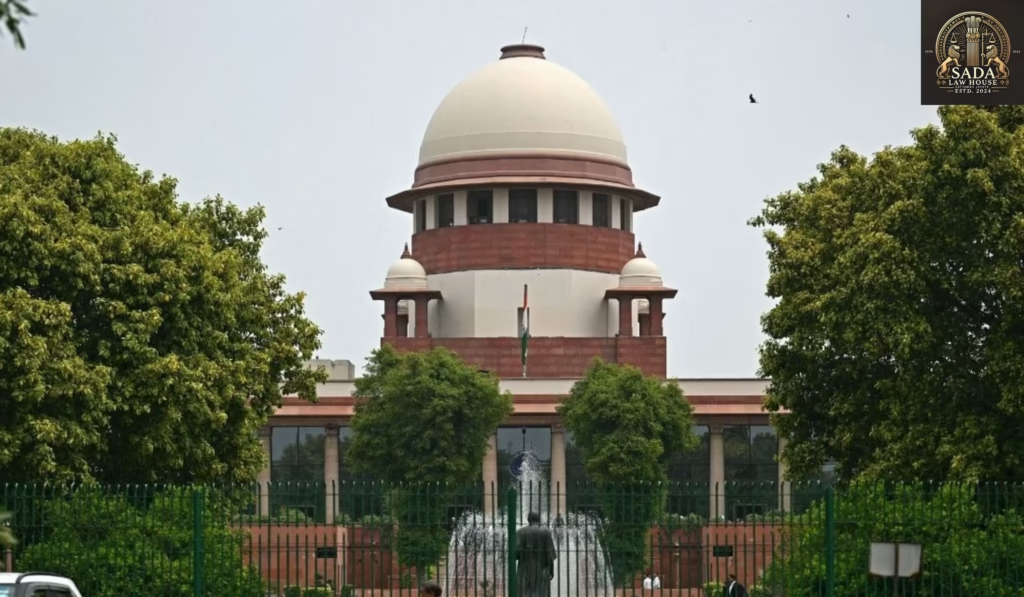
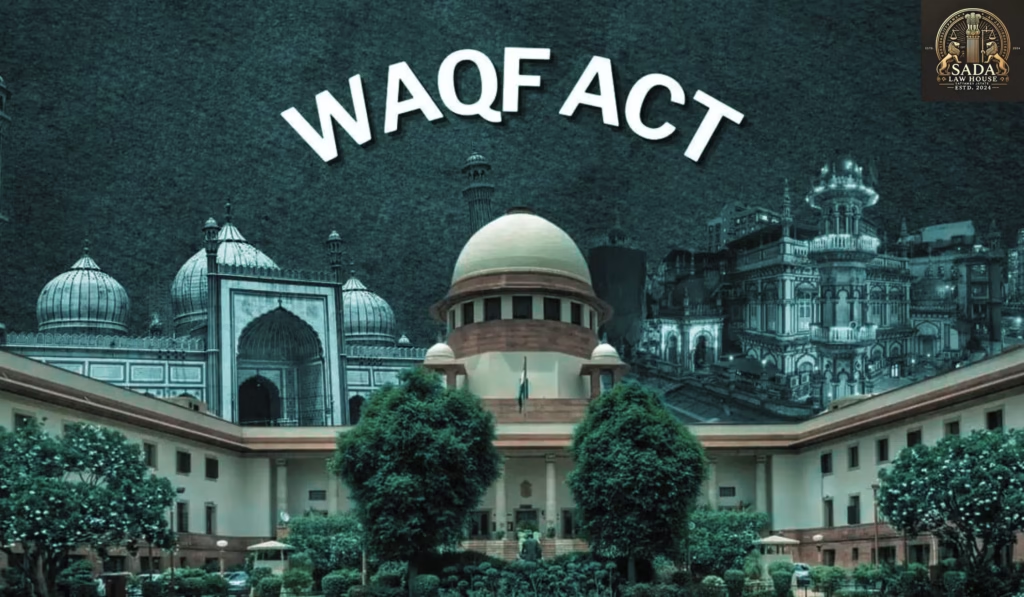
Supreme Court Reserves Interim Order on Waqf (Amendment) Act, 2025: Key Legal and Constitutional Highlights
Trending Today Supreme Court Reserves Interim Order on Waqf (Amendment) Act, 2025: Key Legal and Constitutional Highlights HDFC Bank CEO Sashidhar Jagdishan Moves Bombay HC to Quash FIR in ₹2 Crore Bribery Case Filed by Lilavati Trust IPS Officer’s Husband Arrested in ₹7.2 Crore BMC Redevelopment Scam: Mumbai EOW Crackdown Sparks Integrity Debate Bombay High Court Orders Strict Action Against Illegal Occupants in MHADA Transit Homes Ex-Lilavati Hospital Trustee Chetan Mehta Seeks Bombay High Court Relief in ₹1,243 Crore Fraud Case INTERNSHIP OPPORTUNITY AT CODITAS, PUNE LEGAL JOB OPPORTUNITY AT SARVAANK ASSOCIATES, BENGALURU LEGAL JOB OPPORTUNITY AT SULLAR LAW CHAMBERS, CHANDIGARH LEGAL JOB OPPORTUNITY AT PEOPLE PRIORITY HR PARTNERS, DELHI LEGAL JOB OPPORTUNITY AT GODREJ INDUSTRIES GROUP, MUMBAI Supreme Court Reserves Interim Order on Waqf (Amendment) Act, 2025: Key Legal and Constitutional Highlights KASHISH JAHAN 25 June 2025 The Supreme Court of India has reserved its interim order on the Waqf (Amendment) Act, 2025, after hearing key constitutional challenges. Explore the legal framework, major parties involved, and implications for religious and minority rights. Supreme Court Reserves Interim Order on Waqf (Amendment) Act, 2025 On May 22, 2025, a bench of the Supreme Court of India, comprising Chief Justice B.R. Gavai and Justice Augustine George Masih, reserved its interim order in the case In Re: Waqf (Amendment) Act, 2025. The court conducted three days of hearings on petitions challenging critical provisions of the Waqf Amendment, including rules around denotification, waqf-by-user, and Waqf Board composition. Legal Framework: Presumption of Constitutionality The Court reiterated the principle that all legislative statutes carry a strong presumption of constitutionality. Interim relief, such as a stay, demands a “very strong, glaring case.” Petitioners, represented by senior advocates, argued the amended Act is vague and infringes on constitutional guarantees like religious freedom and property rights. The government, defended by Solicitor General Tushar Mehta, emphasized the legal continuity of historical regulatory practices concerning waqf properties. Allegations: Executive Overreach into Waqf Assets The core allegation from the petitioners is that the Waqf (Amendment) Act, 2025, enables undue executive control over religious endowments. Specifically, the petitioners claimed the amendments authorize excessive government interference in denotification procedures and Waqf Board appointments. This could disproportionately affect the rights of the Muslim community, compromise minority religious autonomy, and endanger valuable heritage waqf properties. Key Individuals and Political Entities Involved Chief Justice B.R. Gavai & Justice A.G. Masih: Presided over the hearings Tushar Mehta: Argued in favor of the government Petitioners included: AIMIM Communist Party of India (CPI) Prominent Parliamentarian Asaduddin Owaisi Union of India: Argued for a limited review focused on only a few contentious clauses Case Developments: What Happened in Court After intensive arguments, the Supreme Court reserved its interim order. While the bench initially aimed to limit its assessment to three specific areas, petitioners insisted on a comprehensive constitutional review, citing wider concerns over secularism and religious rights. Broader Implications for Religious and Minority Rights This case has far-reaching significance, especially concerning religious freedom under Articles 25 and 26 of the Indian Constitution. The outcome will likely influence how waqf properties are managed and could reshape the relationship between religious institutions and the state. The issue has also sparked nationwide debate and public protests, raising questions about the balance between faith-based governance and state oversight. Legal and Constitutional Relevance The Supreme Court’s ruling will set a precedent on how far executive power can reach into religious and charitable trusts. It will also test whether laws like the Waqf (Amendment) Act can be frozen pending full judicial review, thereby defining the limits of parliamentary authority in matters of religious trust governance and property rights. Leave a Reply Cancel Reply Logged in as Sada Law. Edit your profile. Log out? Required fields are marked * Message* Live Cases Supreme Court Reserves Interim Order on Waqf (Amendment) Act, 2025: Key Legal and Constitutional Highlights Sada Law • June 25, 2025 • Live cases • No Comments HDFC Bank CEO Sashidhar Jagdishan Moves Bombay HC to Quash FIR in ₹2 Crore Bribery Case Filed by Lilavati Trust Sada Law • June 25, 2025 • Live cases • No Comments IPS Officer’s Husband Arrested in ₹7.2 Crore BMC Redevelopment Scam: Mumbai EOW Crackdown Sparks Integrity Debate Sada Law • June 25, 2025 • Live cases • No Comments 1 2 3 … 5 Next »