
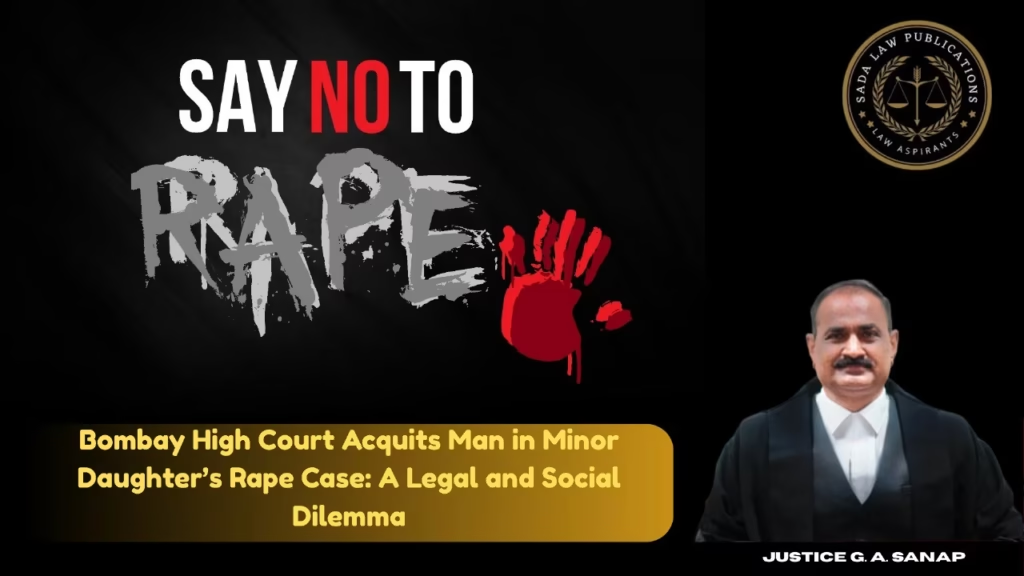
Bombay High Court Acquits Father in Minor Daughter’s Rape Case: Legal Loopholes vs Child Protection
Trending Today Bombay High Court Acquits Father in Minor Daughter’s Rape Case: Legal Loopholes vs Child Protection Lily Thomas vs Union of India: Landmark Supreme Court Verdict That Transformed Indian Election Law Supreme Court Landmark Ruling: Tamil Nadu Laws Enacted Without Governor’s Assent for the First Time in India Karnataka High Court: Professors Not Public Officers, Quo Warranto Writ Inapplicable in Academic Appointments Bombay High Court Overturns 36-Year-Old Pollution Conviction Against Gujarat Petro Chem Executives Allahabad High Court Sparks Outrage by Granting Bail in Rape Case, Blaming Victim for Her Actions Supreme Court Orders AIIMS to Reassess MBBS Eligibility of PwBD Candidate Based on Om Rathod and Anmol Rulings Misuse of Section 17B of the Industrial Disputes Act: Challenges for Employers and Legal Loopholes Supreme Court Strikes Down Tamil Nadu Rule Requiring Title Proof for Property Registration Delhi High Court Fines Shazia Ilmi ₹25,000 in Privacy Violation Case Against Rajdeep Sardesai Bombay High Court Acquits Father in Minor Daughter’s Rape Case: Legal Loopholes vs Child Protection SANOJ KUMAR PAUL 15 Apr 2025 Bombay High Court Acquits Man in Minor Daughter’s Rape Case: A Legal and Social Dilemma In a deeply controversial ruling, the Bombay High Court recently acquitted a man accused of repeatedly raping his own minor daughter. The case was filed under the stringent Protection of Children from Sexual Offences (POCSO) Act and Section 376 of the Indian Penal Code (now the Bharatiya Nyaya Sanhita – BNS), which deal specifically with sexual offences, including those against children. The court ruled that there was insufficient evidence to convict the father. It pointed out inconsistencies in the minor’s testimony, noting that her account had changed over time. Further, the delay in lodging the complaint—without a clear and convincing explanation—and inconclusive medical reports played a significant role in the acquittal. In line with the principle of criminal jurisprudence, the benefit of doubt was extended to the accused. However, this verdict has sparked a wave of outrage among child rights activists and legal experts. Critics argue that the court failed to adequately consider the psychological trauma, fear, and societal pressures that can prevent children—especially those abused by family members—from reporting crimes promptly or articulating their experiences clearly. This case has reignited concerns about how India handles child sexual abuse cases, especially within the family. While the legal system rightly demands evidence and due process, the realities of child trauma and the complexities of abuse dynamics often get overlooked. The silence and hesitation of a victim should not be misinterpreted as falsehood. As the nation grapples with the implications of this verdict, calls for systemic reform are growing louder. Experts are advocating for: Enhanced judicial and police training in trauma-informed approaches, Stronger victim support systems, including counseling and legal aid, And legal reforms that better reflect the nuanced nature of abuse cases. India faces a crucial question: Can its legal system evolve to deliver justice without re-traumatizing the vulnerable or letting perpetrators escape accountability simply due to procedural limitations? This case serves as both a legal precedent and a moral wake-up call. Justice must not only be done—it must be seen to accommodate the lived realities of those most in need of protection. Leave a Reply Cancel Reply Logged in as sadalawpublications@gmail.com. Edit your profile. Log out? Required fields are marked * Message* Live Cases Bombay High Court Acquits Father in Minor Daughter’s Rape Case: Legal Loopholes vs Child Protection Bombay High Court Acquits Father in Minor Daughter’s Rape Case: Legal Loopholes vs Child Protection sadalawpublications@gmail.com • April 15, 2025 • Live cases • No Comments Supreme Court Landmark Ruling: Tamil Nadu Laws Enacted Without Governor’s Assent for the First Time in India Supreme Court Landmark Ruling: Tamil Nadu Laws Enacted Without Governor’s Assent for the First Time in India sadalawpublications@gmail.com • April 14, 2025 • Live cases • No Comments Karnataka High Court: Professors Not Public Officers, Quo Warranto Writ Inapplicable in Academic Appointments Karnataka High Court: Professors Not Public Officers, Quo Warranto Writ Inapplicable in Academic Appointments sadalawpublications@gmail.com • April 13, 2025 • Live cases • No Comments 1 2 3 … 5 Next »