
sadalawpublications.com

human rights

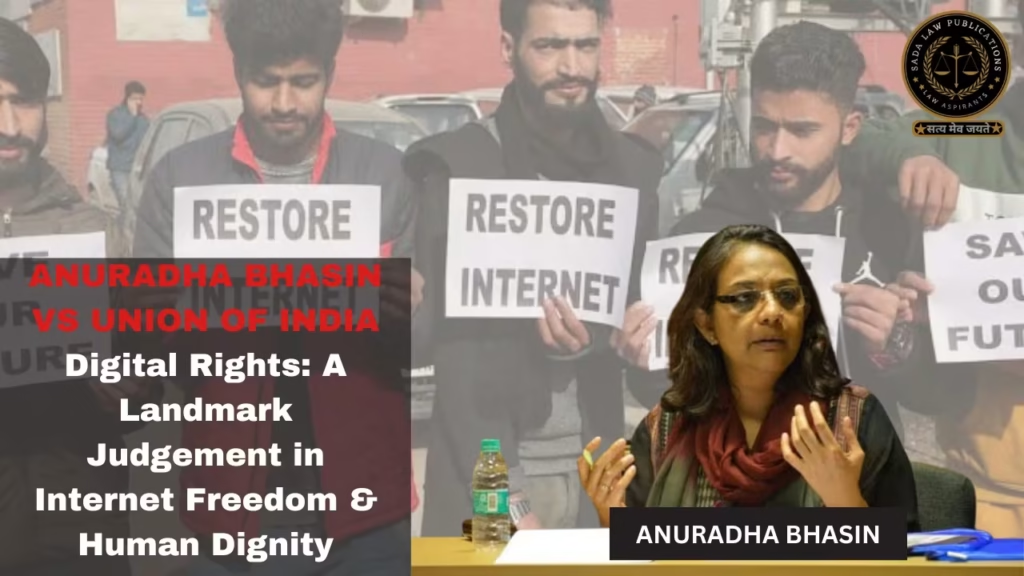
“Anuradha Bhasin vs Union of India (2020): A Landmark Verdict on Internet Freedom and Fundamental Rights”

Trending Today “Anuradha Bhasin vs Union of India (2020): A Landmark Verdict on Internet Freedom and Fundamental Rights” Kaushal Kumar vs State of Uttar Pradesh: Supreme Court’s Landmark Verdict on Free Speech and Right to Dignity Pakistan’s Defence Minister Admits Terror Support, Blames India for Pahalgam Attack Amid Rising Tensions Punjab and Haryana High Court Rules on Husband’s Appeal for Divorce Amid Alleged Extramarital Affair Copyright Protection for Hindustani Classical Music Compositions and AR Rahman’s ‘Veera Raja Veera’ Dispute” Delhi High Court Suspends Medha Patkar’s Sentence in VK Saxena Defamation Case India Puts Indus Waters Treaty on Hold: Historic Decision Amid Rising Tensions with Pakistan Terrorist Attack in Pahalgam, Jammu & Kashmir: 26 Dead, Several Critically Injured in Market Shooting Raj Kundra Moves Bombay High Court to Quash Look Out Circular in Pornographic Film Racket Case Ramdev Agrees to Remove ‘Sharbat Jihad’ Videos After Court Rebuke Over Rooh Afza Remarks Anuradha Bhasin vs Union of India (2020): A Landmark Verdict on Internet Freedom and Fundamental Rights 26 Apr 2025 Discover the significance of Anuradha Bhasin vs Union of India (2020), a milestone in safeguarding internet freedom and human rights in India. Understand the case background, Supreme Court’s judgment, and the future impact of the Telecom Bill 2023. Introduction: A Defining Moment for Digital Rights The case of Anuradha Bhasin vs Union of India (2020) marks a historic milestone in India’s struggle for internet freedom and human rights. Triggered by the communication blackout in Jammu and Kashmir following the Article 370 revocation, the case questioned the delicate balance between national security and fundamental rights. The Supreme Court of India‘s ruling not only scrutinized the legality of internet shutdowns but also introduced critical principles like proportionality, transparency, and judicial review. This blog explores the background, key arguments, court verdict, and the broader impact, including insights into the Telecom Bill 2023. Background: Communication Blackout in Jammu and Kashmir On August 5, 2019, the Indian government revoked Article 370, removing Jammu and Kashmir’s special autonomy. To preempt unrest, authorities imposed a stringent communication blackout—halting internet services and enforcing movement restrictions. This move disrupted daily life, crippled businesses, and hampered journalism. Anuradha Bhasin, Executive Editor of the Kashmir Times, challenged these restrictions in the Supreme Court, arguing that they violated fundamental constitutional rights under Articles 19(1)(a) and 19(1)(g). Core Legal Challenges 1. Violation of Fundamental Rights The indefinite internet suspension infringed upon: Freedom of speech and expression (Article 19(1)(a)). Right to practice any profession or carry out any trade (Article 19(1)(g)). 2. Lack of Proportionality and Due Process Petitioners highlighted: Blanket restrictions were unreasonable and lacked a graded response. Shutdown orders were not publicly disclosed, obstructing judicial review. 3. Government’s Defense The government contended: The shutdown was a temporary measure to maintain national security and public order. Powers were exercised under the Indian Telegraph Act, 1885 and the Temporary Suspension of Telecom Services Rules, 2017. Key Questions Before the Court Constitutionality of prolonged internet shutdowns. Proportionality of restrictions. Transparency and adherence to due process. The Supreme Court’s Verdict: A Historic Ruling On January 10, 2020, the Supreme Court delivered a transformative judgment: Recognition of Internet as a Fundamental Right The Court declared: Access to the internet is protected under Article 19(1)(a) and Article 19(1)(g). The Proportionality Test Restrictions on fundamental rights must be: Necessary. Least intrusive. Periodically reviewed. Transparency and Review Mechanism All shutdown orders must be published. A review committee must assess the necessity of orders every seven days. Judicial Scrutiny Citizens affected by shutdowns must have the right to challenge them in courts. Implementation of Guidelines: Reality Check Despite clear directions, compliance with the Anuradha Bhasin guidelines remains inconsistent. Reports suggest: Some progress in publishing shutdown orders. Inadequate adherence to the periodic review process. Frequent internet shutdowns still occur across India, raising concerns about fundamental rights. Impact on Journalism and Business The blackout devastated both: Journalists struggled to report, affecting press freedom. Businesses, especially in the digital economy, suffered heavy losses. This case stressed the critical need for balancing national security and individual liberties. The Telecom Bill 2023: A Step Forward? The Telecom Bill 2023 aims to codify shutdown regulations: Key Provisions Clear criteria for suspension of services. Robust review and accountability mechanisms. Mandatory public disclosure of shutdown orders. The bill seeks to enshrine the principles of proportionality, necessity, and transparency into law, ensuring a more predictable framework for future restrictions. Conclusion: The Lasting Legacy of Anuradha Bhasin Case The Anuradha Bhasin vs Union of India ruling redefined the conversation around internet shutdowns and fundamental rights in India. Though implementation challenges persist, the case established a strong legal foundation promoting vigilance, transparency, and accountability. As technology evolves, the need to defend digital freedoms and ensure human rights becomes even more critical. The upcoming reforms under the Telecom Bill 2023 offer hope for a balanced and lawful approach in managing security concerns without eroding fundamental liberties. Leave a Reply Cancel Reply Logged in as Sadalaw Publications. Edit your profile. Log out? Required fields are marked * Message* Case Laws “Anuradha Bhasin vs Union of India (2020): A Landmark Verdict on Internet Freedom and Fundamental Rights” “Anuradha Bhasin vs Union of India (2020): A Landmark Verdict on Internet Freedom and Fundamental Rights” Sadalaw Publications • April 26, 2025 • Case law • No Comments Kaushal Kumar vs State of Uttar Pradesh: Supreme Court’s Landmark Verdict on Free Speech and Right to Dignity Kaushal Kumar vs State of Uttar Pradesh: Supreme Court’s Landmark Verdict on Free Speech and Right to Dignity Sadalaw Publications • April 26, 2025 • Case law • No Comments Supreme Court Directs Policy Reform in Mining Royalty: Kirloskar Ferrous Industries Ltd. v. Union of India Explained Supreme Court Directs Policy Reform in Mining Royalty: Kirloskar Ferrous Industries Ltd. v. Union of India Explained Sadalaw Publications • April 18, 2025 • Case law • No Comments 1 2 3 … 5 Next »

“Anuradha Bhasin vs Union of India (2020): A Landmark Verdict on Internet Freedom and Fundamental Rights” Read More »

Opening the Monument Examining the Long-Term Effects of the 1981 Case Francis Coralie v. Union Territory of Delhi on Individual Liberty and Indian Jurisprudence

Trending Today Opening the Monument Examining the Long-Term Effects of the 1981 Case Francis Coralie v. Union Territory of Delhi on Individual Liberty and Indian Jurisprudence Rajya Sabha Adopts Bill 2025 for Waqf (Amendment) Destruction in Kancha Gachibowli ‘forest’ area depicts an ‘alarming picture’, says SC NCLT Rejects Insolvency Plea Against Zomato Over Payment Dispute Actor Hansika Motwani files a motion in the Bombay High Court to quash a FIR after being booked in a Section 498A case. Supreme Court slams Telangana CM for “making mockery” of anti-defection law Union Minister Kiren Rijiju: The Waqf Amendment Bill Is Prospective Rather Than Retrospective Supreme Court of India Significance of mitigating factors when awarding the death penalty. The Supreme Court permits the petitioner to get involved in ongoing proceedings but rejects another petition contesting the Places of Worship Act. Punjab & Haryana High Court: Child in Womb During Accident Is Subject To Reimbursement Under MV Act AN ANALYSIS OF THE ROLE OF CSR IN THE COMPANIES ACT 2013 05 Apr 2025 The Indian Supreme Court radically changed the meaning of the right to life under Article 21 of the Indian Constitution in 1981 when it handed down a landmark decision in the case of Francis Coralie Mullin v. Administrator, Union Territory of Delhi. This case was more than just a court battle; it also represented a major advancement in Indian human rights law.The case centred on Francis Coralie Mullin‘s situation, who protested the cruel circumstances surrounding her imprisonment. The court’s ruling emphasised that the right to life encompasses more than just the ability to survive physically. It also includes the right to live with dignity.As we examine this case in more detail, we’ll see how this landmark decision changed the legal landscape by guaranteeing that the Indian state‘s obligation to safeguard life includes a duty to provide humane and respectable living conditions. Whether you’re a student, a lawyer, or just someone who cares about human rights, this investigation will give you important context for understanding one of the most important judicial rulings in Indian history. An overview of the 1981 case Francis Coralie v. Union Territory of Delhi The seminal case of Francis Coralie v. Union Territory of Delhi (1981) has had a profound effect on India’s fundamental rights landscape. The case explores the fundamental ideas of individual freedom and the defence of rights against the state. Context of the Case In the case of Francis Coralie v. Union Territory of Delhi (1981), the petitioner was a journalist and social worker who was wrongfully detained by the Delhi Police in violation of preventive detention statutes. The petitioner contested this arbitrary detention on the grounds that it violated his or her fundamental rights to life and personal liberty as guaranteed by Articles 21 and 19 of the Indian Constitution. Importance of the Situation The Francis Coralie case is significant because it helped define India’s expanded understanding and application of fundamental rights. The ruling stressed that the protection of one’s dignity, privacy and physical integrity are all included in the concept of personal liberty, which goes beyond simple physical freedom.The case made clear how crucial it is to defend human rights values and make sure that government activities are consistent with the guarantees of constitutional protection that each and every person receives. By restating the judiciary‘s position as a protector of fundamental rights and a check on administrative excess, it established a precedent for cases to come. Important Case Details The famous case of Francis Coralie v. Union Territory of Delhi (1981) had a big influence on how fundamental human rights were interpreted in India. The lawsuit established a precedent for upcoming human rights cases and addressed important legal issues. Let’s examine the salient features of this significant case. Parties involved In this case, Francis Coralie, a social activist and lawyer, filed a petition against the Union Territory of Delhi, asserting a breach of fundamental rights. The Union Territory of Delhi represented the government officials whose acts were being scrutinised. The case highlighted the conflict amongst private liberties and state power, making it a major source of disagreement. Legal Issues Addressed The case focused chiefly on a violation of Article 21 of the Indian Constitution, which provides the protection of life as well as private liberty. Francis Coralie stated that the activities of government officials violated individuals’ worth and well-being, underscoring the significance of defending fundamental rights even in the face of state action. This case underscored the importance of the ability to live in dignity as an integral part of the right to life. Judgement and Impact The Supreme Court‘s decision emphasised the importance of Article 21 and broadened its meaning to encompass the right of living with dignity. The decision strengthened the protection of fundamental rights and established a precedent for subsequent situations involving human rights breaches. The influence of this case went transcend Francis Coralie’s individual circumstances, impacting the legal landscape of rights for humans in India.The Francis Coralie case serves as a timely reminder of the critical balance between individual rights and governmental authority, underscoring the fundamental ideals of human dignity and liberty established in the Indian Constitution. Impact on the Indian Legal System​ The 1981 Supreme Court case of Francis Coralie Mullin v. Administrator, Union Territory of Delhi significantly impacted the Indian legal system, particularly concerning personal liberty and the establishment of precedents for future judicial actions.​Indian Kanoon Enhancing the Realm of Personal Liberty In this landmark decision, the Supreme Court of India expanded the scope of personal liberty under Article 21 of the Indian Constitution. The Court emphasized the inherent dignity and worth of the individual, broadening the definition of personal liberty beyond mere physical restraint. This interpretation laid a robust foundation for protecting Indian citizens’ fundamental rights against arbitrary state actions, reinforcing the principle that personal liberty is sacred and inviolable.​Indian Kanoon Setting Precedents for Future Cases The ruling in the Francis Coralie Mullin case set important precedents that have influenced subsequent legal discourse in India.

Opening the Monument Examining the Long-Term Effects of the 1981 Case Francis Coralie v. Union Territory of Delhi on Individual Liberty and Indian Jurisprudence Read More »