sadalawpublications.com

human rights

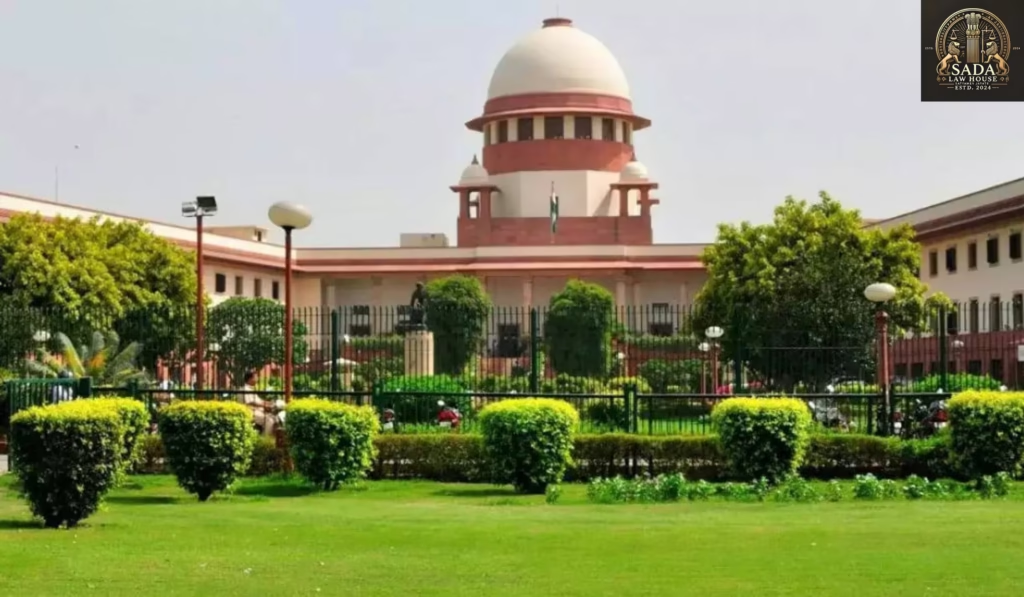
Supreme Court Orders Judicial and Investigative Oversight in Manipur Ethnic Violence Cases (2023 INSC 698)

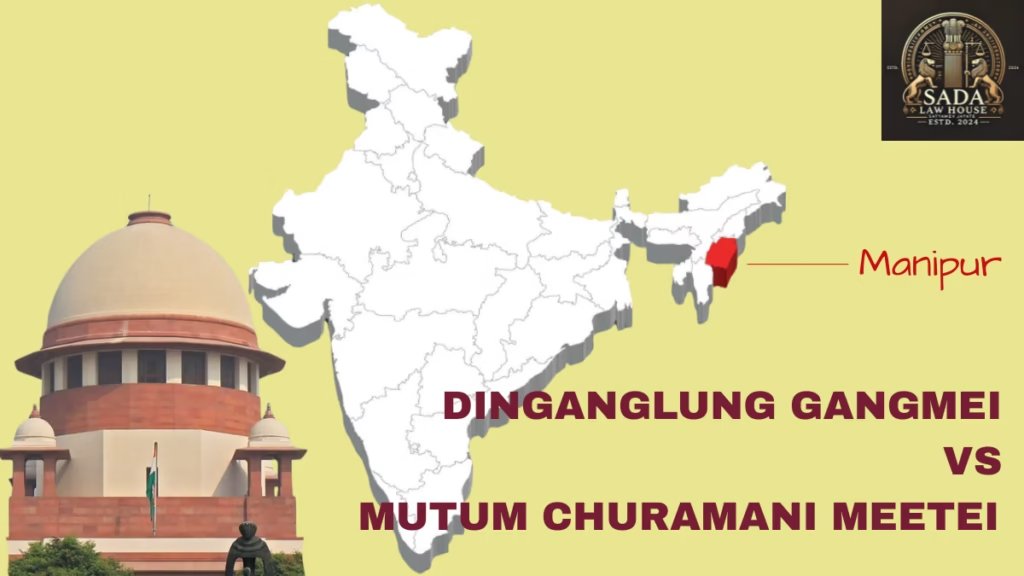
Trending Today Supreme Court Orders Judicial and Investigative Oversight in Manipur Ethnic Violence Cases (2023 INSC 698) State of Rajasthan v. Sharwan Kumar Kumawat (2023): Validity of Amendments to Rajasthan Minor Mineral Concession Rules Endocrinology and Immunology Lab v. E.S.I. Corporation: Application of the ESI Act to Pathological Labs Dinganglung Gangmei vs Mutum Churamani Meetei (2023 INSC 698): Supreme Court Oversight in Manipur Ethnic Violence YUKTI: Nationwide Mentorship and Internship Initiative for Aspiring Lawyers Supreme Court Seeks Centre’s Response on Sonam Wangchuk’s Detention Saurabh Sharma Appointed Partner at JSA Advocates & Solicitors in Ahmedabad Salib @ Shalu @ Salim v. State of Uttar Pradesh & Ors. (2023) Kishore Balkrishna Nand v. State of Maharashtra & Anr (2023) Avtar Singh & Anr v. State of Punjab (2023) Supreme Court Orders Judicial and Investigative Oversight in Manipur Ethnic Violence Cases (2023 INSC 698) PRABHAT KUMAR BILTORIA 14 October, 2025 Introduction The case of Dinganglung Gangmei vs Mutum Churamani Meetei arose out of the severe ethnic violence in Manipur following the Manipur High Court’s directive to consider the Meitei community for inclusion in the Scheduled Tribes list. This led to large-scale unrest, human rights violations, and displacement. Petitions were filed under Article 32 of the Constitution seeking protection of victims’ rights, restoration of order, and judicial oversight in the investigation of crimes. Background On March 27, 2023, the Acting Chief Justice of the Manipur High Court instructed the state administration to recommend the inclusion of the Meitei community in the Scheduled Tribes list. This decision sparked widespread protests among tribal groups who feared erosion of their constitutional protections. The violence resulted in killings, arson, sexual assaults, and mass displacement, prompting the Supreme Court’s intervention to ensure justice and uphold constitutional principles. Key Developments Numerous writ petitions were filed before the Supreme Court under Article 32. The Court found the responses of both the State and Central Governments inadequate. A three-member Judicial Relief and Rehabilitation Committee was formed, comprising: Justice Gita Mittal (Former Chief Justice, J&K High Court) Justice Shalini Phansalkar Joshi (Former Judge, Bombay High Court) Justice Asha Menon (Former Judge, Delhi High Court) The CBI was directed to investigate 11 FIRs related to sexual violence, with oversight from Dattatray Padsalgikar (Former Maharashtra DGP). 42 Special Investigation Teams (SITs) were set up for district-level investigations, with officers from outside Manipur to ensure impartiality. Issues Whether the Manipur High Court’s direction for inclusion of the Meitei community in the ST list was constitutionally valid. What remedial measures should be taken to address the humanitarian crisis, ensure accountability, and protect victims’ fundamental rights—particularly those of women affected by violence. Current Status The Supreme Court’s directions are being implemented under continuous judicial supervision. The Court has mandated regular progress reports from both the CBI and the Judicial Committee. Relief camps, medical aid, and victim compensation are being monitored to ensure transparency and accountability in the justice process. Conclusion The Supreme Court’s intervention in this case represents a landmark exercise of constitutional responsibility during ethnic conflict. It emphasized victim-centric justice, structural accountability, and the protection of fundamental rights. The ruling stands as a powerful reaffirmation of the judiciary’s role in preserving the rule of law, ensuring fairness, and delivering justice even amid social and political turmoil. Leave a Reply Cancel Reply Logged in as Sada Law. Edit your profile. Log out? Required fields are marked * Message* Case Laws Supreme Court Orders Judicial and Investigative Oversight in Manipur Ethnic Violence Cases (2023 INSC 698) Sada Law • October 14, 2025 • Case law • No Comments State of Rajasthan v. Sharwan Kumar Kumawat (2023): Validity of Amendments to Rajasthan Minor Mineral Concession Rules Sadalaw • October 13, 2025 • Case law • No Comments Endocrinology and Immunology Lab v. E.S.I. Corporation: Application of the ESI Act to Pathological Labs Sadalaw • October 13, 2025 • Case law • No Comments 1 2 3 … 5 Next »

Supreme Court Orders Judicial and Investigative Oversight in Manipur Ethnic Violence Cases (2023 INSC 698) Read More »

Delhi High Court Seeks Accountability for Custodial Deaths — Justice Beyond the Bars

Trending Today Delhi High Court Seeks Accountability for Custodial Deaths — Justice Beyond the Bars LEGAL INTERNSHIP OPPORTUNITY AT MANDLA & SINGH LAW CHAMBERS, DELHI LEGAL JOB OPPORTUNITY AT GAURAV SHARMA LAW OFFICES LEGAL INTERNSHIP OPPORTUNITY AT HIKMAT HELPING HANDS FOUNDATION LEGAL JOB OPPORTUNITY AT JSA, BENGALURU Supreme Court Presses States on Governors’ Discretion: Federal Structure in Question Supreme Court Questions Centre on Algorithmic Policing and AI Bias: A Step Toward Digital Rights Reform LEGAL INTERNSHIP OPPORTUNITY AT BOBBLE AI INTERNSHIP OPPORTUNITY AT SETTLEMENTOFLOAN LEGAL JOB OPPORTUNITY AT BP, PUNE Delhi High Court Seeks Accountability for Custodial Deaths — Justice Beyond the Bars Kashish Jahan 31 JULY 2025 The Delhi High Court has demanded a detailed action plan from police authorities on custodial deaths, highlighting a systemic violation of Article 21. This strong judicial intervention could set a new benchmark for prison and police accountability in India. The Right to Life Must Extend Behind Bars On 25 July 2025, the Delhi High Court took a strong stand against the rising number of custodial deaths in the capital. Justice Asha Rao referred to the deaths as a “systemic failure”, emphasizing that they violate Article 21 of the Constitution — the right to life and human dignity. A Public Interest Litigation (PIL) filed by a group of human rights lawyers cited recent NCRB data indicating a 27% increase in custodial deaths over the past two years. Most of these victims came from marginalized communities and lacked access to legal assistance. Shocking Pattern of Negligence and Suppression The petition uncovered alarming trends: Families being coerced to withdraw complaints. CCTV footage missing despite Supreme Court mandates. Medical reports being altered to conceal abuse. Justice Rao cited the Paramvir Singh Saini judgment which directed that all police stations and interrogation rooms must be equipped with functioning CCTV cameras. She remarked, “The Constitution’s promise of dignity does not end when the lock-up door closes.” Court Directives: A Push for Transparency The High Court issued a series of binding directions: The Delhi Police Commissioner must submit a five-year record of custodial deaths. Details of disciplinary actions taken against involved officers must be disclosed. Proof must be furnished that all lock-ups have operational CCTV with backup systems. The preservation of video footage is now mandatory. Independent medical examinations must be conducted for every case of injury or death in custody. Reigniting India’s Struggle for Prison Reform This judicial intervention reopens India’s longstanding struggle with torture in custody, a problem spotlighted in the landmark D.K. Basu v. State of West Bengal case, yet rarely enforced in practice. The upcoming August hearing will reveal whether Delhi’s jails and police stations will finally prioritize human dignity and accountability. If the High Court’s stand results in measurable reform, it could become a national model for custodial justice. Leave a Reply Cancel Reply Logged in as Sadalaw. Edit your profile. Log out? Required fields are marked * Message* Live Cases Delhi High Court Seeks Accountability for Custodial Deaths — Justice Beyond the Bars Sadalaw • July 31, 2025 • Live cases • No Comments Supreme Court Presses States on Governors’ Discretion: Federal Structure in Question Sadalaw • July 30, 2025 • Live cases • No Comments Supreme Court Questions Centre on Algorithmic Policing and AI Bias: A Step Toward Digital Rights Reform Sadalaw • July 30, 2025 • Live cases • No Comments 1 2 3 … 5 Next »

Delhi High Court Seeks Accountability for Custodial Deaths — Justice Beyond the Bars Read More »

J&K Police Block Access to Martyrs’ Graveyard on July 13: A Growing Flashpoint in Kashmir

Trending Today J&K Police Block Access to Martyrs’ Graveyard on July 13: A Growing Flashpoint in Kashmir NATIONAL MOOT COURT COMPETITION BY MNLUCS JUDGMENT WRITING COURSE BY DRISHTI JUDICIARY LEGAL JOB OPPORTUNITY AT ADV KAPIL PALIWAL LEGAL JOB OPPORTUNITY AT UNGENDER LEGAL INTERNSHIP OPPORTUNITY AT WADHWA & CO LEGAL JOB OPPORTUNITY AT ALBA LAW OFFICES LEGAL JOB OPPORTUNITY AT D. E. SHAW INDIA PRIVATE LIMITED, HYDERABAD LEGAL JOB OPPORTUNITY AT ATLANTIC LAW Bombay High Court Rules Against Online Harassment Masquerading as Free Speech J&K Police Block Access to Martyrs’ Graveyard on July 13: A Growing Flashpoint in Kashmir Kashish Jahan 14 JULY 2025 On July 13, J&K Police restricted public access to the Martyrs’ Graveyard in Srinagar, reigniting concerns over civil liberties, freedom of assembly, and Kashmir’s unresolved political tensions. Historic Date Met with Fresh Restrictions In Srinagar today, Jammu and Kashmir Police imposed heavy restrictions, blocking access to the July 13 Martyrs’ Graveyard. This day commemorates the 1931 killing of 22 protesters under the Dogra rule, seen by many as the spark that ignited Kashmir’s long-standing demand for dignity and political identity. Security Measure or Suppression of Memory? While officials claim the restrictions were imposed purely for security reasons, local residents argue they are an attempt to suppress collective memory. Since the abrogation of Article 370 in 2019, this significant date has consistently seen increased police presence and limited public access. A Ritual of Resistance for the Kashmiri People For many Kashmiris, visiting the graveyard is far more than just a symbolic act. It’s a deeply emotional tradition that honors those who laid down their lives. Locals say it affirms a resistance to historical erasure, and keeps alive the memory of a defining moment in Kashmir’s political journey. Human Rights Groups Raise Alarm Leading human rights organizations have condemned the police action, calling it a violation of the right to peaceful assembly. According to observers, using “security” as a justification to restrict non-violent commemorations sets a dangerous precedent for civil liberties in the region. Legal Action on the Horizon? Legal experts suggest that these blanket bans could soon face judicial review. If such restrictions persist, petitions may be filed in the Jammu and Kashmir High Court under constitutional protections guaranteeing the freedom to assemble peacefully. What Comes Next for Kashmir? As tensions simmer, all eyes are now on the government’s next move — will the restrictions ease or become a new norm? Either way, this yearly confrontation around July 13 has come to symbolize the broader political unease and ongoing conflict in Kashmir. Leave a Reply Cancel Reply Logged in as Sadalaw. Edit your profile. Log out? Required fields are marked * Message* Live Cases J&K Police Block Access to Martyrs’ Graveyard on July 13: A Growing Flashpoint in Kashmir Sadalaw • July 14, 2025 • Live cases • No Comments Bombay High Court Rules Against Online Harassment Masquerading as Free Speech Sadalaw • July 13, 2025 • Live cases • No Comments Calcutta High Court Slams West Bengal Government Over Forest Land Encroachment Sadalaw • July 13, 2025 • Live cases • No Comments 1 2 3 … 5 Next »

J&K Police Block Access to Martyrs’ Graveyard on July 13: A Growing Flashpoint in Kashmir Read More »

Gujarat High Court Orders Fresh SIT Probe Into Dalit Man’s Custodial Death Amid Allegations of Police Torture

Trending Today INTERNSHIP OPPORTUNITY AT CCR, NUSRL, RANCHI Gujarat High Court Orders Fresh SIT Probe Into Dalit Man’s Custodial Death Amid Allegations of Police Torture INTERNSHIP OPPORTUNITY AT K&G TECHLAW PARTNERS Delhi High Court Quashes FIR Against Journalist in Official Secrets Act Case, Cites Press Freedom Supreme Court to Urgently Hear Petition on Same-Sex Couples’ Adoption Rights in India Madras High Court Allows Women to Join Temple Chariot Festival, Citing Equality and Religious Freedom Telangana High Court Cancels Free Land Allotment to IAMC Hyderabad in Landmark Ruling Court Orders FIR Against Zed News and News18 for Defamatory Reporting During Operation Sindoor in Jammu & Kashmir Delhi High Court Rules Arbitration Clause Doesn’t Automatically Override Civil Court Jurisdiction Supreme Court Affirms Right to Close Business Under Article 19 of Indian Constitution Gujarat High Court Orders Fresh SIT Probe Into Dalit Man’s Custodial Death Amid Allegations of Police Torture KASHISH JAHAN 1 JULY 2025 The Gujarat High Court has ordered a fresh SIT probe into the alleged custodial death of a 27-year-old Dalit man in Rajkot, highlighting critical concerns about police accountability and custodial violence in India. High Court Steps In Amid Allegations of Custodial Torture The Gujarat High Court has ordered the formation of a new Special Investigation Team (SIT) to investigate the alleged custodial death of a 27-year-old Dalit man in Rajkot. The man died within 24 hours of being detained over a minor theft allegation. Family Alleges Torture and Post-Mortem Tampering According to the victim’s family, he was subjected to severe custodial torture. They also claimed that the post-mortem report was tampered with to conceal the actual cause of death, contradicting physical injuries and witness statements. Initial Police Investigation Under Scrutiny The original investigation conducted by the district police cleared all involved officers, citing natural causes. However, ongoing protests by Dalit rights groups and mounting public pressure prompted the victim’s family to petition the court for an independent probe. Justice Biren Vaishnav Highlights Major Lapses Justice Biren Vaishnav stated that initial findings pointed to procedural irregularities, destruction of CCTV footage, and conflicting witness testimonies. The court ordered that a new SIT, led by an independent IPS officer, be formed and that a detailed report be submitted within two months. Debate Rekindled Over Police Accountability in India This incident has reignited national debate on police accountability and custodial violence. The National Human Rights Commission (NHRC) has frequently raised concerns over custodial deaths in India. The victim’s family called the court’s decision a “ray of hope for justice.” Leave a Reply Cancel Reply Logged in as Sada Law. Edit your profile. Log out? Required fields are marked * Message* Live Cases Gujarat High Court Orders Fresh SIT Probe Into Dalit Man’s Custodial Death Amid Allegations of Police Torture Sada Law • July 1, 2025 • Live cases • No Comments Delhi High Court Quashes FIR Against Journalist in Official Secrets Act Case, Cites Press Freedom Sada Law • July 1, 2025 • Live cases • No Comments Supreme Court to Urgently Hear Petition on Same-Sex Couples’ Adoption Rights in India Sada Law • July 1, 2025 • Live cases • No Comments 1 2 3 … 5 Next »

Gujarat High Court Orders Fresh SIT Probe Into Dalit Man’s Custodial Death Amid Allegations of Police Torture Read More »

Madras High Court Awards ₹10 Lakh for Illegal Detention, Reinforces Right to Liberty

Trending Today Madras High Court Awards ₹10 Lakh for Illegal Detention, Reinforces Right to Liberty Supreme Court Clarifies Dowry Death Law: Presumption Only if Dowry Demand Proven Delhi High Court: Social Media Users Liable for Defamation, Freedom of Speech Has Limits Thiruchendur Temple Consecration Dispute: Vidhayahar Challenges HC-Approved Timing in Supreme Court Kerala High Court Empowers Muslim Women: Khula Divorce Valid Without Husband’s Consent Orissa High Court Slams ‘Bulldozer Justice’, Orders ₹2 Lakh Salary Recovery from Tahasildar for Illegal Demolition LEGAL JOB OPPORTUNITY AT DMD ADVOCATES LEGAL JOB OPPORTUNITY AT SINGHANIA & PARTNERS LEGAL JOB OPPORTUNITY AT K.L.E. SOCIETY’S LAW COLLEGES JOB OPPORTUNITY AT S.S. JAIN SUBODH LAW COLLEGE, JAIPUR Madras High Court Awards ₹10 Lakh for Illegal Detention, Reinforces Right to Liberty KASHISH JAHAN 27 June 2025 The Madras High Court has ordered ₹10 lakh compensation for a man’s illegal detention, reaffirming the constitutional right to liberty under Article 21 and stressing police accountability in India. A Powerful Verdict Against Arbitrary Arrests In a landmark judgment, the Madras High Court has awarded ₹10 lakh in compensation to a man who was wrongfully detained by the police without following due legal procedure. This ruling marks a critical stand for protecting the fundamental right to personal liberty, as guaranteed under Article 21 of the Constitution of India. Background: Violation of Legal Rights The case involved a petitioner who was taken into custody by the police in connection with a criminal investigation. However, he was neither produced before a magistrate nor informed of the legal grounds for his arrest. Shockingly, he remained in unlawful custody for nearly three days—an outright violation of his constitutional and human rights. Justice G.R. Swaminathan Condemns Misuse of Power Presiding over the case, Justice G.R. Swaminathan condemned the police for their “blatant misuse of power.” He emphasized that “no one in a democratic country should be deprived of liberty without due process.” The court further warned that the responsible officers could face both departmental inquiries and legal consequences. Legal and Constitutional Implications This judgment sends a strong message about the judiciary’s unwavering role in defending civil liberties. It reinforces the legal safeguards against custodial abuse and illegal detention, while also highlighting the need for increased police accountability in India. Conclusion: A Step Toward Justice and Reform The verdict not only brings justice to the victim but also serves as a precedent to prevent similar violations in the future. It reiterates the judiciary’s responsibility in upholding the rule of law and protecting every citizen’s civil liberties. Leave a Reply Cancel Reply Logged in as Sada Law. Edit your profile. Log out? Required fields are marked * Message* Live Cases Madras High Court Awards ₹10 Lakh for Illegal Detention, Reinforces Right to Liberty Sada Law • June 27, 2025 • Live cases • No Comments Supreme Court Clarifies Dowry Death Law: Presumption Only if Dowry Demand Proven Sada Law • June 27, 2025 • Live cases • No Comments Delhi High Court: Social Media Users Liable for Defamation, Freedom of Speech Has Limits Sada Law • June 27, 2025 • Live cases • No Comments 1 2 3 … 5 Next »

Madras High Court Awards ₹10 Lakh for Illegal Detention, Reinforces Right to Liberty Read More »

Supreme Court Refuses Urgent Listing of Hany Babu’s Bail Clarification Plea in Bhima Koregaon Case

Trending Today Supreme Court Refuses Urgent Listing of Hany Babu’s Bail Clarification Plea in Bhima Koregaon Case Supreme Court Clarifies Azure–PPL Copyright Stay: No Impact on Third Parties Bombay High Court Quashes 306 IPC FIR in Loan-Linked Suicide Case, Cites Lack of Instigation Punjab–Haryana High Court Rejects PIL Against Online Betting Ads, Citing Statutory Remedies Under Gambling Law Supreme Court Reserves Interim Order on Waqf (Amendment) Act, 2025: Key Legal and Constitutional Highlights HDFC Bank CEO Sashidhar Jagdishan Moves Bombay HC to Quash FIR in ₹2 Crore Bribery Case Filed by Lilavati Trust IPS Officer’s Husband Arrested in ₹7.2 Crore BMC Redevelopment Scam: Mumbai EOW Crackdown Sparks Integrity Debate Bombay High Court Orders Strict Action Against Illegal Occupants in MHADA Transit Homes Ex-Lilavati Hospital Trustee Chetan Mehta Seeks Bombay High Court Relief in ₹1,243 Crore Fraud Case INTERNSHIP OPPORTUNITY AT CODITAS, PUNE Supreme Court Refuses Urgent Listing of Hany Babu’s Bail Clarification Plea in Bhima Koregaon Case PRABHAT KUMAR BITLORIA 25 June 2025 The Supreme Court of India declined urgent listing of Hany Babu’s plea in the Bhima Koregaon case, asking for clarification on bail rights after withdrawal from apex court. Explore the legal timeline and implications. Supreme Court Declines Urgent Listing of Hany Babu’s Bail Clarification Plea On June 23, 2025, the Supreme Court of India refused to urgently list a bail clarification plea filed by Hany Babu, a former professor at Delhi University and an accused in the high-profile Bhima Koregaon case. Request for Clarification on Bail Rights The application sought clarification from the apex court on whether Babu could approach the Bombay High Court for bail, following the withdrawal of his petition from the Supreme Court. However, the bench comprising Justice KV Viswanathan and Justice NK Singh denied scheduling the matter during the court’s vacation session, stating it would be taken up after reopening. Counsel Cites Precedents and Delays Babu’s counsel highlighted that several co-accused in the case had been granted bail either on merit or due to prolonged custody. The defense argued that the urgency stemmed from the legal ambiguity following the withdrawal of the Special Leave Petition (SLP) earlier in May 2024. The Bombay High Court had, on May 2, 2025, directed Babu to seek clarification from the Supreme Court regarding his right to approach the High Court for bail, prompting the submission of this plea. Supreme Court Questions Delay in Filing Justice Viswanathan questioned why the plea had not been filed during regular working days between May 2 and May 23. “You needed to demonstrate a sense of urgency and submit your filing punctually,” he noted. The court emphasized that urgent listings are typically granted when filings reflect genuine immediacy. In response, Babu’s counsel attributed the delay to time taken in acquiring certified copies. Justice Viswanathan remarked that in urgent cases, listings have been allowed even without certified copies—a common practice known among legal professionals. Background: Arrest, Custody, and Legal Battle Hany Babu was arrested by the National Investigation Agency (NIA) in July 2020 under the Unlawful Activities (Prevention) Act (UAPA), for his alleged links to Maoist groups. The Bombay High Court denied him bail in September 2022. In May 2024, Babu withdrew his SLP from the Supreme Court, citing changed circumstances and expressing his intent to seek bail through the High Court instead. High Court Demands Supreme Court Clarification Despite the withdrawal, the Bombay High Court ruled that the Supreme Court’s permission to withdraw the plea did not inherently preserve his right to seek bail again. Consequently, Babu was required to obtain formal clarification from the Supreme Court to proceed. Leave a Reply Cancel Reply Logged in as Sada Law. Edit your profile. Log out? Required fields are marked * Message* Live Cases Supreme Court Refuses Urgent Listing of Hany Babu’s Bail Clarification Plea in Bhima Koregaon Case Sada Law • June 25, 2025 • Live cases • No Comments Supreme Court Clarifies Azure–PPL Copyright Stay: No Impact on Third Parties Sada Law • June 25, 2025 • Live cases • No Comments Bombay High Court Quashes 306 IPC FIR in Loan-Linked Suicide Case, Cites Lack of Instigation Sada Law • June 25, 2025 • Live cases • No Comments 1 2 3 … 5 Next »

Supreme Court Refuses Urgent Listing of Hany Babu’s Bail Clarification Plea in Bhima Koregaon Case Read More »

Chhattisgarh High Court Orders ₹2 Lakh Compensation in Custodial Death Case, Cites Police Misconduct

Trending Today Chhattisgarh High Court Orders ₹2 Lakh Compensation in Custodial Death Case, Cites Police Misconduct Supreme Court Rules Title Deed Essential for Property Ownership in Landmark Judgment Mehul Choksi Sues Indian Government in London Over Alleged Abduction From Antigua Supreme Court Stays Contempt Proceedings Against Bengal Police Officers Over 2019 Howrah Lathicharge Incident JOB OPPORTUNITY AT GREENFINCH LEGAL SERVICES PVT. LTD., ANDHRA PRADESH LEGAL JOB OPPORTUNITY AT BURGEON LAW Tamil Nadu ADGP Arrested Following Madras High Court Order in Teenage Abduction Case Involving MLA LEGAL JOB OPPORTUNITY AT A. K. SINGH & ASSOCIATES, MUMBAI LEGAL JOB OPPORTUNITY AT ZIMYO, GURUGRAM CALL FOR BLOGS BY LAWFUL LEGAL Chhattisgarh High Court Orders ₹2 Lakh Compensation in Custodial Death Case, Cites Police Misconduct KASHISH JAHAN 19 June 2025 The Chhattisgarh High Court has awarded ₹2 lakh compensation in a custodial death case, emphasizing police accountability, human rights, and the urgent need for reform in India’s law enforcement system. Justice for Suresh Haththel: A Case of Custodial Violence In a significant development, the Chhattisgarh High Court has ordered the state government to pay ₹2 lakh in compensation to the mother of Suresh Haththel, a 27-year-old man who died while in police custody in 2021. Contrary to official claims of a natural death, the court cited multiple injuries indicating clear signs of custodial violence. This decision came after a writ petition filed by the victim’s family seeking justice. Accountability and State Responsibility The court underscored the state’s constitutional duty to safeguard the lives of individuals in custody. It criticized the police for failing to preserve crucial evidence such as CCTV footage and for poor documentation—raising serious concerns about attempts to cover up the incident. This landmark ruling sends a strong signal about the need for transparency and accountability in Indian law enforcement. Strengthening Human Rights Jurisprudence in India This verdict contributes to the expanding body of jurisprudence on human rights in India, especially relating to state liability in custodial death cases. The court emphasized that while financial compensation cannot bring back a lost life, it serves as a minimal recognition of the state’s failure and a deterrent to future misconduct. Calls for Systemic Reform in Custodial Practices The judgment highlighted the urgent need for systemic reforms in custodial institutions. This includes better training for officers, real-time monitoring, independent audits, and mandatory medical checkups and videography during custody. These measures are essential to prevent future instances of police brutality and uphold constitutional protections. A Step Toward Justice and Institutional Reform This ruling by the Chhattisgarh High Court is a firm reminder that the state’s authority must be exercised within legal and humane boundaries. It reflects the Indian judiciary’s commitment to uphold the fundamental rights of life and liberty guaranteed by the Constitution of India. Leave a Reply Cancel Reply Logged in as Sada Law. Edit your profile. Log out? Required fields are marked * Message* Live Cases Chhattisgarh High Court Orders ₹2 Lakh Compensation in Custodial Death Case, Cites Police Misconduct Sada Law • June 19, 2025 • Live cases • No Comments Supreme Court Rules Title Deed Essential for Property Ownership in Landmark Judgment Sada Law • June 19, 2025 • Live cases • No Comments Mehul Choksi Sues Indian Government in London Over Alleged Abduction From Antigua Sada Law • June 19, 2025 • Live cases • No Comments 1 2 3 … 5 Next »

Chhattisgarh High Court Orders ₹2 Lakh Compensation in Custodial Death Case, Cites Police Misconduct Read More »

Custodial Death of Somnath Suryawanshi: Bombay High Court Urged to Order Court-Monitored SIT Probe

Trending Today Custodial Death of Somnath Suryawanshi: Bombay High Court Urged to Order Court-Monitored SIT Probe One Nation, One Election: A Constitutional Reform or Threat to India’s Federalism? Madras High Court Rules False Sexual Allegations as Mental Cruelty, Grants Divorce to Husband President Approves Inquiry Into Former CJI D Y Chandrachud Over Alleged Misuse of Power Bokaro Launches Mobile Land Court to Deliver Justice in Rural Jharkhand Supreme Court Questions Centre on Surrogacy Rules 2023: Challenge Highlights Reproductive Rights and Constitutional Concerns Delhi High Court Restrains Unauthorized Use of “TATA” Trademark in Domain Names Bombay High Court Halts BMC Demolition Over Alleged Illegal Structures Amid Procedural Dispute Madras High Court Seeks Tamil Nadu’s Response on Facial Recognition in Policing Amid Privacy Concerns Madras High Court Seeks Tamil Nadu Govt’s Response on PIL Challenging Facial Recognition in Policing Custodial Death of Somnath Suryawanshi: Bombay High Court Urged to Order Court-Monitored SIT Probe   Kashish Jahan 16 June 2025 The custodial death of Somnath Suryawanshi in Maharashtra prompts the Bombay High Court to consider ordering a court-monitored SIT. Explore the call for judicial accountability and police reforms in custodial violence cases. Tragic Custodial Death Sparks Demand for Independent Investigation The custodial death of Somnath Suryawanshi in Maharashtra’s Beed district has reignited national concerns over police brutality and custodial violence. The Aurangabad Bench of the Bombay High Court is currently hearing a Public Interest Litigation (PIL) filed by activist Prakash Ambedkar, urging the court to order a court-monitored Special Investigation Team (SIT) to probe the incident. Why a Court-Monitored SIT Is Crucial The PIL stresses that an impartial investigation is only possible through a court-monitored SIT, due to alleged police involvement in the death. Past probes conducted by local authorities have been criticized for lack of transparency and potential cover-ups. This situation highlights the urgent need for judicial accountability and an independent inquiry into custodial deaths. The Fight for Accountability in Custodial Violence Cases Custodial deaths violate fundamental rights guaranteed under Article 21 of the Indian Constitution, which protects the right to life and personal liberty. Despite these protections, custodial violence remains a persistent issue in India, with many cases going unpunished. The Suryawanshi case is a stark reminder of the ongoing struggle to hold law enforcement agencies accountable and ensure justice for victims. Public Outcry and Legal Implications The tragic incident has sparked widespread public outrage and intense scrutiny from the legal community. Observers are closely watching how the Bombay High Court responds, as its decision could set an important precedent for future cases involving custodial violence and police accountability. Broader Impact on Policing and Human Rights This case is more than just an isolated tragedy; it represents a critical moment for the Indian legal system and law enforcement reforms. A thorough, transparent investigation could reinforce the message that no one, including police officers, is above the law. Moreover, it underscores the need to uphold human rights at the core of all policing activities. Leave a Reply Cancel Reply Logged in as Sada Law. Edit your profile. Log out? Required fields are marked * Message* Case Laws Supreme Court Affirms Right to Anticipatory Bail Across States in Matrimonial Disputes: Priya Indoria v. State of Karnataka (2023) Sada Law • June 13, 2025 • Case law • No Comments Supreme Court Rules on Governor’s Limited Discretion to Withhold Assent and Summon Punjab Legislative Assembly | State of Punjab v. Principal Secretary (2023) Sada Law • June 13, 2025 • Case law • No Comments Supreme Court Judgment on Chargesheets: Not Public Documents, No Mandatory Online Upload by Investigating Agencies | Saurav Das v. Union of India (2023) Sada Law • June 13, 2025 • Case law • No Comments 1 2 3 … 5 Next »
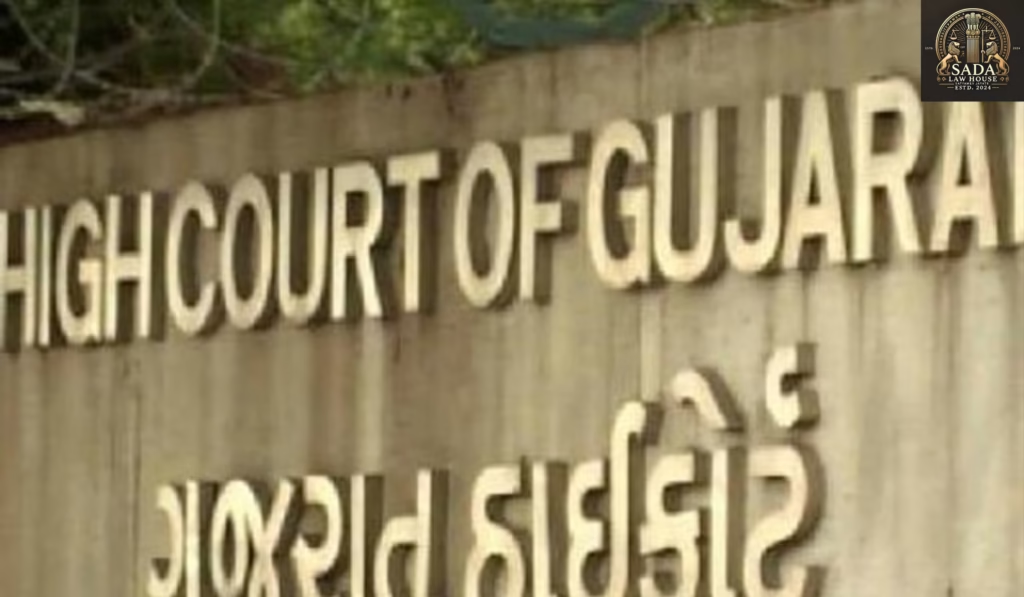
Custodial Death of Somnath Suryawanshi: Bombay High Court Urged to Order Court-Monitored SIT Probe Read More »

Supreme Court Slams Misuse of Preventive Detention After Bail Grant in Kerala Case

Trending Today Supreme Court Slams Misuse of Preventive Detention After Bail Grant in Kerala Case Supreme Court Directs Streamlined Implementation of RTI Act for Easier Access to Information Remission Shouldn’t Be Denied Solely on Reports of Presiding Judge or Police: Supreme Court Lays Down Factors for Premature Release Supreme Court Issues 12 Key Directions for Speedy Trial of Civil Cases ED Cannot Invoke PMLA Without Scheduled Offence: Supreme Court in Pavana Dibbur Case Maternity Benefits Must Extend Beyond Contract Period: Supreme Court Landmark Ruling Secunderabad Club v. Commissioner of Income Tax-V (2023): Supreme Court Rules Interest Income on Bank Deposits Taxable Devesh Sharma v. Union of India (2023): Supreme Court Rules B.Ed. Holders Ineligible for Primary Teaching Posts Salib v. State of Uttar Pradesh (2023): Supreme Court Denies Plea to Quash Criminal Intimidation FIR Pradyuman Bisht v. Union of India (2023) — Supreme Court Mandates Enhanced Court Security and Digitization Supreme Court Slams Misuse of Preventive Detention After Bail Grant in Kerala Case Prabhat Kumar Biltoria 09 June 2025 The Supreme Court of India has strongly criticized the misuse of preventive detention laws to keep accused individuals in jail after they’ve secured bail. Learn how this landmark ruling upholds constitutional rights and reinforces due legal process. Supreme Court Highlights Abuse of Preventive Detention On June 7, 2025, the Supreme Court of India issued a strong rebuke to state authorities for misusing preventive detention laws to keep individuals imprisoned even after being granted bail. In the case Dhanya M v. State of Kerala, the Court emphasized that preventive detention is a rare constitutional exception—not a backdoor method to override judicial bail. Background of the Case: Detention After Bail The case involved Rajesh, a registered moneylender operating under ‘Rithika Finance’ in Kerala, who was labeled a “goonda” under the Kerala Anti-Social Activities (Prevention) Act, 2007. Despite securing bail in multiple FIRs related to loan sharking and assault, he was detained by an order from the District Magistrate of Palakkad on June 20, 2024. His wife, Dhanya M., challenged this detention through a Habeas Corpus petition, which was initially dismissed by the Kerala High Court. The matter was then escalated to the Supreme Court, which overturned both the detention order and the High Court ruling. Supreme Court’s Key Observations Preventive Detention Is a Constitutional Exception A bench comprising Justices Sanjay Karol and Manmohan clarified that preventive detention is meant for exceptional circumstances involving threats to public order, not as a means to extend incarceration after bail. “Preventive detention is a severe measure… authorized only under Article 22 of the Constitution,” the Court stated. Detention Must Be Based on Concrete Evidence The Court noted that the Kerala government failed to demonstrate how Rajesh’s actions disturbed public order as opposed to mere law-and-order issues affecting only a few individuals. “The act alone does not determine its own gravity… Its effect on society may vary greatly,” the bench stated. Legal Precedents Cited in the Judgment To support its ruling, the Court referenced several landmark judgments: Vijay Narain Singh v. State of Bihar – Emphasized caution in detaining someone already released on bail. Mortuza Hussain Choudhary v. State of Nagaland – Highlighted strict conditions for preventive detention. SK Nazneen v. State of Telangana and Nenavath Bujji v. State of Telangana – Distinguished between public order and individual crimes. Court Calls Out Lack of Bail Cancellation Efforts One of the most critical points was the State’s failure to seek cancellation of Rajesh’s bail in any of the four FIRs. The Supreme Court observed that no legal steps had been taken to revoke his bail, nor had any violations of bail conditions been specified. “Preventive detention laws should not be used solely to restrict freedom when an individual is already granted bail by a competent court,” the judgment concluded. Final Verdict: Detention and High Court Ruling Overturned The Supreme Court annulled both the preventive detention order and the Kerala High Court‘s earlier decision, reinforcing that constitutional safeguards must be respected even in cases involving multiple FIRs. Conclusion: A Win for Constitutional Justice This judgment serves as a critical reminder that preventive detention must be used sparingly and with due process. It reaffirms the principle that bail granted by courts cannot be bypassed through administrative orders unless backed by substantial evidence.   Leave a Reply Cancel Reply Logged in as Sada Law. Edit your profile. Log out? Required fields are marked * Message* Case Laws Supreme Court Directs Streamlined Implementation of RTI Act for Easier Access to Information Supreme Court Directs Streamlined Implementation of RTI Act for Easier Access to Information Sadalaw • June 8, 2025 • Case law • No Comments Remission Shouldn’t Be Denied Solely on Reports of Presiding Judge or Police: Supreme Court Lays Down Factors for Premature Release Remission Shouldn’t Be Denied Solely on Reports of Presiding Judge or Police: Supreme Court Lays Down Factors for Premature Release Sadalaw • June 8, 2025 • Case law • No Comments Supreme Court Issues 12 Key Directions for Speedy Trial of Civil Cases Supreme Court Issues 12 Key Directions for Speedy Trial of Civil Cases Sadalaw • June 8, 2025 • Case law • No Comments 1 2 3 … 5 Next »

Supreme Court Slams Misuse of Preventive Detention After Bail Grant in Kerala Case Read More »

Supreme Court Denies Stay on Rohingya Deportation, Questions Claims of Forced Expulsion into Sea

Trending Today Supreme Court Denies Stay on Rohingya Deportation, Questions Claims of Forced Expulsion into Sea Supreme Court Rules in Favor of ISKCON Bangalore in Hare Krishna Temple Ownership Dispute Major Bureaucratic Reshuffle in Delhi Under Rekha Gupta’s Leadership India Ready to Remove All Tariffs on US Goods, Says Donald Trump Supreme Court Rules Insurance Companies Not Liable for Ensuring Long-Term Well-Being of Accident Victims Supreme Court Upholds Use of Urdu for Official Purposes in Maharashtra: Varshatai v. State of Maharashtra (2025) AP High Court Grants Parole to Lifer for Son’s Wedding in Exceptional Case Citing Rule 27 ED Arrests Gujarat Samachar Owner Bahubali Shah: Political Uproar as Congress, AAP Accuse BJP of Silencing Media Rajnath Singh Urges IMF to Reconsider $1 Billion Pakistan Loan Over Terror Funding Allegations Electricity Reaches 17 Remote Naxal-Affected Villages in Chhattisgarh for the First Time Supreme Court Denies Stay on Rohingya Deportation, Questions Claims of Forced Expulsion into Sea MAHI SINHA 17 May 2025 The Supreme Court of India has rejected a plea to halt the deportation of 43 Rohingya refugees, questioning the validity of claims that they were cast into international waters. Learn more about the court proceedings, the role of human rights advocates, and the legal arguments surrounding refugee rights in India. Supreme Court Dismisses Petition to Halt Rohingya Deportation On May 16, 2025, the Supreme Court of India denied a writ petition in the case of MOHAMMAD ISMAIL v. UNION OF INDIA, which claimed that 43 Rohingya refugees—including women, children, elderly individuals, and those with critical illnesses—were forcibly deported and thrown into international waters by Indian authorities. A bench comprising Justices Surya Kant and N. Kotiswar Singh refused to grant an interim stay on further deportations. The ruling followed a similar rejection by a three-judge panel led by Justice Kant on May 8. Supreme Court Questions Credibility of Allegations The court dismissed the petition as lacking substantial evidence. The judges stated that the accusations were “generalized,” “vague,” and “unsupported.” The petition failed to present prima facie evidence that could justify overturning an earlier court order. Senior Advocate Colin Gonsalves, representing the petitioners, urged for an urgent hearing, citing a UN Human Rights report that confirmed the deportation. However, Justice Kant questioned the reliability of the petition, calling it a “beautifully crafted story” lacking factual backing. Evidence and Eyewitness Testimony Under Scrutiny Justice Kant questioned the source of information, particularly how the petitioner, reportedly in Delhi, could verify the events allegedly happening in the Andaman Islands and Myanmar. Gonsalves argued that the petitioners received phone calls and recorded messages from deported individuals. The bench, however, demanded verifiable proof and insisted that only official reports or recorded testimonies would be considered credible. UN Investigation and Sovereignty Concerns Gonsalves informed the court that the Office of the United Nations High Commissioner for Human Rights (OHCHR) had taken note of the issue and initiated an investigation. The bench instructed him to submit these findings officially, while reiterating that “those sitting outside cannot challenge our sovereignty.” Legal Precedents and Rights of Non-Citizens Referencing the landmark case NHRC v. State of Arunachal Pradesh, Gonsalves argued that even non-citizens have the right to life and liberty under Indian law. However, the bench countered that the relief in that case was possible only because the government had agreed to consider granting citizenship to the Chakma people. Justice Kant also emphasized the ongoing legal debate regarding the classification of the Rohingyas as legitimate refugees under Indian law. Rohingya Crisis and International Law Gonsalves highlighted a ruling by the International Court of Justice, which found that Rohingyas in Myanmar face the threat of genocide. Despite this, the court asked for concrete evidence that showed any new developments or alarming information gathered after the May 8 ruling. The bench questioned the reliability of data sourced from social media and emphasized the need for verified communication with the refugee community. Final Observations on Deportation Proceedings The Supreme Court reiterated that if the Rohingyas have no legal right to remain in India, they must be deported in accordance with established legal procedures. This decision follows submissions from Solicitor General Tushar Mehta, who affirmed the Union Government’s obligation to implement prior court rulings concerning foreign nationals. As of now, more than 8,000 Rohingya refugees reside in India with valid UNHCR documentation, while approximately 600 are located in Delhi alone. Conclusion: A Complex Legal and Humanitarian Battle The ongoing deportation of the Rohingya refugees highlights the complex intersection of international human rights, national sovereignty, and legal interpretation in India. While advocates like Colin Gonsalves continue to fight for refugee protection under constitutional and international law, the Supreme Court remains firm in demanding concrete, verifiable evidence to intervene. Leave a Reply Cancel Reply Logged in as Sada Law. Edit your profile. Log out? Required fields are marked * Message* Live Cases Supreme Court Denies Stay on Rohingya Deportation, Questions Claims of Forced Expulsion into Sea Supreme Court Denies Stay on Rohingya Deportation, Questions Claims of Forced Expulsion into Sea Sada Law • May 17, 2025 • Live cases • No Comments Supreme Court Rules in Favor of ISKCON Bangalore in Hare Krishna Temple Ownership Dispute Supreme Court Rules in Favor of ISKCON Bangalore in Hare Krishna Temple Ownership Dispute Sada Law • May 17, 2025 • Live cases • No Comments Major Bureaucratic Reshuffle in Delhi Under Rekha Gupta’s Leadership Major Bureaucratic Reshuffle in Delhi Under Rekha Gupta’s Leadership Sada Law • May 17, 2025 • Live cases • No Comments 1 2 3 … 5 Next »
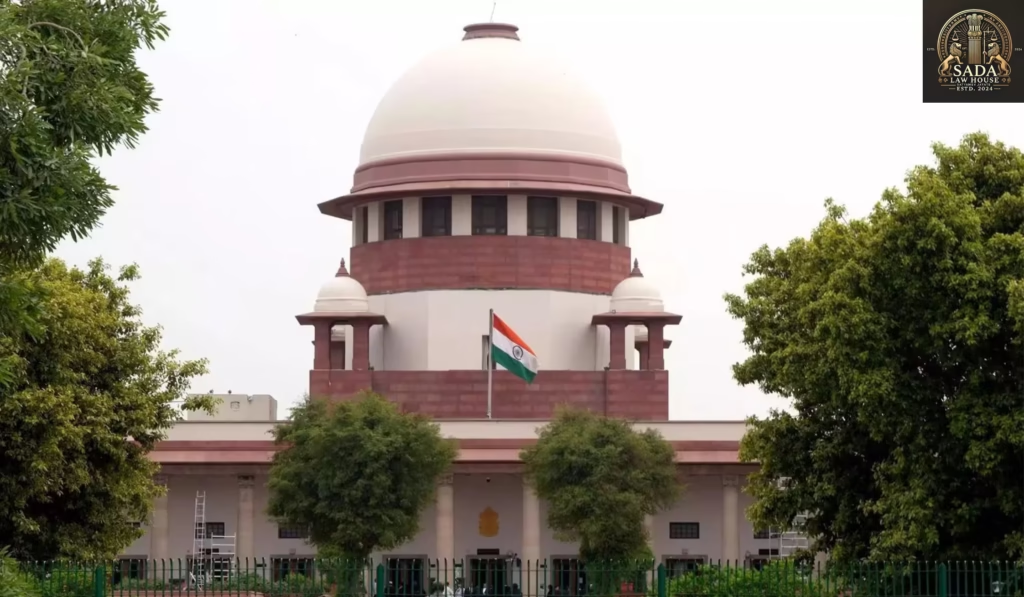
Supreme Court Denies Stay on Rohingya Deportation, Questions Claims of Forced Expulsion into Sea Read More »