sadalawpublications.com

Sadalaw

Legal Framework governing reproductive rights and abortion law

Legal Framework governing reproductive rights and abortion law 24 jan 2025 Introduction The fundamental basis of India’s abortion legislation is a cis-hetero-patriarchal society that controls expecting mothers’ bodies through a severe criminal justice system. The criminal framework includes the POCSO Act and the PCPNDT Act, which allow for nearly unrestrained law enforcement harassment of abortion providers and seekers and necessitate significant state surveillance.[i] Due to the stigma surrounding abortions that is reinforced by criminalization, pregnant women have few options when it comes to ending their pregnancy. These options include carrying an undesired pregnancy to term and forgoing prenatal and maternal healthcare, or obtaining an unsafe abortion and running the risk of legal repercussions. Essential components of women’s independence and health are reproductive rights, which include the right to a safe and legal abortion. India’s legal system for abortion and reproductive rights has changed significantly over time, striking a balance between individual liberties, public health concerns, and social factors. This blog examines legal interpretation, important statutes, and current issues with reproductive rights and abortion regulations in India. Legal Framework In India, the Medical Termination of Pregnancy (MTP) Act is a government law that permits licensed medical practitioners to perform abortions in specific predefined situations. This legislation was a progressive move that recognized women’s reproductive rights and attempted to lower maternal mortality from unsafe abortions. Medical terminations of pregnancy were governed by Sections 312 to 318 of the Indian Penal Code (IPC) prior to the MTP Act of 1971. The majority of these provisions attempted to criminalize abortions, with the exception of cases where the procedure was performed in good faith to save the woman’s life. It is extremely difficult for women to obtain safe abortions because the IPC laws do not distinguish between unwanted and intended pregnancies. When women, including rape survivors, mentally ill, and those experiencing unintended pregnancies as a result of contraceptive failures, began going to court to seek permission for ending their pregnancies beyond the recommended gestational period of 20 weeks, the 1971 law was unable to keep up with the demands of the changing times and scientific advances in medicine.[ii] In order to lower maternal mortality and morbidity brought on by unsafe abortions, the 2021 Act modification seeks to guarantee women’s access to safe and legal abortion services. The modifications provide abortions up to 24 weeks for specific categories of women, up to 24 weeks for women whose marital status changed during pregnancy, up to 24 weeks for survivors of rape or incest, and up to 24 weeks for other vulnerable women. The amendments also permit abortions up to 20 weeks after the opinion of one licensed medical professional. The modification also made pregnancies outside of marital institutions legally binding by substituting “by any married woman or her husband” with “any woman or her partner.” Existing legislation and policy: what is still lacking? The MTP Act’s significant medical slant is one of its main criticisms. Practitioners of alternative medical systems and mid-level healthcare providers are not covered by the “physicians only” provision. Access to second trimester abortions is further limited by the need for a second medical opinion, particularly in remote locations.[iii] All public hospitals are required by the MTP Act to provide abortion services. Despite this, public health institutions are exempt from the same regulatory processes as the private sector because they are not required to obtain the necessary approval. It is incorrect to believe that simply because a health institution is part of the public sector, it has effective regulatory processes that don’t need to be supported by laws and regulations and is accountable to the general public. Any restrictions of this kind are frequently out-of-date or opaque.[iv] The absence of a clear policy on excellent clinical practice and research constitutes a significant gap in Indian abortion policy. Published in 2001[v]national technical guidelines do not guarantee acceptable clinical practice even at abortion clinics that have been recognized by the WHO, and they do not comply with their international guidance[vi] Protecting women’s reproductive rights: the role of the judiciary The judiciary will inevitably have to handle the problem of reproductive rights as there isn’t a sufficient legislative framework to safeguard women’s reproductive rights. The Indian judiciary has played a pivotal role in safeguarding and augmenting the reproductive rights of women, guaranteeing the preservation of their constitutional entitlements to bodily autonomy, personal liberty, and privacy. In interpreting the Medical Termination of Pregnancy (MTP) Act and related regulations, the courts have adopted a progressive approach, guaranteeing that the rules are in line with the changing requirements of society and improvements in medicine. In the landmark decision of Suchita Srivastava v. Chandigarh Administration.[vii], the Supreme Court of India upheld the constitutional right of women to reproductive autonomy as a part of their right to personal liberty under Article 21. The court underlined that having the freedom to choose among contraception, abortion, and other reproductive health treatments is part of having reproductive rights. In the case of Meera Santosh Pal v. Union of India[viii], the Supreme Court upheld an abortion due to significant fetal abnormalities that took place beyond the 20-week limit set down in the MTP Act. This ruling emphasized the need for the law to be flexible in order to accommodate extraordinary situations and emphasized how crucial it is to take the woman’s health and well-being into account. In X v. Union of India[ix], the Supreme Court extended the rights of reproductive individuals by permitting an unmarried woman to end a pregnancy that resulted from a consenting relationship. This decision was significant because it recognized that a woman’s autonomy to make choices regarding her reproductive health is not contingent on her marital status and that rights pertaining to procreation are not gender-specific. Challenges and Contemporary issues: Access to secure abortion services: The inability to obtain safe abortion services is one of the major problems. Geographical disparities, particularly those between urban and rural areas, make it more difficult for women from rural areas to access licensed medical facilities

Legal Framework governing reproductive rights and abortion law Read More »

The Role of International Law in Shaping Domestic Constitutions

The Role of International Law in Shaping Domestic Constitutions 22 jan 2025 1. Introduction The interplay between international law and domestic constitutions is a significant component of contemporary legal systems. International law, consisting of treaties and conventions and customary legal rules, shapes national constitutions by developing ideas about human rights protections, structures of governance, or legal standards of behaviour. Functionally, this occurrence describes the conditional and dynamic interplay concerning the interaction of international law, international norms, and domestic legal traditions: both peaceful, cooperative interactions and reactionary confrontation when one or more participants see it as moralizing. This paper looks at examples of how international law animates domestic constitutions. I will discuss its influence on legal structures, the constitutional reform process, judicial engagement with rights, and the development and practice of human rights protections. 2. Obtaining Inspiration from International Law a. Human Rights Frameworks One of the most plainly observable ways in which international laws influence domestic constitutions is through inspiration supplied by international human rights frameworks. The Universal Declaration of Human Rights (UDHR) provides one of the foundational documents for drafting other national constitutions. It states fundamental rights and freedoms such as the right to life, freedom of speech, and fair trial. Many domestic legal systems utilize UDHR principles of lived experience as a basis for constitutional provisions and embracing national legislative aspirations. The South African Constitution of 1996 illustrates the degree of international human rights standards’ influence. In written form, the South African Constitution states extensive protections for civil, political, economic, and social rights as a function for those aspirations and blessings of the international community like those found in instruments such as the International Covenant on Civil and Political Rights (ICCPR) and the International Covenant on Economic, Social and Cultural Rights (ICESCR). In Germany, the Basic Law (Grundgesetz) distinguished itself from earlier arrangements to disallow the cataclysmic abuses of rights prevalent as a result of the intoxicated Nazi-era human rights abuse, by solidifying protections for the rights of individuals influenced by other international norms. b. Environmental Protection International treaties addressing environmental issues also have an impact on domestic constitutions. One example is the 1992 Earth Summit, held in Rio de Janeiro, which yielded the Rio Declaration on Environment and Development and Agenda 21, both of which laid out the principles for sustainable development. Those international legal instruments have inspired constitutional amendments and revisions that bear a public commitment about environmental protection, environmental conservation, and sustainable development. Likewise, the Constitution of Ecuador—reformed in 2008—stands out because it incorporates the “Rights of Nature” creating a recognition of the environment in constitutional law, following international environmental principles and the impact of the sustainable development paradigm. Indian constitutional law’s directive principles of state policy accept international convention and accommodate public environmental protection obligations that stem from international treaties-inspired amended constitutional rules. Examples such as these confirm new norms of international environmental law in a public statutory domestic constitutional context.  3. Incorporation of International Law into Domestic Legal Systems  a. Self-Executing Treaties In some jurisdictions, domestic law automatically incorporates international treaties from the time of ratification. Such treaties are defined as self-executing meaning they have legal effect without any additional enabling domestic legislation. In a species-specific example, in the United States certain treaties become part of the “supreme law of the land” following ratification pursuant to Article VI of the Constitution. The incorporation of treaties such as this, can create new legal norms changing domestic law. The Convention on the Elimination of All Forms of Discrimination Against Women is an illustrative case. In jurisdictions that affiliate to characterize CEDAW as a self-executing treaty, the principles of gender equality and non-discrimination express the CEDAW provisions in domestic law and domestic constitutional provisions. Additionally, CEDAW’s incorporation to specific domestic law represents international norms of gender equality and non-discrimination obligations; acknowledgment of CEDAW provides the basis for person’s gender equality standards. b. Legislative Incorporation In several countries, international treaties necessitate an act of legislation to incorporate them into national law. This incorporates the passing of legislation that brings national law into harmony with international obligations. For instance, the United Kingdom’s method for the incorporation of international treaties relies upon Parliament passing legislation to fulfil treaty obligations. The UK’s Human Rights Act 1998 as an example of legislative incorporation, seeks to incorporate the European Convention on Human Rights (ECHR) into UK national law. Likewise, Australia’s mechanism for the incorporation of international treaties involves the passing of enabling legislation. Although not directly incorporated into Australian domestic law, the Australian Constitution allows for the effectuation of international treaties through legislative action. The Australian Parliament has passed legislation that ensures compliance with international human rights obligations, such as the Australian Human Rights Commission Act 1986. 4. Influence on Judicial Interpretation  a. Constitutional Interpretation International law can influence the construction of provisions in domestic constitutions. Courts may construct domestic constitutional rights and principles based on international legal standards; thereby ensuring that national law is consistent with global standards. This occurs in jurisdictions where treaties have been incorporated into national law; however, it may applies more broadly than domestic incorporation of international treaties. In South Africa, for example, the Constitutional Court often referred to international human rights documents when it interprets the Bill of Rights. South Africa’s method of constitutional construction ensures that national provisions are interpreted in keeping with international human rights standards. In similar fashion, the Supreme Court of India has used international treaties and conventions to guide its construction of fundamental rights, as set out in the Indian Constitution. In doing so, India has aligned its national law with international law. b. Human Rights Adjudication International human rights treaties present numerous opportunities for adjudication of cases involving fundamental human rights. In many events, courts and human rights tribunals utilize international human rights norms in adjudicating cases addressing discrimination, freedom of expression, and the right to a fair trial. Many courts and tribunals have found this practice useful in ensuring that domestic legal standards comply with international human rights

The Role of International Law in Shaping Domestic Constitutions Read More »

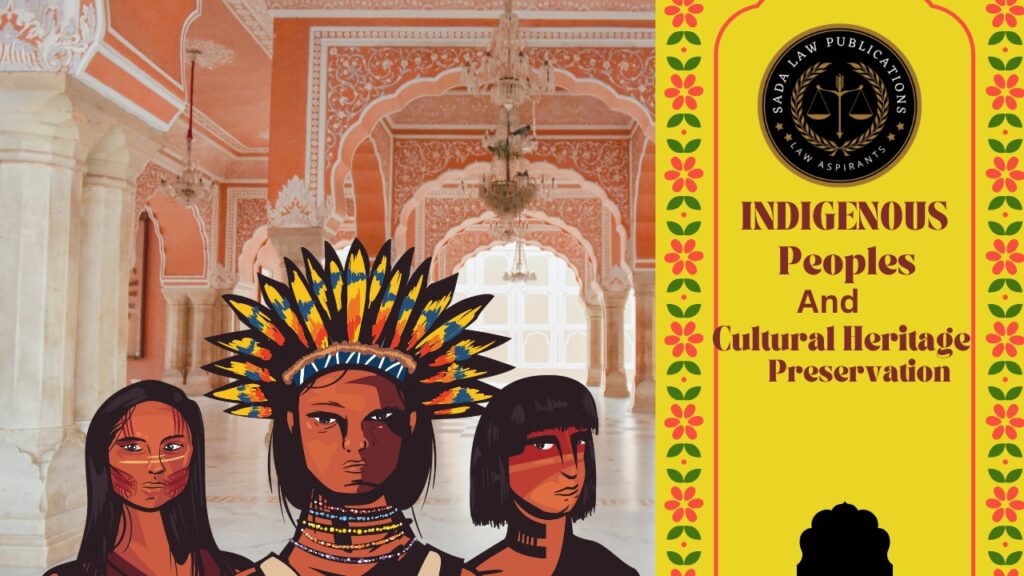
Indigenous Peoples’ Rights and Cultural Heritage Preservation

Indigenous Peoples’ Rights and Cultural Heritage Preservation 22 jan 2025 1. Introduction The indigenous peoples of the world, with their innumerable cultures and diversities of life, history, and traditions, form a significant part of the cultural mosaic. Their rights and cultural heritage have always been major concerns regarding threats from various fronts: colonization, modernity, and environmental degradation. Preserving the cultural heritage of indigenous communities, while at the same time upholding their rights, is indeed an extremely complex issue with intricate details. This essay discusses the legal frameworks, international agreements, and challenges correlated with indigenous peoples’ rights to cultural heritage preservation. It reflects on the role of international law, challenges brought about by modern challenges, and the need to preserve the indigenous cultural heritage for future generations. 2. Historical Context and Legal Framework The history of indigenous peoples worldwide is scared by colonization, marginalization, and suppression of their cultural heritage. Land was taken away as the colonial masters introduced their sets of laws and delved into disregard for laws and customs of people indigenous to them. For example, the colonization of the Europeans in America saw many indigenous communities displaced and cultures decimated. The colonization of the British in Australia led to the near extinction of languages and cultural practices amongst Aborigines.  3. International Legal Frameworks Several international legal regimes have been elaborated, responding to historical injustices for the protection of the rights of indigenous people to their cultural heritage. Core documents include: a. United Nations Declaration on the Rights of Indigenous Peoples (UNDRIP) Adopted by the United Nations General Assembly in 2007, UNDRIP represents the milestone in recognizing indigenous peoples’ rights. The UNDRIP enumerates the collective rights of indigenous peoples to self-government, land, culture, and involvement in decision-making processes. The UNDRIP attaches a great deal of importance to the preservation of indigenous cultural heritage and lays down that indigenous peoples are in control over traditional knowledge and practices. b. Convention on Biological Diversity (CBD) The CBD, signed in 1992, is an acknowledgment that traditional knowledge and practices are significant in biodiversity conservation. It encourages active participation of indigenous peoples in management and protection within their respective traditional lands and knowledge. The Nagoya Protocol to the CBD, adopted in 2010, provides a legal framework aimed at the fair and equitable sharing of benefits arising from the utilization of genetic resources and traditional knowledge. c. International Labour Organization Convention No. 169 Adopted in 1989, ILO Convention No. 169 is a comprehensive international instrument that covers a wide range of rights for indigenous and tribal peoples, including issues relating to land, participation in decision-making, and cultural preservation. Convention No. 169 is legally binding upon the ratifying countries and as such provides a legal framework for the protection of indigenous cultural heritage. d. World Heritage Convention It was adopted in 1972 and focuses on protection of the cultural and natural heritage of outstanding universal value. Though it does not specifically address the rights of indigenous peoples, many indigenous sites have been recognized within this framework. The Convention encourages the participation of indigenous peoples in the management and conservation at World Heritage sites. 4. Cultural Heritage Protection a. Importance of Cultural Heritage Cultural heritage is the ensemble of all traditions, languages, art, rituals, and practices that identify a community. In the case of indigenous people, it is directly linked to their relationship with the land and natural resources. It is crucial in maintaining their social cohesion, historical continuity, and cultural diversity. This heritage needs preservation not only for the communities themselves but for humanity as a whole, for its contribution to global cultural diversity. 5. Challenges on Cultural Heritage  a. Environmental Degradation The greatest threat to indigenous peoples’ culture is environmental degradation. Deforestation, mining, and industrial agriculture all disrupt the homelands and ecosystems on which people have traditionally relied. Deforestation in the Amazon Rainforest alone has taken not only a toll on the biodiversity in the region but threatened the culture which indigenous communities have with the forest for their livelihoods and spiritual practices. b. Globalization and Modernity Globalization and modernity result in the homogenization of cultures and erosion of the traditional practices thereof. The challenges regarding any indigenous culture are that they may be overpowered by Western values and a way of life. They may lose traditional knowledge and practices within such influence. The spread of technology and mass media often converts into cultural assimilation and further marginalizes languages and cultures of indigenous communities. c. Legal and Political Challenges The concept of indigenous cultural heritage is often mired in judicial and political tussles. Conflicting rights over land, inadequate legal provisions, and lack or minimal representation in decision-making forums all combine to work against any possibility of preservation. Very often, court cases regarding land ownership and the extraction of resources have placed indigenous cultural sites under threat. 6. International and National Efforts in Preservation International Initiatives a. UNESCO’s Intangible Cultural Heritage Program UNESCO’s ICH program was devised to preserve cultural practices and traditions important to communities for their identities. It aids in the identification and preservation of intangible cultural heritage in various ways, one of which includes the Representative List of the Intangible Cultural Heritage of Humanity. A few of the indigenous practices have been included in this list, such as certain traditional dances and rituals, proving their significance and a need for their preservation.  b. Convention for Safeguarding of the Intangible Cultural Heritage Adopted in 2003, the Convention deals with safeguarding intangible cultural heritage, including oral traditions, performing arts, and traditional knowledge. It emphasizes the role of communities in the preservation process and encourages the establishment of national inventories and safeguarding measures. This Convention provides a framework for protecting indigenous cultural practices from extinction. 7. National Legislation and Policies  a. Australia’s Native Title Act 1993  Australia’s Native Title Act acknowledges the rights of Aboriginal and Torres Strait Islander peoples to their various lands and waters. It provides legal provision for the making of claims on and the protection of native title, assists in the

Indigenous Peoples’ Rights and Cultural Heritage Preservation Read More »