
sadalawpublications.com

Sadalaw

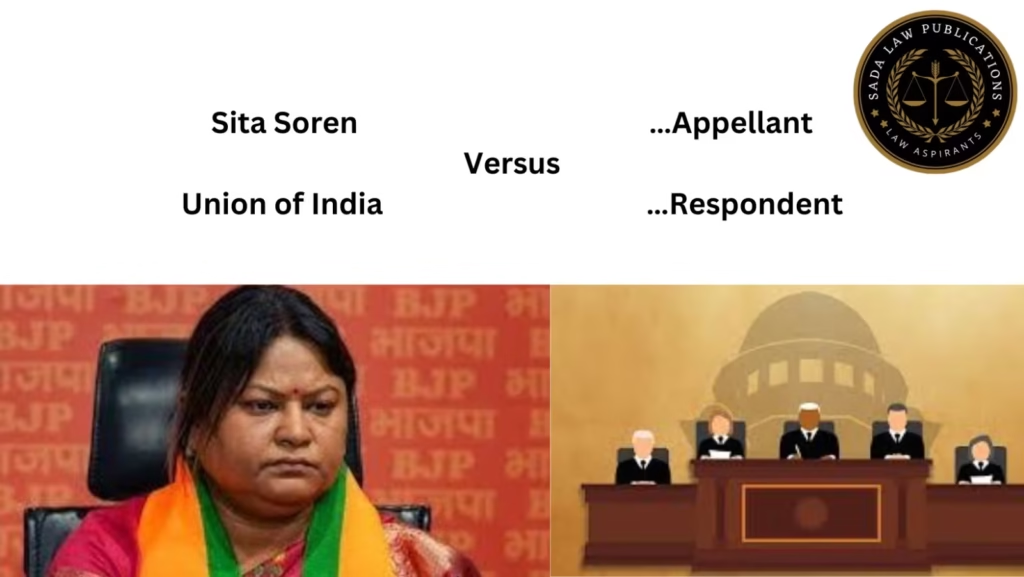
Historic Verdict: Supreme Court Overturns 1998 Ruling P.V. Narasimha Rao v. State (CBI/SPE), Ends Immunity for Lawmakers Taking Bribes for Votes on 4th March, 2024

Trending Today Supreme Court Strikes Down Electoral Bond Scheme as Unconstitutional for Undermining Transparency and Democratic Principles on dated 15th February, 2024. Historic Verdict: Supreme Court Overturns 1998 Ruling P.V. Narasimha Rao v. State (CBI/SPE), Ends Immunity for Lawmakers Taking Bribes for Votes on 4th March, 2024 Supreme Court Overrules Synthetics and Chemicals Ltd The State or its instrumentality cannot tinker with the “rules of the game” insofar as the prescription of eligibility criteria Validity of LMV Driving License for Transport Vehicles Minority Status of educational institutions not affected by statute, date of establishment, or non-minority administration JAMMU AND KASHMIR POST ARTICLE 370 ANIMAL CRUELTY CONTROVERSY: HOW THE 2023 SCC DECISION AFFECT JALIKATTU Role of technology in transforming the Indian judiciary COMMON CAUSE v. UNION OF INDIA 2018 Historic Verdict: Supreme Court Overturns 1998 Ruling P.V. Narasimha Rao v. State (CBI/SPE), Ends Immunity for Lawmakers Taking Bribes for Votes on 4th March, 2024 06 Mar 2025 [post-views] Table of contents Background P.V. Narasimha Rao v. State (CBI/SPE), (1998) SC Sita Soren v. Union of India, 2014 SC Reference to 7-Judge Bench 7-Judge Bench Decision Parliamentary Privilege in India Whether Parliamentary privileges attract immunity to a member of Parliament or of the Legislatures who engages in bribery in connection with their speech or vote? At which stage does the offence of Bribery crystallizes? Criminal Appeal No. 451 of 2019 Sita Soren                                           …Appellant Versus Union of India                                       …Respondent Date of judgement:- 4th march, 2024 Presiding judge: DY Chandrachud, CJI, AS Bopanna, MM Sundresh, Pamidighantam Sri Narasimha, JB Pardiwala, Sanjay Kumar and Manoj Misra, JJ.  The 7-Judge Constitution Bench  overturned the 5-Judge Bench 1998 verdict in P.V. Narasimha Rao v. State (CBI/SPE), (1998) 4 SCC 626, wherein it was established that the Member of Parliaments (‘MP’) and Member of Legislative Assemblies (‘MLA’) enjoyed immunity if they cast vote in the House after taking bribe for it. Background Article 105(2) and 194(2) of the Constitution Article 105(2) of the Constitution of India grants immunity to MPs against prosecution in respect of anything said or any vote given by him in Parliament or any committee. Article 194(2) of the Constitution grants similar immunity to MLAs. P.V. Narasimha Rao v. State (CBI/SPE), (1998) SC The majority of 5-Judge Constitution Bench held that the MPs who allegedly accepted bribe and voted against the no-confidence motion were entitled to immunity under Article 105(2) of Constitution. It said that “no member (of Parliament) is answerable in a court of law or any similar tribunal for what he has said in Parliament. This again is recognition of the fact that a member needs the freedom to say what he thinks is right in Parliament undeterred by the fear of being proceeded against. A vote, whether cast by voice or gesture or the aid of a machine, is treated as an extension of speech or a substitute for speech and is given the protection that the spoken word has.” Sita Soren v. Union of India, 2014 SC This case revolved around complaints of Horse-Trading during election of the Council of the States, and facts reflected that after receiving money, the said member did caste vote, but not in favour of the bribe giver. The Court relied on the majority view in P.V. Narasimha Rao (supra) to express that the act of receiving money had no nexus with the alleged conspiracy or the act of casting vote. The Court viewed that the petitioner’s act of receiving money pursuant to the conspiracy and agreement with bribe giver lacked nexus with the vote due to the fact that she did not cast vote in favour of the said person and will have no immunity as guaranteed under Article 194(2) of the Constitution. Reference to 7-Judge Bench While hearing an appeal against the High Court’s decision, the three-judge Bench of the Court said that the question that whether by virtue of Article 105(2) and 194(2) of the Constitution the MPs or MLAs can claim immunity from the prosecution on a criminal charge of bribery, was dealt by a 5-Judge Bench in P.V. Narasimha Rao (supra), hence, considering the wide ramification of the question, the doubts raised and the issue being a matter of public importance, the correctness of the P.V. Narasimha Rao was referred to a larger bench. 7-Judge Bench Decision Reconsidering PV Narasimha Rao does not violate the principle of stare decisis Referring to Maganlal Chhaganlal (P) Ltd. v. Municipal Corpn. of Greater Bombay, (1974) 2 SCC 402 the Court said that the ability of the Court to reconsider its decisions is necessary for the organic development of law and the advancement of justice. Further, the Court said that if the Court is denuded of its power to reconsider its decisions, the development of constitutional jurisprudence would virtually come to a standstill. The Court also reiterated that the doctrine of stare decisis is not an inflexible rule of law, and it cannot result in perpetuating an error to the detriment of the general welfare of the public. The Court explained that its earlier decisions can be reviewed by the Court, if it believes that there is an error, or the effect of the decision would harm the interests of the public or if “it is inconsistent with the legal philosophy of the Constitution”. The Court stated that “the period of time over which the case has held the field is not of primary consequence”. Hence, the Court said that the majority judgment in PV Narasimha Rao (supra) deals with an important question of constitutional interpretation which has wide ramifications on public interest, probity in public life and the functioning of parliamentary democracy and as it contains several apparent errors inter alia in its interpretation of the text of Article 105; its conceptualization of the scope and purpose of parliamentary privilege and its approach to international jurisprudence all of which have resulted in a paradoxical outcome. Parliamentary Privilege in India The Court said that the clause (1) and (2) of the Article 105 of
Historic Verdict: Supreme Court Overturns 1998 Ruling P.V. Narasimha Rao v. State (CBI/SPE), Ends Immunity for Lawmakers Taking Bribes for Votes on 4th March, 2024 Read More »

Supreme Court Overrules Synthetics and Chemicals Ltd

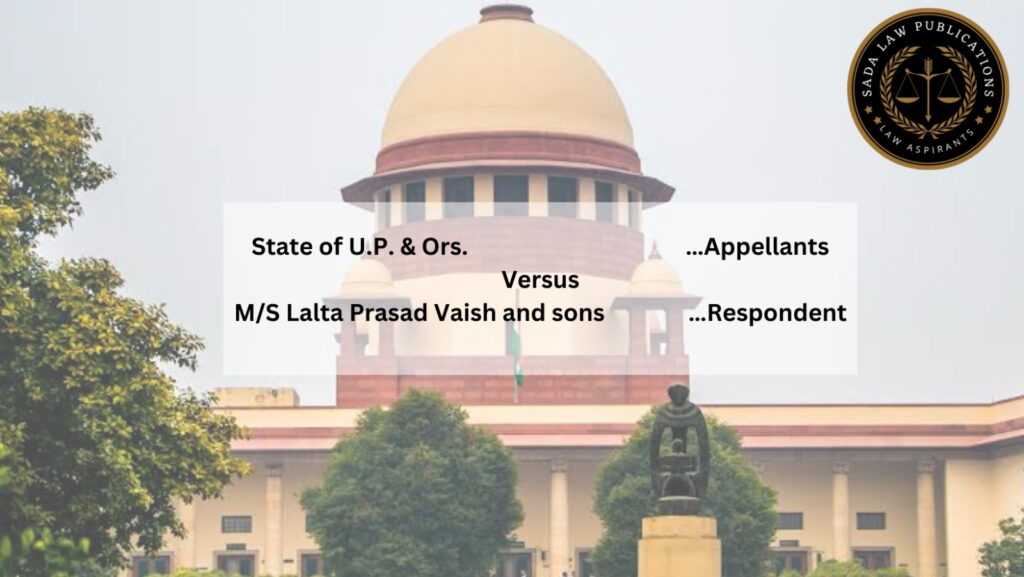
Trending Today Supreme Court Overrules Synthetics and Chemicals Ltd The State or its instrumentality cannot tinker with the “rules of the game” insofar as the prescription of eligibility criteria Validity of LMV Driving License for Transport Vehicles Minority Status of educational institutions not affected by statute, date of establishment, or non-minority administration JAMMU AND KASHMIR POST ARTICLE 370 ANIMAL CRUELTY CONTROVERSY: HOW THE 2023 SCC DECISION AFFECT JALIKATTU Role of technology in transforming the Indian judiciary COMMON CAUSE v. UNION OF INDIA 2018 Legal Framework governing reproductive rights and abortion law The Impact of Contract Law on E-Commerce and Online Transactions Supreme Court Overrules Synthetics and Chemicals Ltd. Verdict: States Can Tax Industrial Alcohol – Supreme Court decided on 23 october, 2024 05 Mar 2025 Table of contents Introduction Constitutional Framework, Statutory Provisions, and the Synthetics Judgment Court’s Assessment Reconciling Entry 8 of List II and Entry 52 of List I Understanding Entry 52 of List I and its Limitations Whether Entry 52 of List I Override Entry 8 of List II? Defining ‘Intoxicating Liquor’  Civil Appeal No 151 of 2007 State of U.P. & Ors.                                        …Appellants Versus  M/S Lalta Prasad Vaish and sons                             …Respondent Date of Judgement:-  23 october, 2024 Presiding judges:- Dr DY Chandrachud, CJ.* Hrishikesh Roy, J Abhay S. Oka, J JB Pardiwala, J Manoj Misra, J Ujjal Bhuyan, J Satish Chandra Sharma B V Nagarathna, J and Augustine George Masih, JJ. INTRODUCTION:- In an appeal concerning the scope of State Legislatures’ power under Entry 8 and the interpretation of “intoxicating liquor”—whether it includes only potable alcohol or also extends to alcohol used in other industries—a 9-Judge Constitution Bench ruled by an 8:1 majority as follows: Entry 8 of List II in the Seventh Schedule of the Constitution serves as both an industry-based and product-based entry. The phrase “that is to say” does not limit its scope, covering everything from raw materials to the consumption of intoxicating liquor. Parliament cannot claim complete control over the industry through a declaration under Entry 52 of List I. The State Legislature’s power under Entry 24 of List II is only restricted to the extent that Parliament legislates under Entry 52 of List I. Parliament lacks the legislative competence to take control of the intoxicating liquor industry covered under Entry 8 of List II using its authority under Article 246 and Entry 52 of List I. Entry 8 of List II is grounded in public interest and extends beyond potable alcohol. The term “intoxicating” suggests that it includes alcohol with potential misuse affecting public health. This encompasses substances like rectified spirit, ENA, and denatured spirit, which serve as raw materials for alcoholic beverages and other products. However, it does not cover final products containing alcohol, such as hand sanitizers, as that would encroach upon other legislative domains. The majority opinion, delivered by Chief Justice Dr. DY Chandrachud along with Justices Hrishikesh Roy, Abhay S. Oka, JB Pardiwala, Manoj Misra, Ujjal Bhuyan, Satish Chandra Sharma, and Augustine George Masih, also overruled the 7-Judge Bench decision in Synthetics and Chemicals Ltd. v. State of U.P., (1990) 1 SCC 109, which had held that States could not impose taxes on industrial alcohol. Justice  V. Nagarathna was the sole dissenter in the case. Background: Constitutional Framework, Statutory Provisions, and the Synthetics Judgment:- The present appeal centered on the legislative authority of State Legislatures under Entry 8 of the Seventh Schedule of the Constitution, specifically concerning the regulation and taxation of industrial alcohol. As per the Constitutional framework, States have legislative competence over ‘industries’ under Entry 24 of List II. However, this power is subject to Entries 7 and 52 of List I. Entry 8 of List II pertains to ‘intoxicating liquors,’ followed by the phrase “that is to say, the production, manufacture, possession, transport, purchase, and sale of intoxicating liquors.” Additionally, the Seventh Schedule distinctly allocates taxing powers related to alcohol. Under Article 246, in conjunction with Entry 52 of List I, Parliament enacted the Industries (Development and Regulation) Act, 1951 (IDRA). Section 2 of IDRA grants the Union control over “Fermentation Industries,” including alcohol production. A 2016 amendment to Item 26 of the First Schedule of IDRA specifically excluded potable alcohol from its ambit. Furthermore, Section 18-G of IDRA empowers the Central Government to regulate the supply and distribution of goods related to a scheduled industry to ensure equitable distribution and fair pricing. In Synthetics and Chemicals Ltd. v. State of U.P., a 7-Judge Bench of the Supreme Court examined two key issues: The validity of vend fees imposed on industrial alcohol under various State laws, and Whether the power to levy excise duty on industrial alcohol rested with the State or the Centre. The Court held that the term “intoxicating liquor” in Entry 8 refers exclusively to liquor that is consumable in its existing form by humans. It further established three key principles: States lack the authority to impose taxes on industrial alcohol. States can impose taxes on potable alcohol. States can levy fees on industrial alcohol. In State of U.P. v. Lalta Prasad, (2007) 13 SCC 463, the Supreme Court identified six issues requiring adjudication by a larger Bench. Subsequently, in December 2010, a 5-Judge Bench observed that the ruling in Synthetics warranted reconsideration by a 9-Judge Bench and directed the matter accordingly. Court’s Assessment: In its preliminary observations, the Court delved into the distinction between potable and non-potable alcohol. It was noted that the complexity, where the materials for the preparation of potable alcohol are also used for the preparation of other products, a simplistic classification of ‘potable’ and ‘non-potable’ alcohol cannot be made for the purposes of this judgment. Reconciling Entry 8 of List II and Entry 52 of List I Entry 8 of List II specifically deals with ‘intoxicating liquor,’ defining its scope through the phrase “that is to say,” which serves to clarify its coverage rather than restrict it. This entry includes all aspects of intoxicating liquor, from production to sale, as indicated by the terms “production,

Supreme Court Overrules Synthetics and Chemicals Ltd Read More »

The State or its instrumentality cannot tinker with the “rules of the game” insofar as the prescription of eligibility criteria

Trending Today The State or its instrumentality cannot tinker with the “rules of the game” insofar as the prescription of eligibility criteria Validity of LMV Driving License for Transport Vehicles Minority Status of educational institutions not affected by statute, date of establishment, or non-minority administration JAMMU AND KASHMIR POST ARTICLE 370 ANIMAL CRUELTY CONTROVERSY: HOW THE 2023 SCC DECISION AFFECT JALIKATTU Role of technology in transforming the Indian judiciary COMMON CAUSE v. UNION OF INDIA 2018 Legal Framework governing reproductive rights and abortion law The Impact of Contract Law on E-Commerce and Online Transactions Indian Parliament The State or its instrumentality cannot tinker with the “rules of the game” insofar as the prescription of eligibility criteria —- Supreme court on 7th November, 2024 04 Mar 2025 Table of contents Introduction Facts Issue involved CIVIL APPEAL No. 2634 of 2013 Tej Prakash Pathak & Ors ………. Appellant (s) v. Rajasthan High Court & Ors ……… Respondent (s) Date of judement : 7th November, 2024 Presiding Judges :- DY Chandrachud, CJI, Hrishikesh Roy, PS Narasimha, Pankaj Mithal, and Manoj Misra, JJ Introduction:  In a matter posing a legal question of whether the criteria for appointment to a public post could be altered by the authorities concerned in the middle or after the process of selection has started, the 5-Judge Constitution Bench  held the following: Recruitment process commences from the issuance of the advertisement calling for the applications and ends with filling up of vacancies; Eligibility criteria for inclusion in the select list cannot be altered midway, unless explicitly allowed by the prevailing rules or the original advertisement, provided it does not contradict those rules; If such change is permissible under the extant rules or advertisement, the change has to meet the standard of Articles 14 of the Constitution and must satisfy the test of non —arbitrariness; Manjusree v. State of A.P. (2008) 3 SCC 512. (deals with right to be placed in the select list), is good law and not in conflict with State of Haryana v. Subash Chander Marwaha, (1974) 3 SCC 220 (deals with the right to be appointed from the select list) into consideration. These cases dealt with altogether different issues. Recruiting bodies subject to the extant rules may devise an appropriate procedure for bringing the recruitment process to its logical end, provided the procedure is transparent non-discriminatory, non-arbitrary, and has a rational nexus with the object sought to be achieved. Extant Rules having statutory force are binding on the recruiting body both in terms of procedure and eligibility, however, where the rules are silent, the administrative instructions can fill in the gaps. Placement in the select list does not give a candidate an indefeasible right to employment; the State or its instrumentality for bona fide reasons can chose to not fill up the vacancies, however, if vacancies exist the State or its instrumentality cannot arbitrarily deny appointment to a person within the zone of consideration. Facts: The present case is concerned with the recruitment process for filling thirteen translator posts in the Rajasthan High Court, which required candidates to first appear for a written exam, followed by a personal interview. Twenty-one candidates participated in the process, but only three were declared successful by the High Court (administrative side). It was later revealed that the Chief Justice of the High Court had imposed a 75 per cent marks criterion for selection, which had not been mentioned in the original recruitment notification. This new criterion was applied retroactively, resulting in the selection of only three candidates and the exclusion of the remaining ones. In response, three unsuccessful candidates filed a writ petition challenging the decision, arguing that the imposition of the 75 per cent cutoff amounted to “changing the rules of the game after the game is played,” which was impermissible. The High Court dismissed their petition in March 2010, prompting the appellants to approach the Supreme Court for relief. In 2023, the three-judge bench acknowledged that applying the K. Manjusree (supra) ruling strictly to the present case would compel the Rajasthan High Court to recruit all thirteen candidates, rather than just three. However, the Bench expressed that such a rigid application, without further scrutiny, might not serve the larger public interest or the goal of creating an efficient administrative framework. To support this view, the Bench referenced the Subash Chander Marwaha case, which dealt with the recruitment of civil judges in Haryana, noting that this ruling had not been considered in the Manjusree case. As a result, the matter was referred to a larger Bench for a conclusive ruling…. Issues  Involved:- When the recruitment process commences and comes to an end Basis of the doctrine that ‘rules of the game’ must not be changed during the game, or after the game is played Whether the decision in K. Manjusree (supra) is at variance with earlier precedents on the subject Whether the above doctrine applies with equal strictness qua method or procedure for selection as it does qua eligibility criteria Whether procedure for selection stipulated by Act or Rules framed either under the proviso to Article 309 of the Constitution or a Statute could be given a go-bye (a) When the recruitment process commences and comes to an end:- The Court reiterated that the process of recruitment begins with the issuance of advertisement and ends with the filling up of notified vacancies. It consists of various steps like inviting applications, scrutiny of applications, rejection of defective applications or elimination of ineligible candidates, conducting examinations, calling for interview or viva voce and preparation of list of successful candidates for appointment (b) Basis of the doctrine that ‘rules of the game’ must not be changed during the game, or after the game is played:- The doctrine proscribing change of rules midway through the game, or after the game is played, is predicated on the rule against arbitrariness enshrined in Article 14 of the Constitution. Article 16 is only an instance of the application of the concept of equality enshrined in Article

The State or its instrumentality cannot tinker with the “rules of the game” insofar as the prescription of eligibility criteria Read More »

Validity of LMV Driving License for Transport Vehicles

Trending Today The State or its instrumentality cannot tinker with the “rules of the game” insofar as the prescription of eligibility criteria Validity of LMV Driving License for Transport Vehicles Minority Status of educational institutions not affected by statute, date of establishment, or non-minority administration JAMMU AND KASHMIR POST ARTICLE 370 ANIMAL CRUELTY CONTROVERSY: HOW THE 2023 SCC DECISION AFFECT JALIKATTU Role of technology in transforming the Indian judiciary COMMON CAUSE v. UNION OF INDIA 2018 Legal Framework governing reproductive rights and abortion law The Impact of Contract Law on E-Commerce and Online Transactions Indian Parliament Validity of LMV Driving License for Transport Vehicles: Supreme Court on 6th November, 2024 04 Mar 2025 CIVIL APPEAL No. 841 of 2018 M/s BAJAJ ALLIANCE GENERAL INSURANCE CO. LTD.                           …APPELLANT(S) VERSUS RAMBHA DEVI & ORS.                           …RESPONDENT(S) Date of the Judgement- 6th November, 2024 Presideng Judges: DY Chandrachud, CJI, Hrishikesh Roy, PS Narasimha, Pankaj Mithal, and Manoj Misra, JJ Introduction In a case addressing whether an individual with a driving license for a ‘Light Motor Vehicle’ (LMV) is permitted to drive a ‘transport vehicle’ within the LMV category with an unladen weight not exceeding 7500 kg, a five-judge bench ruled that a person holding an LMV license can operate such a transport vehicle without requiring a specific endorsement. The issue at hand originated in the case of Mukund Dewangan v. Oriental Insurance Company Limited (2017) 14 SCC 663, where a 3-judge bench ruled that no separate endorsement was needed on an LMV driving license to operate a transport vehicle with an unladen weight below 7500 kg. The Court held that a person with an LMV license could drive a “transport vehicle of light motor vehicle class” weighing up to 7500 kg. However, in 2022, a coordinate bench raised doubts about this ruling, and the matter was subsequently referred to a larger 5-judge bench for further consideration. Adopting a harmonious interpretation of the provisions of the Motor Vehicles Act, 1988 (‘MV Act’), the Court upheld the decision in Mukund Dewangan (supra). Decisions:- The Court gave the following conclusions: A driver holding a license for LMV for vehicles underweight 7500 kg is permitted to operate a transport vehicle without needing additional authorisation under Section 10(2)(e) of the MV Act. For licensing purposes, LMVs and transport vehicles are not completely distinct categories, as there is some overlap between the two. A driver holding an LMV license can, under certain conditions, operate light commercial transport vehicles. However, there are still specific eligibility requirements that apply to certain types of vehicles, such as e-carts, e-rickshaws, and vehicles transporting hazardous goods. The second part of Section 3(1), which emphasises the necessity of a specific requirement to drive transport vehicle, does not supersede the definition of LMV provided in Section 2(21) of the MV Act. The additional eligibility criteria specified in the MV Act and MV Rules generally for driving transport vehicles would apply only to those intending to operate transport vehicles exceeding 7500 kgs, i.e medium goods vehicle, medium passenger vehicle, heavy goods vehicle and heavy passenger vehicles. … 2 Comments ANIMAL CRUELTY CONTROVERSY: HOW THE 2023 SCC DECISION AFFECT JALIKATTU – sadalawpublications.comFebruary 27, 2025 at 8:17 am | Edit[…] rights and abortion law The Impact of Contract Law on E-Commerce and Online Transactions Indian Parliament Addressing Judicial Issues in Revenge Porn Cases Triviality section 95 INDIAN YOUNG […]Reply RAVI KUMARFebruary 8, 2025 at 2:48 am | EditThe freedom we enjoy today is ours due to the lifelong struggle of our ancestors who fought tooth and nail for it. People from different backgrounds joined the show, inspired by the ideology of freedom, equality and democracy. Its a very good xplanation. #goodarticleReply Leave a Reply Cancel Reply Logged in as sadalawpublications@gmail.com. Edit your profile. Log out? Required fields are marked * Message*

Validity of LMV Driving License for Transport Vehicles Read More »

Minority Status of educational institutions not affected by statute, date of establishment, or non-minority administration

Trending Today Validity of LMV Driving License for Transport Vehicles Minority Status of educational institutions not affected by statute, date of establishment, or non-minority administration JAMMU AND KASHMIR POST ARTICLE 370 ANIMAL CRUELTY CONTROVERSY: HOW THE 2023 SCC DECISION AFFECT JALIKATTU Role of technology in transforming the Indian judiciary COMMON CAUSE v. UNION OF INDIA 2018 Legal Framework governing reproductive rights and abortion law The Impact of Contract Law on E-Commerce and Online Transactions Indian Parliament Addressing Judicial Issues in Revenge Porn Cases Minority Status of educational institutions not affected by statute, date of establishment, or non-minority administration :Supreme Court on 8th November, 2024 03 Mar 2025 Aligarh Muslim University v. Naresh Agarwal, 2024 Civil Appeal no. 2286 of 2006 Parties involved :  Aligarh Muslim University ……….. Appellant                                                             Vs.                                                               Naresh Agarwal & Ors“     ………..Respondents   Date of judgement: 8th november 2024 President Judges:- Dr. DY Chandrachud, CJ.,  Sanjiv Khanna, Surya Kant, JB Pardiwala, Dipankar Datta, Manoj Misra and Satish Chandra Sharma  Facts and judgement :- In an appeal against Allahabad High Court’s Order in Naresh Agarwal (Dr.) v. Union of India, 2005 whereby, Aligarh Muslim University’s (‘AMU’) action of 50 percent seat reservation in postgraduate medical courses for Muslim candidates by claiming it to be a minority institution, was struck down and held that AMU cannot have an exclusive reservation because it is not a minority institution, the Seven-Judge Constitution Bench comprising of Dr. DY Chandrachud, CJ., Sanjiv Khanna, Surya Kant, JB Pardiwala, Dipankar Datta, Manoj Misra and Satish Chandra Sharma, JJ. in 4: 3 overruled the Five-Judge Bench verdict in S. Azeez Basha v. Union of India, 1967,  which held that an institution incorporated by a statute cannot claim to be a minority institution, hence AMU as created by an Act of Parliament, is not a minority institution so as to be covered under Article 30 of the Constitution of India.   Issues: Whether an educational institution must be both established and administered by a linguistic or religious minority to secure the guarantee under Article 30? What are the criteria to be satisfied for the ‘establishment’ of a minority institution? Whether Article 30(1) envisages an institution which is established by a minority with participation from members of other communities; Whether a minority educational institution which is registered as a society under the Societies Registration Act 1860 soon after its establishment loses its status as a minority educational institution by virtue of such registration; and Whether the decision of this Court in Prof. Yashpal v. State of Chhattisgarh (2005) 5 SCC 420 and the amendment of National Commission for Minority Educational Institutions Act 2005 in 2010 have a bearing on the question formulated above and if so, in what manner…. Brief Undertanding about Amu through the time line in this case 1877- Sir Syed Ahmed Khan, Founded the Muhammadan Anglo- orientation college (MAO Colle) at aligarh The britishers imperial legislative council enacted the aligarh muslim university Act (AMU Act) incorporating AMU as a university Indian independence Indian constitution Article 30 A constitution bench (5 judge) in which held that an institution incorporated by a statute cannot claim to be a minority institution, hence AMU as created by an Act of Parliament, is not a minority institution so as to be covered under Article 30 of the Constitution of India. Parliament enacted the aligarh muslim University (Amendment) Act, 1981. This Amendment chenged the AMU Act and changed the definition of the word “University” as an institution “established by the muslims of India, etc. Note: the parliament tried to rectify the mistakes becoz of which AMU lost the minority university status. The AMU reserved 50% seats in postgraduate medical courses for muslim andidates by claaming it to be a minority institution. This bill was challedged in Dr. Naresh Agarwal v Union of India . The Allahabad High Court struch down the reservation policy and held that the AMU couldnot have an exclusive reservation because it was not a minority institution acoording to S. Azeez Basha. A three judges bench heard the AMU’S appeal and referred the decision in S. Azeez Basha for reconsideration by a seven – judge bench. Decision- The Suprme court by a 4:3 majority overruled Azeezz Basha. The majority held that merely because an institution is created by a statute does not strip it of minority status. The majority also held that Article 30(1) protectes institutes established before the constitution came into force in 1950. The court laid criteria to determine when an institution is a minority institution benefitting from Article  30(1) protection. The Court further laid down the factors which must be used to determine if a minority ‘established’ an educational institution: The indicia of ideation, purpose and implementation must be satisfied. First, the idea for establishing an educational institution must have stemmed from a person or group belonging to the minority community; second, the educational institution must be established predominantly for the benefit of the minority community; and third, steps for the implementation of the idea must have been taken by the member(s) of the minority community; and The administrative set up of the educational institution must elucidate and affirm (I) the minority character of the educational institution; and (II) that it was established to protect and promote the interests of the minority community. The Court overruled the view taken in Azeez Basha (supra) that an educational institution is not established by a minority if it derives its legal character through a statute. 4 Comments ANIMAL CRUELTY CONTROVERSY: HOW THE 2023 SCC DECISION AFFECT JALIKATTU – sadalawpublications.comFebruary 27, 2025 at 8:19 am | Edit […] law The Impact of Contract Law on E-Commerce and Online Transactions Indian Parliament Addressing Judicial Issues in Revenge Porn Cases Triviality section 95 INDIAN YOUNG LAWYERS ASSOCIATION v.

Minority Status of educational institutions not affected by statute, date of establishment, or non-minority administration Read More »

JAMMU AND KASHMIR POST ARTICLE 370

Trending Today JAMMU AND KASHMIR POST ARTICLE 370 ANIMAL CRUELTY CONTROVERSY: HOW THE 2023 SCC DECISION AFFECT JALIKATTU Role of technology in transforming the Indian judiciary COMMON CAUSE v. UNION OF INDIA 2018 Legal Framework governing reproductive rights and abortion law The Impact of Contract Law on E-Commerce and Online Transactions Indian Parliament Addressing Judicial Issues in Revenge Porn Cases Triviality section 95 INDIAN YOUNG LAWYERS ASSOCIATION v. STATE OF KERALA & Ors JAMMU AND KASHMIR POST ARTICLE 370: A SOCIO-ECONOMIC EVALUATION 01 Mar 2025 Introduction Article 370 of the Indian Constitution has been one of the most contentious topics since its establishment. Its relevance, consequences, and political and legal discourse have all had a considerable impact on India’s constitutional and political landscape. This article dives into the historical backdrop, legal framework, debates, and final repeal of Article 370, providing a thorough explanation of its history and relevance. Historical Context. The integration of Jammu and KashmirArticle 370 has its roots in the turbulent time of 1947, when British India was divided into two distinct sovereign states: India and Pakistan. Maharaja Hari Singh, monarch of the princely state of Jammu and Kashmir, initially sought independence. However, faced with an invasion by tribal militias from Pakistan, he requested military aid from India. In exchange, he signed the Instrument of Accession on October 26, 1947, which admitted Jammu and Kashmir to India. This accession was remarkable in that it granted the state extensive autonomy in accordance with the wording of the Instrument. The deliberation of Article 370Article 370 of the Indian Constitution legally enshrines Jammu and Kashmir’s special status. This Article was written to reflect the parameters of the Memorandum of Acquisition while also addressing the specific circumstances under which Jammu and Kashmir joined India. Article 370, drafted by former Jammu and Kashmir Prime Minister Gopalaswami Ayyangar, was intended to be a temporary provision until a permanent resolution could be reached. Objectives of Article 370 Sovereignty and Special DesignationArticle 370 awarded Jammu and Kashmir a unique autonomy status. Unlike the other Indian states, Jammu and Kashmir had its own constitution, which went into effect on January 26, 1957. The Indian Parliament’s legislative powers over the state were confined to defence, foreign affairs, finance, and communications, as stated in the Protocol of Accession. Any other laws could only be applied to Jammu and Kashmir with the approval of the state administration. Presidential Decree and Constituent Assembly ResolutionsUnder Article 370(1)(d), the President of India had the authority to apply other parts of the Indian Constitution to Jammu and Kashmir, subject to exclusions and adjustments, and with the authorization of the state administration. This was accomplished through presidential orders. Furthermore, Article 370(2) indicated that the Article will terminate upon the advice of the Jammu and Kashmir Constituent Assembly. Yet after the Constituent Assembly dissolved in 1957 without adopting abrogation, Article 370 remained in effect. Disagreements and constitutional interpretations The Talk Over PermanenceThe portrayal of Article 370 as a transitory clause sparked heated debate. Critics contended that Article 370 was only designed to be temporary and would expire once the Constituent Assembly of Jammu and Kashmir declared its fate. However, advocates said that because the Constituent Assembly did not recommend its repeal, Article 370 had become a permanent part of the Constitution. Supreme Court verdictsThe Supreme Court of India has played an important role in enforcing Article 370. In the 2018 decision of *SBI v. Santosh Gupta*, the Court maintained that Article 370 was not a transitional provision and had gained permanent character due to the absence of a recommendation for its repeal by the Constituent Assembly. Furthermore, in several decisions, the Supreme Court underscored the autonomy afforded to Jammu and Kashmir under Article 370, underscoring that any changes to its status required authorization of the state government. Presidential DecreeThroughout the decades, multiple Presidential Orders have been issued to extend various parts of the Indian Constitution and central laws to Jammu & Kashmir. Critics said that this approach degraded the state’s distinctive position, effectively reducing its autonomy. However, proponents said that these orders were required to further integrate Jammu and Kashmir with the rest of India and establish legal and administrative uniformity. The Abrogation of Article 370 Political PerspectiveThe Bhartiya Janata Party (BJP) and its ideological father, the Rastriya Swayamsevak Sangh (RSS), have been vocal advocates for the repeal of Article 370. The BJP’s programme has constantly included the repeal of Article 370, which it sees as a barrier to national unification and growth. The BJP won a large mandate in the 2019 general elections, allowing it to pursue its programme. Legislative and Philosophical ManoeuvresOn August 5, 2019, the Indian government, led by Prime Minister Narendra Modi and Home Minister Amit Shah, announced the repeal of Article 370. This was achieved through a series of legal and political manoeuvres.    1. Presidential Order C.O. 272: This order essentially modified Article 367 of the Indian Constitution, which addresses interpretations. It included a clause declaring that references in Article 370 to the Jammu and Kashmir Constituent Assembly should be construed as references to the state’s Legislative Assembly. Considering the state was under President’s Rule (direct control by the central government), the Parliament of India was empowered to act on behalf of the Legislative Assembly.        2.The resolution in Parliament: Concurrently, a resolution in Parliament was passed recommending that the President issue an order under Article 370(3) announcing that all Article 370 sections would no longer be in effect.   3. Reorganisation Act: Parliament introduced and approved the Jammu and Kashmir Reorganization Act in 2019, which divided the state into two Union Territories: Jammu and Kashmir (with a Legislative Assembly) and Ladakh (without one).  Judicial Limitations and the consequences The repeal of Article 370 provoked intense debate and multiple legal challenges. The petitioners claimed that Presidential Order C.O. 272 and subsequent measures violated the Constitution and harmed the notion of federalism. They maintained that such a fundamental constitutional reform required the assent of the Constituent Assembly, or at

JAMMU AND KASHMIR POST ARTICLE 370 Read More »

ANIMAL CRUELTY CONTROVERSY: HOW THE 2023 SCC DECISION AFFECT JALIKATTU

Trending Today ANIMAL CRUELTY CONTROVERSY: HOW THE 2023 SCC DECISION AFFECT JALIKATTU Role of technology in transforming the Indian judiciary COMMON CAUSE v. UNION OF INDIA 2018 Legal Framework governing reproductive rights and abortion law The Impact of Contract Law on E-Commerce and Online Transactions Indian Parliament Addressing Judicial Issues in Revenge Porn Cases Triviality section 95 INDIAN YOUNG LAWYERS ASSOCIATION v. STATE OF KERALA & Ors Legal Framework governing reproductive rights and abortion law ANIMAL CRUELTY CONTROVERSY: HOW THE 2023 SCC DECISION AFFECT JALIKATTU 27 Feb 2025 Introduction Violent acts against animals and traditional customs have long been at odds with each other, particularly in countries like India, where cultural legacy and modern ethics sometimes conflict. One of the most heated controversies in recent years has centred on Jallikattu, an ancestral bull-taming sport popular in Tamil Nadu. The 2023 case of Animal Welfare Board of India vs. Union of India (2023 SCC Online SC 661) demonstrates the continuous legal and ethical conflict between animal rights activists and cultural supporters. This case provides an important prism through which to evaluate the bigger problems of animal welfare, cultural rights, and legal interpretations in contemporary India. Overview on Jallikattu Jallikattu is an old sport that has been played for almost 2,000 years and is traditionally celebrated during Tamil Nadu’s Pongal festival, which celebrates the harvest. Contestants attempt to catch a bull by the hump and ride it as long as possible, or to bring it to a halt. Proponents claim that Jallikattu is more than a sport; it is a symbol of Tamil culture and identity. They argue it serves an important role in protecting indigenous cattle breeds, strengthening community relationships, and honouring courage. Nevertheless, animal rights organisations, like the Animal Welfare Board of India (AWBI), claim that Jallikattu subjected bulls to severe brutality and stress. There have been reports of bulls being force-fed alcohol, having their tails twisted or bitten, and being physically assaulted in order to induce violence. These behaviours raise serious questions regarding animal care and the ethical implications of carrying on such a tradition in contemporary society. Judicial Trail Heading to 2023 The legal battle over Jallikattu has been going on for more than a decade. In 2014, the Supreme Court of India prohibited Jallikattu, alleging animal cruelty and protecting animal rights under the Prevention of Cruelty to Animals Act of 1960. The moratorium was a big success for animal rights campaigners, but it sparked widespread demonstrations in Tamil Nadu, where Jallikattu is regarded as an important part of cultural legacy. In the wake of popular outrage, the Tamil Nadu government issued a resolution in 2017 that permitted Jallikattu, which was eventually adopted by Parliament. The ordinance was challenged in the Supreme Court, sparking a complicated legal process that resulted in the 2023 decision. The 2023 Supreme Court Judgement: Critical Arguments In the case of Animal Welfare Board of India vs. Union of India (2023 SCC Online SC 661), the court had to balance cultural rights with animal welfare. The case featured comments from both sides, illustrating the deep-seated tensions and complexities of the matter. Claims for Jallikattu Cultural Heritage and Identity: Proponents, including the Tamil Nadu government, contended that Jallikattu is a centuries-old ritual rooted in Tamil culture. They contended that prohibiting the sport would violate the Tamil people’s cultural rights, which are protected by Article 29 of the Indian Constitution. Socioeconomic and Humanitarian consequences: Supporters emphasised Jallikattu’s economic benefits, such as preserving indigenous cow breeds. They suggested that the sport encourages farmers to raise local bulls, so improving biodiversity and livelihoods in the countryside. Statutory Mechanisms: The Tamil Nadu government convinced the court that measures have been implemented to reduce animal cruelty. These included veterinarian checks, sport-specific laws and regulations, and penalties for violators. They argued that these procedures would safeguard the bulls’ care while allowing the custom to continue. Arguments Against Jallikattu. Animal Mistreatment: The AWBI along with different animal rights groups provided considerable proof of bull cruelty during Jallikattu. They contended that no amount of regulation could overcome the sport’s intrinsic brutality, in which the primary goal is to irritate and dominate the animal. Legal precedents and animal rights: They emphasised earlier Supreme Court rulings, including the 2014 decision that recognised animal rights under the Prevention of Cruelty to Animals Act. They contended that permitting Jallikattu would undermine animal protection laws and set an undesirable precedent. Ethical dilemmas: Beyond legal considerations, animal rights campaigners invoked broader ethical concerns, suggesting that cultural practices must adapt to changing society norms. They argued that cruelty to animals cannot be justified in the sake of tradition. The Judgement and its repercussions The Supreme Court’s 2023 decision was a careful attempt to manage the delicate nexus of cultural rights and animal welfare. The court acknowledged Jallikattu’s traditional significance while emphasising the importance of ensuring the welfare of the animals involved. The decision permitted Jallikattu to continue, but only with strict controls intended at reducing cruelty and guaranteeing adherence to animal welfare standards. The primary provisions of the judgement Regulatory Oversight: The court mandated independent panels to oversee Jallikattu tournaments. These committees are responsible for ensuring that the regulations are rigorously observed and that any incidents of cruelty are swiftly addressed. Veterinary Care: The judgement emphasised the importance of complete veterinary care before, during, and after the occurrence. Bulls must be tested for fitness, and any bull judged to be unfit is not permitted to compete. Training and Recognition: The court directed the Tamil Nadu government to instruct organisers and participants on animal care norms. This involves educating them on the legal and ethical duties associated with running the sport. Repercussions: Violations of regulations may result in fines and imprisonment. The court warned that any violation from the stipulated norms would result in severe repercussions. larger consequences for animal welfare and cultural practices. The 2023 decision in Animal Welfare Board of India vs. Union of India is significant not only for Jallikattu, but also for the larger discussion of

ANIMAL CRUELTY CONTROVERSY: HOW THE 2023 SCC DECISION AFFECT JALIKATTU Read More »

Role of technology in transforming the Indian judiciary

Trending Today Role of technology in transforming the Indian judiciary COMMON CAUSE v. UNION OF INDIA 2018 Legal Framework governing reproductive rights and abortion law The Impact of Contract Law on E-Commerce and Online Transactions Indian Parliament Addressing Judicial Issues in Revenge Porn Cases Triviality section 95 INDIAN YOUNG LAWYERS ASSOCIATION v. STATE OF KERALA & Ors Legal Framework governing reproductive rights and abortion law The Role of International Law in Shaping Domestic Constitutions Role of technology in transforming the Indian judiciary 14 Feb 2025 Introduction Through the use of technology, the Indian judiciary which has historically been hampered by paper-based procedures and procedural obstacles is going through a dramatic transition. Projects like the National Judicial Data Network (NJDG) and the e-court service have revolutionized case administration, increased transparency, and enhanced access to justice. In order to overcome barriers, video conferencing facilities maintain remote audiences’ geographic accessibility. Even with advancements, problems like cybersecurity threats and inadequate infrastructure still exist. This blog looks at how technology is changing the Indian court, taking into account how it affects transparency, efficiency, and the possibility of future digital innovation to better judicial governance in contemporary India. A new revolution in every aspect of human existence is being driven by technology. According to a paper titled “Online Courts and the future of the courts,” technology will usher in a decade of fascinating legal business that will completely transform our traditional, conservative courts.[i] The exponential increase in population over the years combined with a judge scarcity has presented the Indian court system with enormous challenges. As a result, the number of pending cases has significantly increased, and the inefficiencies in the judicial system have become more obvious.[ii] This blog examines how artificial intelligence might help the Indian legal system overcome its obstacles. Investigating AI’s actual scope and applicability to legal administration and application, however, is crucial.[iii] Advantages of Technology in the Legal Field Technology use in the legal field has a number of advantages that are beneficial to both the practice of law and the administration of justice[iv]. It has revolutionized the legal environment of today by substituting contemporary methods for traditional ones. Increased productivity, better teamwork, quick turnaround times, easier access to information, vast data storage capacities, better legal research, cost savings, ease of use, increased transparency, data analytics, predictive insights, and enhanced case management are just a few advantages of legal technology. Legal practitioners can operate more productively because to technology, which automates time-consuming and repetitive processes like scheduling, document management, and legal research. This results in less work for the administrative staff, increased output, and the capacity to manage more cases. Utilization of technology in the Supreme Court Over the past few years, the Indian Supreme Court, High Courts, and other legal firms have adopted vital measures to embrace technology and adapt to it in order to expeditiously and efficiently accomplish their tasks. A nine-judge panel rendered important rulings on the ideas of open justice, openness in the legal system, and access to public information in the case of Swapnil Tripathi v. Supreme Court of India.[v] “Whether or not there should be live streaming of court proceedings” was another major question that was answered. “Live-streaming of court proceedings is manifestly in the public interest,” the Supreme judicial ruled. The relevance of live-streaming as an expansion of the idea of open justice and open courts must be emphasized once more. The Indian Supreme Court released a call for Financial, Technical, and EMD bids on May 23, 2023, for the design, development, and implementation of AI systems that will record court arguments and proceedings. Technological Initiatives in the Indian Judiciary E-courts: The E-Courts mission, which was launched in 2005 under the authority of the Indian Supreme Court, is at the vanguard of such efforts. Through the use of electronic case management systems (CMS), electronic filing systems, and digital case record repositories, this effort aims to digitize courtroom procedures across the country. The E-Courts initiative expedites case disposal, minimizes paperwork, and streamlines administrative duties by allowing plaintiffs, attorneys, and court officers to electronically report cases and obtain case-related statistics online. Simultaneously, the NJDG (National Judicial Data Network) is a crucial instrument for promoting accountability and transparency inside the judiciary. Real-time updates on case status, judge workload distribution, and settlement fees are provided by the NJDG through the consolidation of data from district courts located in the southern region. In addition to facilitating judicial monitoring and operational analysis, this data hiding in the middle also informs policy decisions, enables informed judicial processes, and empowers stakeholders. E-SCRs: Electronic Supreme Court Reports, or e-SCRs for short, are digital or electronic copies of the official reports of rulings and directives from the Indian Supreme Court. Lawyers, legal experts, scholars, and members of the public can use it to look up specific cases, see earlier rulings, and keep up with the most recent Supreme Court rulings. SUVAS: In 2019, the President of India was given with SUVAS (Supreme Court Vidhik Anuvaad Software). According to a press release published on November 25, 2019, “SUVAS is an artificial intelligence-trained machine-assisted translation tool. Currently capable of translating English judicial documents, orders, or judgments into nine vernacular language scripts and vice versa, this tool was created specifically for the judicial domain. The introduction of artificial intelligence in the judicial domain begins with this. Hindi, Bengali, Marathi, Telugu, Urdu, Assamese, Kannada, Odiya, and Tamil are among the nine Indian languages. SUPACE: An AI research assistant tool called SUPACE (Supreme Court Portal for Assistance in Court’s Efficiency) serves to increase the productivity of valid analysts and judges by lowering pendency and increasing proficiency. It can even obtain information from thousands of pages of papers in a matter of seconds. Impact of Technology in Indian Judiciary The efficiency and accessibility of the legal system have been greatly altered by the use of technology in the courtroom. Digital tools have expedited court procedures, streamlined case administration, and handled evidence, cutting down on delays and speeding up case resolution.[vi] 

Role of technology in transforming the Indian judiciary Read More »

Legal Framework governing reproductive rights and abortion law

Trending Today Legal Framework governing reproductive rights and abortion law The Impact of Contract Law on E-Commerce and Online Transactions Indian Parliament Addressing Judicial Issues in Revenge Porn Cases Triviality section 95 INDIAN YOUNG LAWYERS ASSOCIATION v. STATE OF KERALA & Ors Legal Framework governing reproductive rights and abortion law The Role of International Law in Shaping Domestic Constitutions Indigenous Peoples’ Rights and Cultural Heritage Preservation SPORTA TECHNOILOGIES V. HONG Y1 F35 Legal Framework governing reproductive rights and abortion law 08 Feb 2025 Introduction The fundamental basis of India’s abortion legislation is a cis-hetero-patriarchal society that controls expecting mothers’ bodies through a severe criminal justice system. The criminal framework includes the POCSO Act and the PCPNDT Act, which allow for nearly unrestrained law enforcement harassment of abortion providers and seekers and necessitate significant state surveillance.[i] Due to the stigma surrounding abortions that is reinforced by criminalization, pregnant women have few options when it comes to ending their pregnancy. These options include carrying an undesired pregnancy to term and forgoing prenatal and maternal healthcare, or obtaining an unsafe abortion and running the risk of legal repercussions. Essential components of women’s independence and health are reproductive rights, which include the right to a safe and legal abortion. India’s legal system for abortion and reproductive rights has changed significantly over time, striking a balance between individual liberties, public health concerns, and social factors. This blog examines legal interpretation, important statutes, and current issues with reproductive rights and abortion regulations in India. Legal Framework In India, the Medical Termination of Pregnancy (MTP) Act is a government law that permits licensed medical practitioners to perform abortions in specific predefined situations. This legislation was a progressive move that recognized women’s reproductive rights and attempted to lower maternal mortality from unsafe abortions. Medical terminations of pregnancy were governed by Sections 312 to 318 of the Indian Penal Code (IPC) prior to the MTP Act of 1971. The majority of these provisions attempted to criminalize abortions, with the exception of cases where the procedure was performed in good faith to save the woman’s life. It is extremely difficult for women to obtain safe abortions because the IPC laws do not distinguish between unwanted and intended pregnancies. When women, including rape survivors, mentally ill, and those experiencing unintended pregnancies as a result of contraceptive failures, began going to court to seek permission for ending their pregnancies beyond the recommended gestational period of 20 weeks, the 1971 law was unable to keep up with the demands of the changing times and scientific advances in medicine.[ii] In order to lower maternal mortality and morbidity brought on by unsafe abortions, the 2021 Act modification seeks to guarantee women’s access to safe and legal abortion services. The modifications provide abortions up to 24 weeks for specific categories of women, up to 24 weeks for women whose marital status changed during pregnancy, up to 24 weeks for survivors of rape or incest, and up to 24 weeks for other vulnerable women. The amendments also permit abortions up to 20 weeks after the opinion of one licensed medical professional. The modification also made pregnancies outside of marital institutions legally binding by substituting “by any married woman or her husband” with “any woman or her partner.” Existing legislation and policy: what is still lacking? The MTP Act’s significant medical slant is one of its main criticisms. Practitioners of alternative medical systems and mid-level healthcare providers are not covered by the “physicians only” provision. Access to second trimester abortions is further limited by the need for a second medical opinion, particularly in remote locations.[iii] All public hospitals are required by the MTP Act to provide abortion services. Despite this, public health institutions are exempt from the same regulatory processes as the private sector because they are not required to obtain the necessary approval. It is incorrect to believe that simply because a health institution is part of the public sector, it has effective regulatory processes that don’t need to be supported by laws and regulations and is accountable to the general public. Any restrictions of this kind are frequently out-of-date or opaque.[iv] The absence of a clear policy on excellent clinical practice and research constitutes a significant gap in Indian abortion policy. Published in 2001[v]national technical guidelines do not guarantee acceptable clinical practice even at abortion clinics that have been recognized by the WHO, and they do not comply with their international guidance[vi] Protecting women’s reproductive rights: the role of the judiciary The judiciary will inevitably have to handle the problem of reproductive rights as there isn’t a sufficient legislative framework to safeguard women’s reproductive rights. The Indian judiciary has played a pivotal role in safeguarding and augmenting the reproductive rights of women, guaranteeing the preservation of their constitutional entitlements to bodily autonomy, personal liberty, and privacy. In interpreting the Medical Termination of Pregnancy (MTP) Act and related regulations, the courts have adopted a progressive approach, guaranteeing that the rules are in line with the changing requirements of society and improvements in medicine. In the landmark decision of Suchita Srivastava v. Chandigarh Administration.[vii], the Supreme Court of India upheld the constitutional right of women to reproductive autonomy as a part of their right to personal liberty under Article 21. The court underlined that having the freedom to choose among contraception, abortion, and other reproductive health treatments is part of having reproductive rights. In the case of Meera Santosh Pal v. Union of India[viii], the Supreme Court upheld an abortion due to significant fetal abnormalities that took place beyond the 20-week limit set down in the MTP Act. This ruling emphasized the need for the law to be flexible in order to accommodate extraordinary situations and emphasized how crucial it is to take the woman’s health and well-being into account. In X v. Union of India[ix], the Supreme Court extended the rights of reproductive individuals by permitting an unmarried woman to end a pregnancy that resulted from a consenting relationship. This decision was significant because it recognized

Legal Framework governing reproductive rights and abortion law Read More »

The Impact of Contract Law on E-Commerce and Online Transactions

Trending Today Role of technology in transforming the Indian judiciary COMMON CAUSE v. UNION OF INDIA 2018 Legal Framework governing reproductive rights and abortion law The Impact of Contract Law on E-Commerce and Online Transactions Indian Parliament Addressing Judicial Issues in Revenge Porn Cases Triviality section 95 INDIAN YOUNG LAWYERS ASSOCIATION v. STATE OF KERALA & Ors Legal Framework governing reproductive rights and abortion law The Role of International Law in Shaping Domestic Constitutions The Impact of Contract Law on E-Commerce and Online Transactions 03 Feb 2025 Introduction E-commerce has revolutionised company practices in the digital age, integrating online transactions into day-to-day activities. The ease and convenience of internet buying is altering consumer behaviour and business, from purchasing to making travel reservations. But the growth of e-commerce also brings with it legal difficulties, particularly with regard to contract law. Understanding how contract law affects online transactions and e-commerce is crucial for both consumers and enterprises. E-commerce law has led to the emergence of numerous business models, such as B2B (business to business), B2C (business to consumer), C2B (consumer to business), C2C (consumer to consumer), and B2B2C (an intermediary business that connects the first firm to the end customer).[i] Despite the revolutionary nature of e-commerce law’s inception, regulations that protect and hold all e-commerce participants, including consumers, accountable are still required to maintain industry equilibrium. This is particularly true for India because of its enormous potential brought about by its robust economy. According to research, the Indian e-commerce law sector has expanded rapidly and is expected to do so in the future.[ii] What is Online Contract? Online contracts have become increasingly significant due to the increased usage of the internet and electronic commerce, mostly because of their multiplicity and reach. An agreement that is modelled, signed, and completed electronically typically via the internet is referred to as an online contract or an electronic contract. An electronic contract is one that is created, managed, and implemented by a software programme.[iii] UNCITRAL Model Law on Electronic Commerce[iv] states that ” A contract can be formed by the exchange of data messages, and when a contract is formed using data messages, its validity shouldn’t be contested.”[v] ESSENTIAL ELEMENTS OF ONLINE CONTRACT  Offer and Acceptance: In an online transaction, the seller typically submits an offer via a website or mobile application that offers a thorough description of the good or service in addition to the cost. When a customer clicks a button to confirm the transaction, it is considered accepted. Online contracts sometimes take the form of “click-wrap” agreements, where users click to accept the terms and conditions. Indian courts have confirmed that these kinds of electronic contracts are legitimate and real. Consideration: The price that was exchanged between the parties is referred to as consideration. This usually refers to the money transferred by the buyer in exchange for the goods or services that the vendor provides in an online transaction. A consideration may take the form of money, products, services, or even a pledge to refrain from taking certain actions, but it must be legal and have some value according to the Indian Contract Act. Intention to Create Legal Relations: Legally enforceable agreements must be the intention of both parties. This objective is usually assumed in business dealings. The purpose is strengthened by online structures that have a defined method for making and accepting gives, as well as explicit user agreements. Formation of Online Contract Although no explicit regulation has been introduced for the legality of online contracts, the Information Technology Act, 2000 has provisions for the establishment and validity of online contracts in India. A number of procedures, including email, filling out online forms, placing orders, and using online agreements, might result in the formation of online contracts. Essential components like an offer and an acceptance are required just as much as they are in traditional paper-based contracts. Compared to previous approaches, online contract generation involves the website acting as the shop and responding to the user’s activities. Customers must acknowledge and accept the normal terms stated on the retailer’s website before downloading any content. The customer and the retailer for the transaction then have a contract concluded when the website provides the service and the customer pays the right amount. Traditional contracts and online contracts are nearly identical, with the exception of certain features and requirements. Validity of Contract  The Indian Contract Act, 1872 and the Information Technology Act, 2000 both emphasise the idea of forming a legal connection as a foundation for the legitimacy of online contracts in India. Digital contracts are legally enforceable according to the IT Act, which gives electronic signatures the same legal standing as handwritten ones. “Click-wrap” has been adopted by Indian courts. acceptance of binding contracts, whereby users click to consent to terms and conditions, provided that these terms are such that they are easily accessed, understood, and Being in In addition to consumer protection laws like the Consumer Protection Act of 2019, this legal framework ensures that online contracts are recognised and enforceable, just like their offline counterparts, and enhances trust and confidence in e-commerce transactions. Evaluation of Legal Concerns Arising in E-Commerce Jurisdictional Challenges: The fact that the internet transcends national and jurisdictional boundaries is one of its greatest advantages, but it also presents one of the most legal obstacles to e-commerce. This poses inquiries about the field of law that attorneys refer to as Private right away. Conflict of Laws, or International Law, as an alternative. Specifically, in this context, the two most pressing questions are: (a) What law governs any contract; and (b) Can an action based on a contract be heard in Indian courts? [vi] According to established legal precedents, Indian courts have the authority to handle e-commerce cases even if the goods and services were supplied outside of India as long as the matter’s cause of action originates entirely or partially in India.[vii] In India, the place of business, the location of the contract’s formation, and the source of

The Impact of Contract Law on E-Commerce and Online Transactions Read More »